
Key Takeaways
- Scientists created an advanced water filtering material by combining wood pieces with copper under carbon dioxide gas.
- This innovative material traps over ninety percent of difficult industrial pollutants on its surface very efficiently.
- Introducing a specific chemical trigger causes the trapped pollutants to break down completely into harmless components.
- The unique manufacturing process simultaneously creates an abundance of clean gas that can be used for energy.
- This dual action approach provides a sustainable solution that cleans polluted water while producing green fuel.
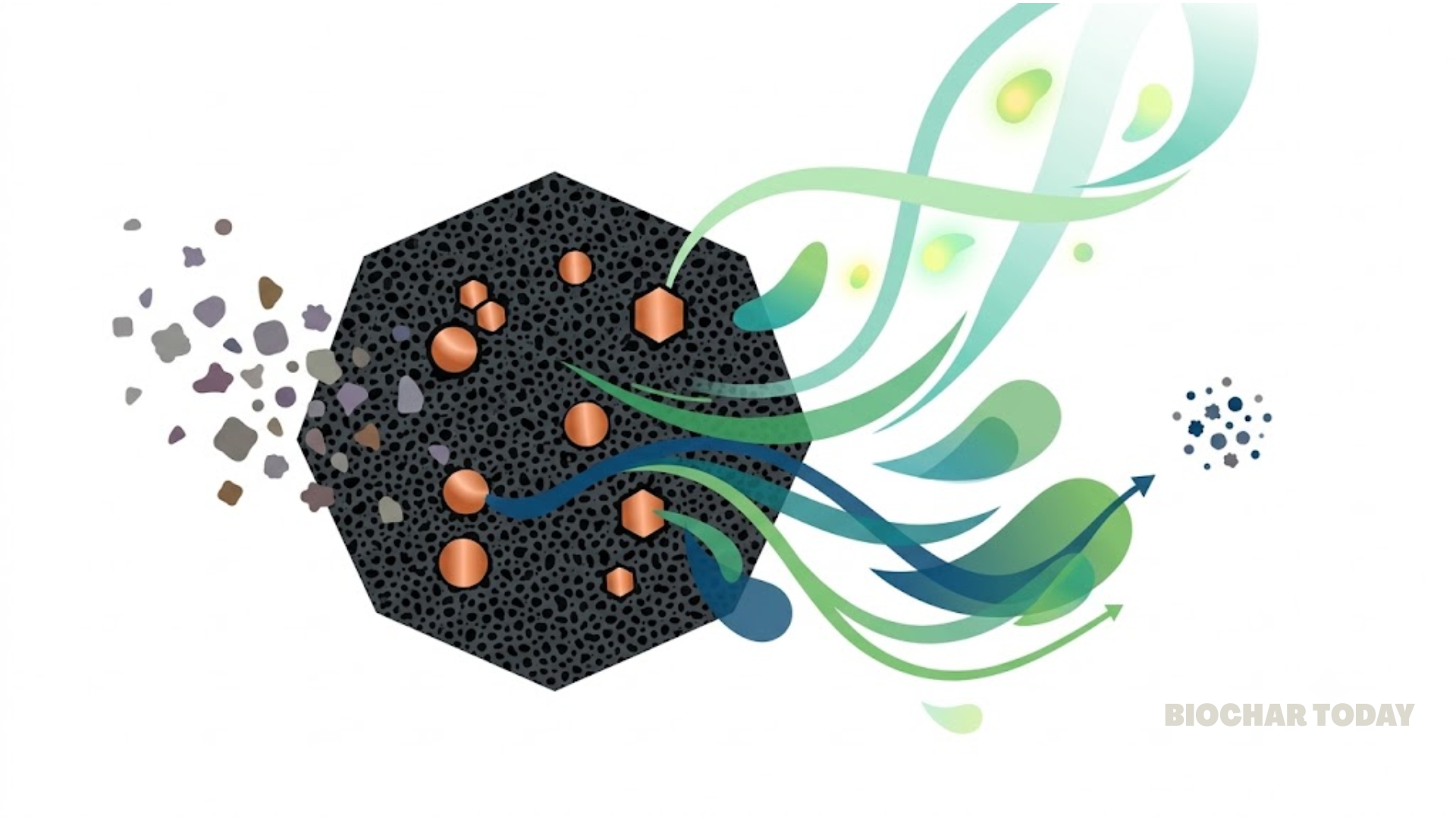
In a groundbreaking paper published in the journal npj Clean Water, authors Chohee Yang, Youn-Jun Lee, Seong-Jik Park, Doyeon Lee, and Eilhann E. Kwon introduced an innovative environmental technology that simultaneously resolves water pollution and green energy challenges. The team engineered a high-performance copper-incorporated biocharBiochar is a carbon-rich material created from biomass decomposition in low-oxygen conditions. It has important applications in environmental remediation, soil improvement, agriculture, carbon sequestration, energy storage, and sustainable materials, promoting efficiency and reducing waste in various contexts while addressing climate change challenges. More that exhibits exceptional efficiency in removing toxic persistent organic pollutants from aquatic systems. Unlike traditional filtration materials that quickly saturate and lose efficacy, this dual-function material acts as both an effective adsorbent and a powerful catalyst. The study demonstrates that this material has an excellent capacity to capture widespread industrial contaminants like bisphenol A from water supplies. Beyond superior water treatment, the synthesis process offers efficient thermochemical energy recovery, converting ordinary biomassBiomass is a complex biological organic or non-organic solid product derived from living or recently living organism and available naturally. Various types of wastes such as animal manure, waste paper, sludge and many industrial wastes are also treated as biomass because like natural biomass these More into clean fuels.
The core findings show a massive performance increase compared to standard biochars produced under conventional conditions. Specifically, the copper-infused biochar synthesized under a carbon dioxide atmosphere achieved a ninety point eight percent pollutant removal efficiency during the initial adsorption phase. In contrast, biochar produced using standard nitrogen gas removed only fifteen point two percent of the contaminant under identical conditions. This large difference highlights the structural advantages of the new material, which contains a dense network of microscopic pores that dramatically increase the surface area available for trapping toxins. The copper and carbon dioxide combination alters the charcoalCharcoal is a black, brittle, and porous material produced by heating wood or other organic substances in a low-oxygen environment. It is primarily used as a fuel source for cooking and heating. More matrix, creating optimal diffusion channels that maximize contact between organic contaminants and active filtering sites.
Furthermore, the research highlights excellent catalytic capabilities when the material is paired with a chemical oxidant. Following initial adsorption, adding peroxydisulfate drives rapid chemical degradation, achieving over ninety-nine percent total contaminant removal from the treated water. The study verified that this breakdown occurs directly at the copper active sites anchored within the porous framework rather than on the carbon surface itself. These copper nanoparticles act as tiny catalytic engines that activate the oxidant to dismantle persistent toxins without releasing harmful secondary chemicals into the environment. Even when tested in complex water mixtures containing humic acid and various environmental salts, the material maintained its high performance and resisted typical fouling over time.
The study also details a major breakthrough in clean energy production during biochar manufacturing. Applying a copper-catalyzed, carbon dioxide-assisted thermal treatment to ordinary wood chips redirected chemical decomposition pathways to maximize synthesis gas production. The addition of copper lowered the required gasificationGasification is a high-temperature, thermochemical process that converts carbon-based materials into a gaseous fuel called syngas and solid by-products. It takes place in an oxygen-deficient environment at temperatures typically above 750°C. Unlike combustion, which fully burns material to produce heat and carbon dioxide (CO2), gasification More temperature, increasing total gas yields from thirty-five percent to forty-nine percent. Crucially, during the stable heating stage, valuable carbon monoxide production experienced an impressive two point zero three fold increase. Ultimately, clean carbon monoxide and hydrogen combined to constitute ninety-four percent of the total gas products, while reducing complex, low-value bio-oils by sixty-two percent. This dual-achievement provides a clear blueprint for industrial facilities to treat wastewater while generating self-sustaining renewable power.
Source: Yang, C., Lee, Y.-J., Park, S.-J., Lee, D., & Kwon, E. E. (2026). Cu-incorporated micro-mesoporous biochar for enhanced adsorption and persulfate-driven degradation of organic pollutants. npj Clean Water.




Leave a Reply