

Key Takeaways
- Converting leftover plant matter into stable biocharBiochar is a carbon-rich material created from biomass decomposition in low-oxygen conditions. It has important applications in environmental remediation, soil improvement, agriculture, carbon sequestration, energy storage, and sustainable materials, promoting efficiency and reducing waste in various contexts while addressing climate change challenges. More locks up atmospheric carbon for centuries rather than letting it decompose.
- Industrial processing of plant waste produces clean electricity and renewable heating along with solid charcoalCharcoal is a black, brittle, and porous material produced by heating wood or other organic substances in a low-oxygen environment. It is primarily used as a fuel source for cooking and heating. More.
- Adding this specialized charcoal to agricultural soils permanently enhances crop growing environments and locks away carbon.
- Modern manufacturing methods allow factories to continuously convert diverse regional plant waste without creating harmful chemical runoffs.
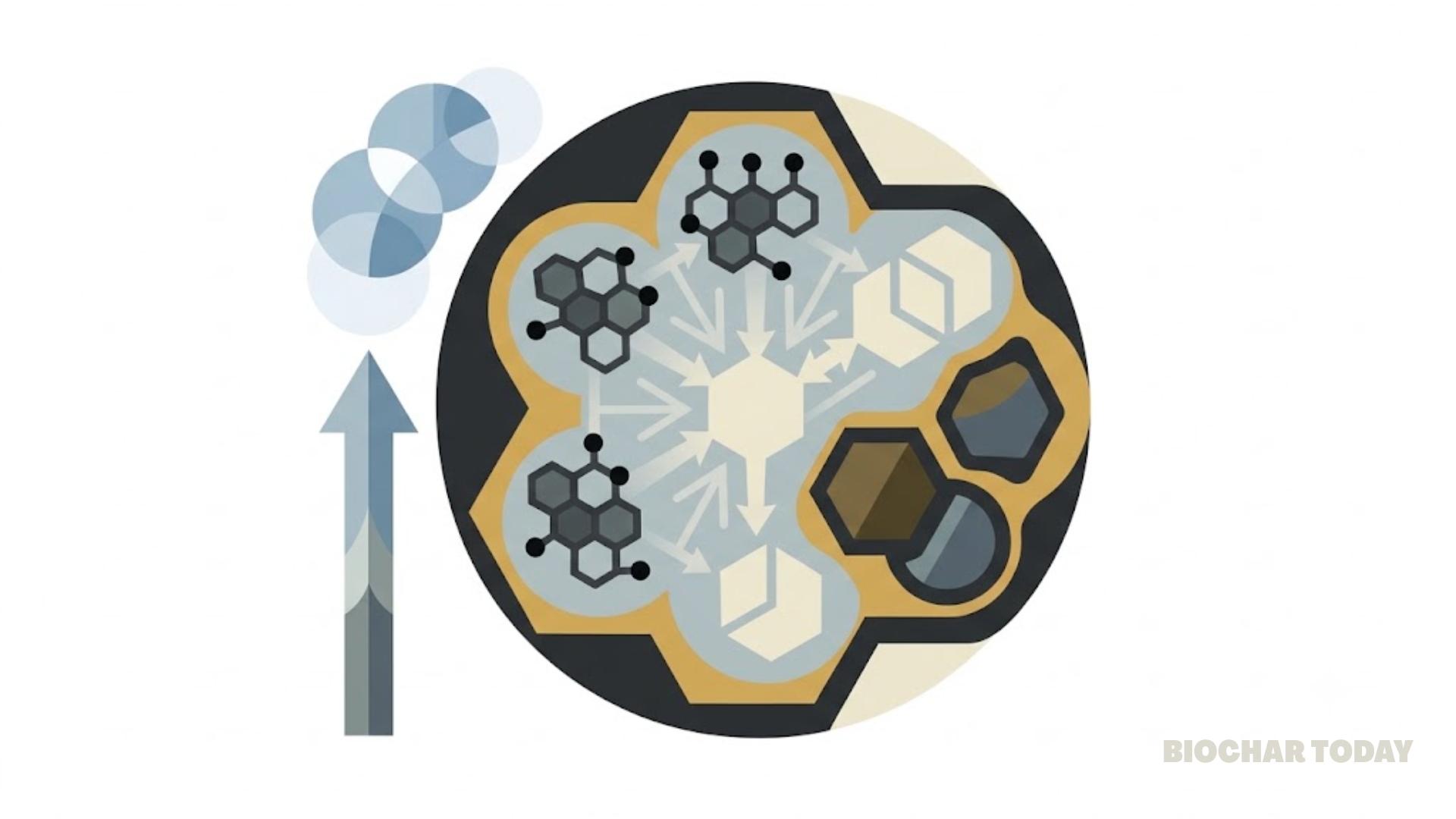
The research published in the Journal of Soil Science and Plant Nutrition by Erdem Yilmaz and his colleagues evaluates how different processing conditions alter the final quality of soil amendments derived from farm waste. The investigators systematically tested wheat straw, tomato waste, carnation stalks, banana residues, and vineyard prunings across a spectrum of heating levels and speeds. The study reveals that the physical and chemical properties of the resulting char depend heavily on the original plant material and the peak processing temperature rather than the speed at which the material is heated. Higher temperatures consistently drive off volatile gases, leaving behind a highly stable matrix dominated by permanent carbon structures that resist natural decay.
A primary finding of the experiment centers on how the heating process shifts the overall yield and chemical composition of the final material. As the processing temperature rises from low to high levels, the total weight of the recovered charcoal decreases due to the loss of moisture and volatile organic matter, but the concentration of stable carbon increases dramatically. The researchers found that different agricultural residues respond uniquely to heat, with certain materials maintaining a more robust physical framework. Tomato and banana residues processed at elevated temperatures exhibit exceptionally high alkaline values, meaning they possess a strong capacity to sweeten acidic soils and improve the overall growing environment for crops.
Furthermore, the study highlights critical changes in how nutrients and mineral ashAsh is the non-combustible inorganic residue that remains after organic matter, like wood or biomass, is completely burned. It consists mainly of minerals and is different from biochar, which is produced through incomplete combustion. Ash Ash is the residue that remains after the complete More are concentrated during the thermochemical transformation. The chemical analysis indicates that essential minerals become tightly packed within the solid carbon structure as the volatile elements escape. This concentration effect varies significantly by feedstockFeedstock refers to the raw organic material used to produce biochar. This can include a wide range of materials, such as wood chips, agricultural residues, and animal manure. More, as banana and tomato wastes inherently carry a higher mineral content compared to woodier residues like vineyard prunings and wheat straw. The resulting porous networks within the high-temperature charcoal provide excellent structural spaces to retain water and essential plant foods, preventing vital nutrients from washing away during heavy rains and ultimately fostering sustainable agricultural production.
Source: Yilmaz, E., Merdun, H., Galadima, M. M., & Sezgin, İ. V. (2026). Features of biochar produced under different pyrolysis conditionsThe conditions under which pyrolysis takes place, such as temperature, heating rate, and residence time, can significantly affect the properties of the biochar produced. More and their possible significance for soil fertility. Journal of Soil Science and Plant Nutrition, 1-15.




Leave a Reply