
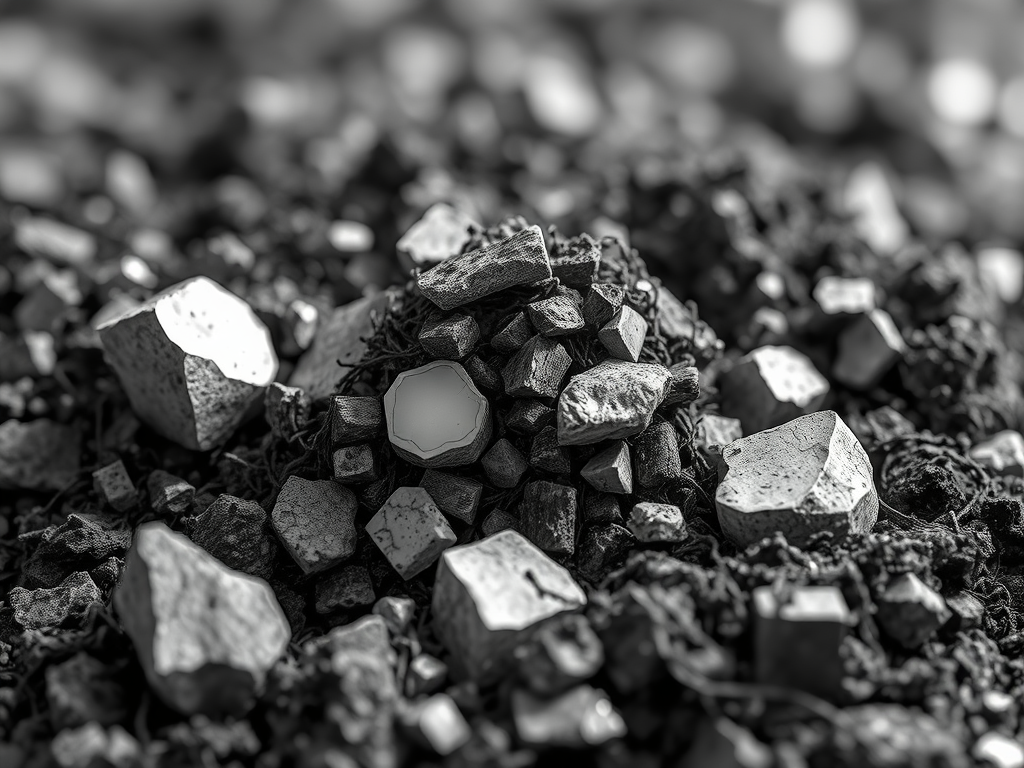
In a recent study published in Ecotoxicology and Environmental Safety, Zhong et al., delved into the adsorption-desorption properties of aromatic organophosphate esters (OPEs) on biochar-mineral complexes. This research not only underscores the critical role of these complexes in environmental remediation but also sheds light on the mechanisms governing the adsorption of pollutants. The study revealed that biochar-mineral complexes, synthesized through a co-ball-milling process, exhibit a higher adsorption capacity for OPEs compared to pristine biocharBiochar is a carbon-rich material created from biomass decomposition in low-oxygen conditions. It has important applications in environmental remediation, soil improvement, agriculture, carbon sequestration, energy storage, and sustainable materials, promoting efficiency and reducing waste in various contexts while addressing climate change challenges. More.
This enhancement is attributed to their larger specific surface area, increased oxygen-containing functional groups, and stronger aromaticity. The complexes’ ability to adsorb OPEs is influenced by a combination of hydrophobic interactions, π-π interactions, pore filling, and hydrogen bonding. Notably, the desorption of OPEs was minimal, indicating a strong retention capacity of these complexes. This is crucial for preventing the secondary release of pollutants back into the environment. The findings suggest that biochar-mineral complexes could be a more effective alternative to pristine biochar in environmental remediation. Their enhanced adsorption capacity and reduced desorption rates make them ideal candidates for mitigating the impact of OPEs and other pollutants. This research paves the way for developing advanced materials that can offer sustainable solutions to environmental contamination.
SOURCE: Zhong, Z., Mao, H., Chang, Z., Guo, H., Tian, L., Du, W., … & Yu, Y. (2025). Adsorption-desorption properties and control mechanism of aromatic organophosphate esters on biochar-mineral complexes. Ecotoxicology and Environmental Safety, 292, 117979. https://doi.org/10.3390/su17052214



Leave a Reply