
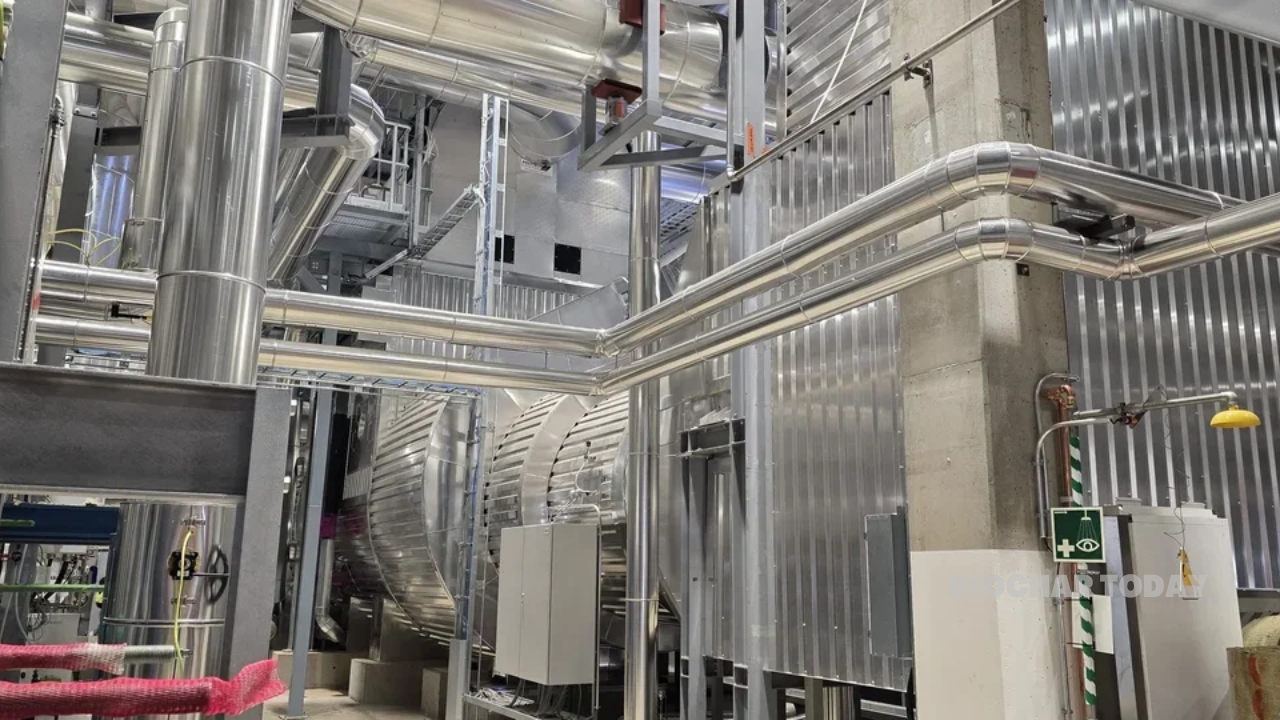
Academics from Northumbria University in the United Kingdom, alongside technology lead Eco Research Ltd and the University of Kamalia, have secured £1.25 million in funding to build Pakistan’s first full-scale commercial demonstration plant that converts agricultural waste into engineered bio-coal pellets. The project, named SAFER PLUS, will establish a processing hub at the University of Kamalia campus in South Punjab, Pakistan. Designed to process 5,000 tonnes of crop residues annually, the facility aims to produce up to 4,000 tonnes of solid bio-coal pellets via torrefaction, alongside secondary co-products including off-grid electricity, process heat for local textile dyeing, and wood vinegar for agricultural applications.
The initiative targets two interconnected structural challenges facing Pakistan: acute air pollution driven by seasonal agricultural residue burning and a heavy financial reliance on fossil fuel imports. Every winter across Punjab, farmers burn millions of tonnes of cotton stalks and sugarcane waste due to a lack of viable commercial disposal routes, driving ambient air pollution five to seven times above World Health Organisation limits and fueling severe seasonal smog. Simultaneously, Pakistan imports approximately 19 million tonnes of coal annually at a cost exceeding $2.5 billion to meet industrial thermal demand. Regional manufacturers face rising fuel expenses, while surrounding rural communities suffer from frequent grid power outages.
To mitigate these issues, the SAFER PLUS consortium is implementing a patent-pending thermal reactor system that processes cotton and sugarcane waste into densified bio-coal pellets without requiring external fuel inputs following initial startup. Operating at a commercial scale, the torrefaction unit converts raw agricultural residues into higher-density solid fuel that functions as a direct drop-in replacement for conventional coal in industrial boilers and brick kilns, offering a 40 to 50 percent reduction in fuel costs without requiring machinery modifications. The supply chain is integrated with a women-led biomassBiomass is a complex biological organic or non-organic solid product derived from living or recently living organism and available naturally. Various types of wastes such as animal manure, waste paper, sludge and many industrial wastes are also treated as biomass because like natural biomass these More cooperative collecting feedstockFeedstock refers to the raw organic material used to produce biochar. This can include a wide range of materials, such as wood chips, agricultural residues, and animal manure. More across a 30-kilometer radius, providing direct payments to over 120 rural households via digital mobile wallets and allocating 60 percent of project training positions to women.
The demonstration hub establishes a operational pathway for scaling thermal biomass conversion across Pakistan’s industrial sectors. Three domestic textile manufacturers have executed formal letters of commitment to trial and commercially purchase the bio-coal output for boiler operation. Following installation, the facility will remain active on the University of Kamalia campus for at least a decade as a permanent operational and research hub. The project consortium has framed a commercial roadmap targeting the deployment of 30 additional processing hubs across Punjab, which could collectively displace over 100,000 tonnes of imported coal annually and divert significant volumes of crop residues from open-field burning.


Leave a Reply