
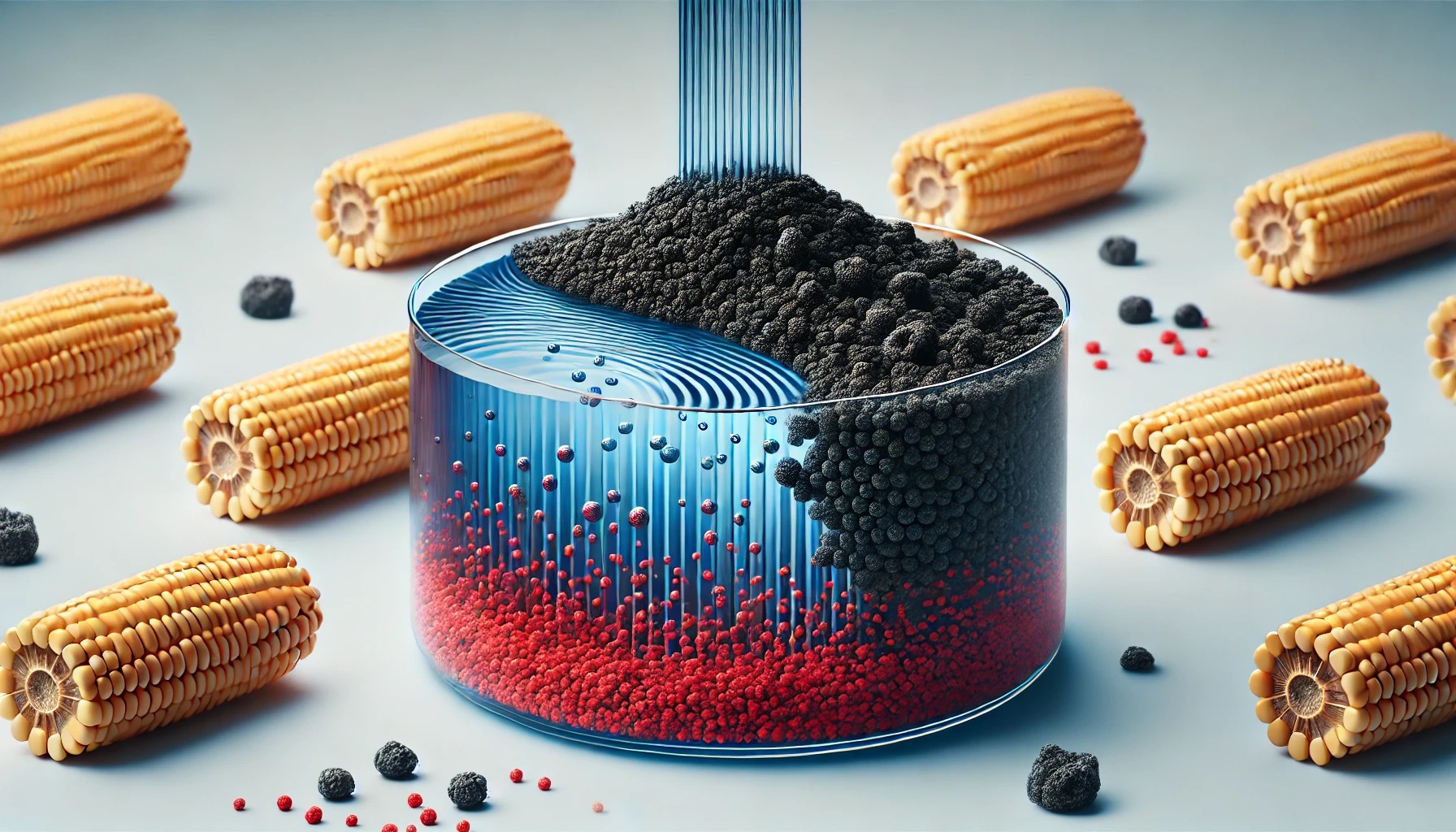
A recent study led by Duy-Khoi Nguyen and colleagues, published in RSC Advances, investigates the effectiveness of biocharBiochar is a carbon-rich material created from biomass decomposition in low-oxygen conditions. It has important applications in environmental remediation, soil improvement, agriculture, carbon sequestration, energy storage, and sustainable materials, promoting efficiency and reducing waste in various contexts while addressing climate change challenges. More made from corncobs in removing toxic hexavalent chromium (Cr(VI)) from water. Chromium contamination, a byproduct of industrial processes, poses severe health and environmental risks. This research highlights the potential of converting agricultural waste into an efficient and eco-friendly water treatment material.
The team synthesized biochar from corncob waste under pyrolysis conditionsThe conditions under which pyrolysis takes place, such as temperature, heating rate, and residence time, can significantly affect the properties of the biochar produced. More, optimizing the process at 700°C for 15 minutes. This method enhanced the material’s surface area to 443 m²/g. The biochar demonstrated a maximum adsorption capacity of 38.1 mg/g, outperforming many alternative materials such as activated carbonActivated carbon is a form of carbon that has been processed to create a vast network of tiny pores, increasing its surface area significantly. This extensive surface area makes activated carbon exceptionally effective at trapping and holding impurities, like a molecular sponge. It is commonly More and composites derived from similar agricultural byproducts.
Mechanistic analysis revealed that Cr(VI) removal occurs through two primary processes: (1) adsorption on the biochar’s surface followed by chemical reduction of Cr(VI) to the less toxic Cr(III), and (2) ion exchange with biochar’s functional groups. Advanced techniques, including SEM-EDX and FTIR, confirmed these interactions. The biochar remained stable and reusable over four treatment cycles, showing minimal performance loss.
This study underscores the potential of corncob biochar as a cost-effective solution for water pollution management, while also promoting sustainable waste utilization. The researchers propose future work on scaling biochar production and its application in dynamic water treatment systems.
SOURCE: Nguyen, et al (2024) Adsorption mechanism of aqueous Cr(VI) by Vietnamese corncob biochar: a spectroscopic study. RCS Advances. https://doi.org/10.1039/D4RA07455F



Leave a Reply