
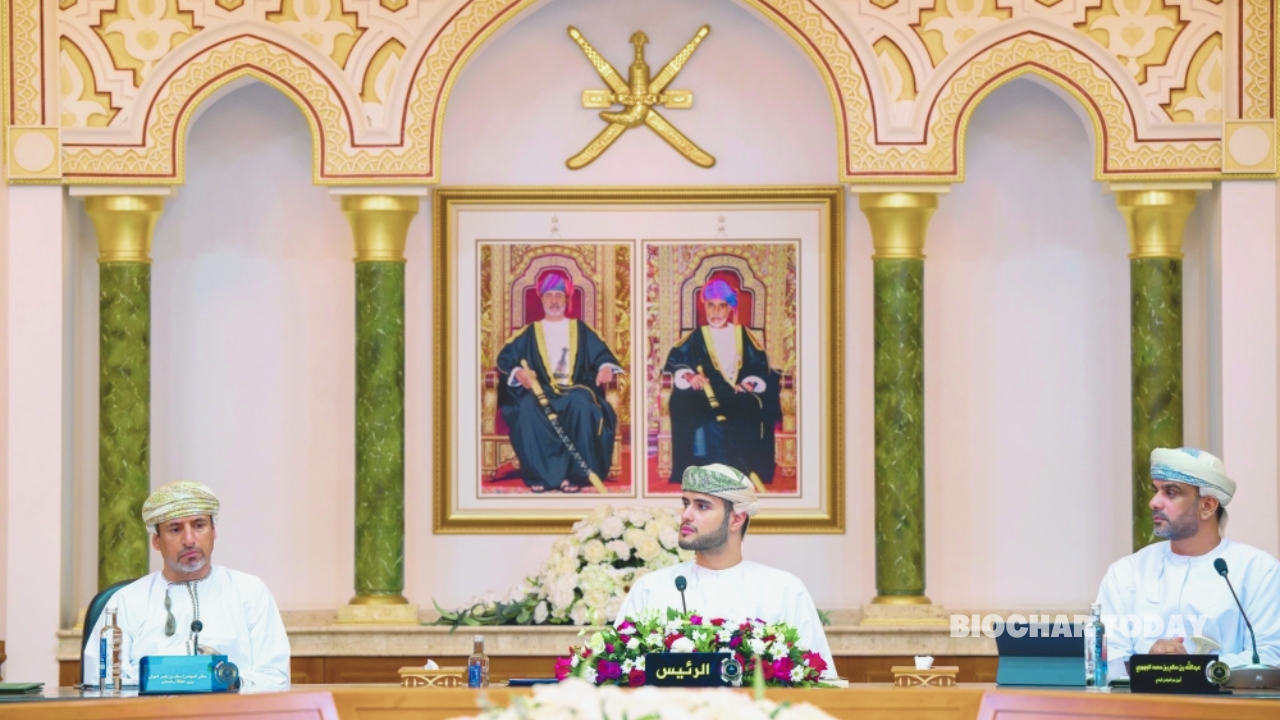
The Muscat Municipal Council, under the leadership of HH Sayyid Bilarab bin Haitham al Said, recently held a strategic development meeting in Oman to review national progress toward decarbonization. During the session, the Ministry of Energy and Minerals delivered a detailed presentation on the operational road map for the newly established Oman Net-Zero Centre. Presented by Eng Salim bin Nasser al Aufi, the initiative directly aligns with the strategic targets of Oman Vision 2040, which seeks to build a resilient green economy and enforce long-term environmental sustainability. The centralized body is tasked with coordinating multi-sectoral emissions reduction pathways, updating national climate plans, and steering the country toward its binding net-zero emissions target by 2050.
The primary challenge addressed by the Omani governing bodies is the structural absence of a unified regulatory framework to track, inventory, and verify carbon emissions across the nation’s transitioning industrial sectors. Without a standardized, data-driven system, the government faces substantial difficulties in attracting high-value international investments and accurately monitoring national compliance with global climate targets. Furthermore, the lack of defined sector-specific reduction pathways creates economic uncertainty for emerging green industries. This regulatory void threatens to slow down the integration of technological carbon sequestration methodologies into the broader national economy, thereby hindering Oman’s ability to remain competitive in a rapidly decarbonizing global marketplace.
To resolve these administrative and structural deficiencies, the Oman Net-Zero Centre, led by Director-General Mohsen bin Sulaiman al Jabri, is implementing a comprehensive national emissions roadmap combined with targeted market regulations. The solution centers on the development and deployment of “Meezan,” a dedicated national platform designed specifically for emissions inventory and data management. This digital framework enables evidence-based decision-making by standardizing how industrial carbon outputs are recorded. By establishing clear regulations for domestic carbon markets, the platform provides a structured environment that allows advanced carbon removal methodologies to be verified, accounted for, and commercialized under a unified national system.
The documented outcomes of these institutional actions establish a clear operational path for green industrial development and job creation within the Sultanate. By formalizing the emissions framework through the Meezan platform, Oman has enhanced its readiness to meet international climate mandates while positioning itself as an active global partner in sustainable development. The council’s approval of these coordinated pathways provides the regulatory certainty required to attract high-value foreign capital into regional environmental projects. Ultimately, this structural groundwork transforms climate compliance from an administrative hurdle into an economic catalyst, ensuring the country possesses the necessary market infrastructure to deploy scalable technological solutions.





Leave a Reply