
Key Takeaways
- Advanced biocharBiochar is a carbon-rich material created from biomass decomposition in low-oxygen conditions. It has important applications in environmental remediation, soil improvement, agriculture, carbon sequestration, energy storage, and sustainable materials, promoting efficiency and reducing waste in various contexts while addressing climate change challenges. More composites simultaneously target toxic metal release and agricultural greenhouse gas generation in submerged farmlands.
- Loading titanium dioxide onto the carbon structure creates a stable filter with exceptional affinity for highly mobile forms of arsenic.
- The composite captures organic molecules to block the microbial pathways that traditionally trigger widespread soil toxin mobilization.
- Field-simulated applications achieve an eighty-eight percent drop in dissolved toxic concentrations over a thirty-day flooding period.
- The amendment acts as a competitive sponge for electrons, successfully diverting them away from climate-warming methane production
The cultivation of staple crops in flooded paddy soils represents a dual dilemma for global food safety and environmental sustainability. Submerged agricultural conditions foster alternating microbial redox processes that trigger the widespread reductive dissolution of iron minerals, which subsequently mobilizes geogenic arsenic and leads to toxic accumulation inside rice grains. Simultaneously, these oxygen-depleted environments promote methanogenic conditions, making rice paddies a primary driver of global greenhouse gas emissions. While standard biochar carbon platforms have been explored for soil remediation, their redox-active nature often functions inadvertently as an electron shuttle, accelerating iron reduction and worsening localized water pollution. To resolve this ecological trade-off, researchers Song Wu, Zhiyuan Zhu, Dunfeng Si, Chuang Zhao, Hai Feng, Qian Zhang, Juan Wang, Dongmei Zhou, and Yujun Wang published a study in the journal Biochar introducing an engineered titanium dioxide-loaded biochar composite designed to simultaneously stabilize both threats.
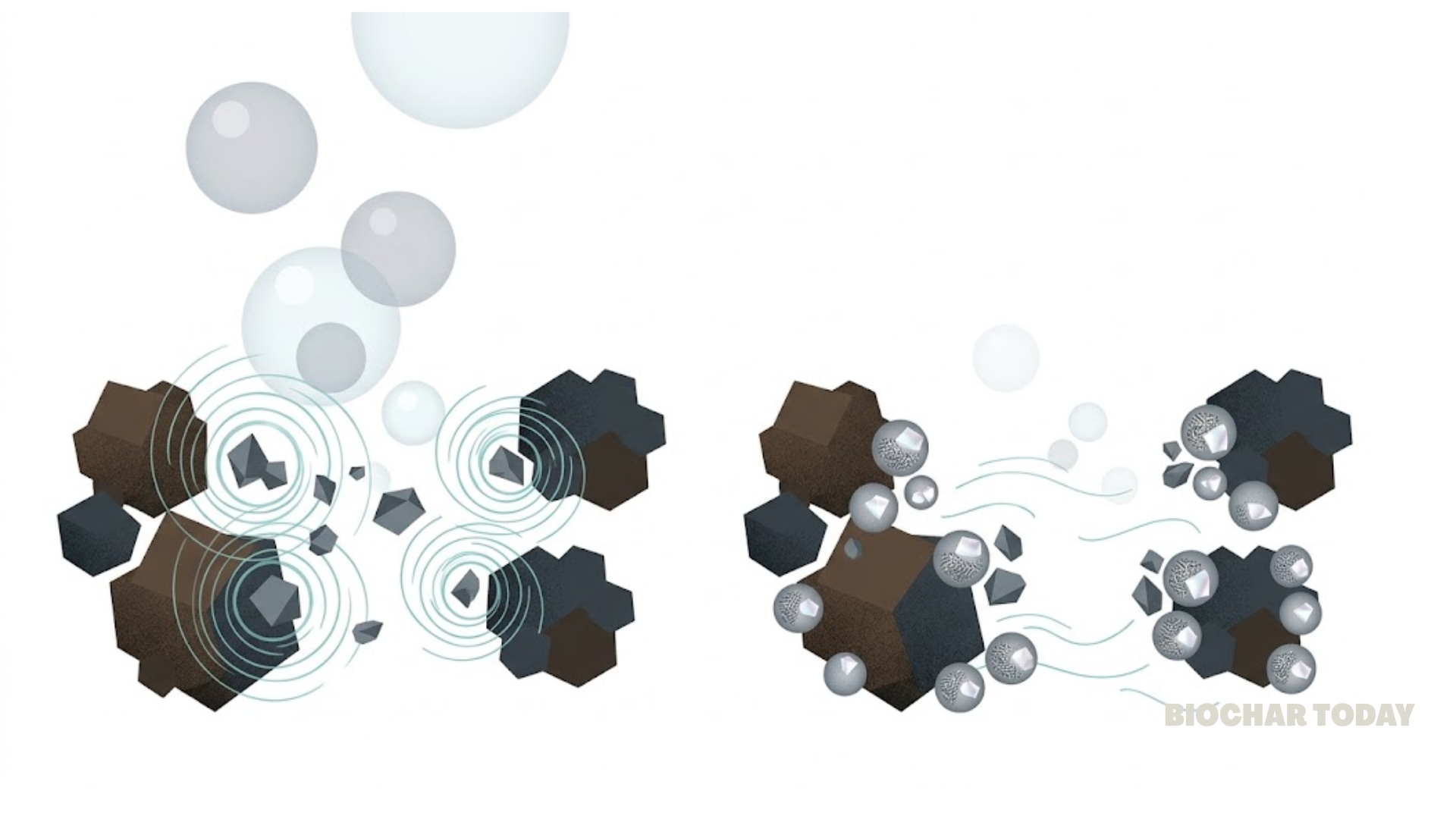
The primary mechanism driving this environmental breakthrough centers on the structural stability of the loaded titanium dioxide crystals, which remain highly resilient against reductive dissolution under intense flooding conditions. Adsorption experiments conducted within anoxic gloveboxes revealed that the engineered composite possesses an exceptional chemical affinity for arsenite, the highly toxic and mobile inorganic form of arsenic that dominates flooded soils. Even when subjected to heavily competitive solutions packed with interfering silicate and phosphate anions, the titanium dioxide-modified carbon matrix effectively maintained its selective capture performance. Laboratory assays tracking microbial interactions further verified that the composite successfully sequesters toxic ions directly as they are released during the reduction of minerals by iron-reducing bacteria, effectively neutralizing the environmental risks associated with shifting microbial niches.
Beyond direct surface adsorption, the material exerts strong biochemical control over the surrounding soil matrix by targeting dissolved organic matter. In natural flooded ecosystems, dissolved organic molecules typically play a harmful dual role by serving as a fuel source for microbial growth and an active electron shuttle that accelerates iron mineral breakdown. Because the pore-activated carbon base of the new composite acts as an exceptionally powerful physical sponge, it aggressively adsorbs these organic compounds straight from the soil porewater. By locking away this dissolved carbon, the amendment effectively starves local bacterial communities and cuts off long-distance electron transfer. This structural intervention delays the initialization of aggressive microbial reduction pathways, thereby preventing the associated surge in both dissolved iron release and secondary carbon dioxide emissions.
When applied to highly contaminated soil microcosms under prolonged methanogenic conditions, the engineered composite delivered outstanding remediation results over a thirty-day trial period. While standard, unmodified biochars rapidly lost their effectiveness once soil iron levels plateaued, the titanium dioxide-loaded composite maintained continuous suppression, slashing total porewater arsenic concentrations by 88.3 percent. Concurrently, the material achieved a massive drop in climate-warming gas output, cutting cumulative methane emissions by over thirty-seven percent. This climate mitigation occurs because the modified carbon framework serves efficiently as a terminal competitive electron acceptor. By actively intercepting and storing electrons generated during anaerobic decomposition, the composite effectively diverts the electrical current away from methanogenic microbes, stifling their ability to generate greenhouse gases.
Despite these powerful dual-action performance advantages, the research team outlines specific economic and operational constraints that must be addressed prior to large-scale agricultural deployment. The current manufacturing cost of high-surface-area pore-activated biochar remains three to ten times higher than standard raw biomassBiomass is a complex biological organic or non-organic solid product derived from living or recently living organism and available naturally. Various types of wastes such as animal manure, waste paper, sludge and many industrial wastes are also treated as biomass because like natural biomass these More, which could limit immediate farm-wide adoption. However, the researchers note that the low necessary application rate of approximately 1,725 kilograms per hectare, paired with the commercial availability of titanium dioxide, offers a viable pathway toward economic feasibility if alternative, lower-cost raw biochars are utilized as the substrate. Moving forward, the authors emphasize that short-term laboratory assessments must be supplemented with long-term field trials to evaluate the structural stability and safety of these engineered composites under the harsh, alternating wet and dry cyclical irrigation schedules common to real-world paddy management.
Source: Wu, S., Zhu, Z., Si, D., Zhao, C., Feng, H., Zhang, Q., Wang, J., Zhou, D., & Wang, Y. (2026). Titanium dioxide-loaded biochar composite simultaneously reduces arsenic mobilization and methane emissions in flooded paddy soils. Biochar, 8(89).





Leave a Reply