

Key Takeaways
- BiocharBiochar is a carbon-rich material created from biomass decomposition in low-oxygen conditions. It has important applications in environmental remediation, soil improvement, agriculture, carbon sequestration, energy storage, and sustainable materials, promoting efficiency and reducing waste in various contexts while addressing climate change challenges. More research has expanded from traditional heating fuel into a major environmental strategy for restoring damaged land and cleaning polluted soils.
- Global scientific interest skyrocketed in recent years as researchers realized the material can effectively trap carbon dioxide and absorb dangerous contaminants.
- China and the United States lead global scientific efforts in developing biochar applications, contributing most of the total published research.
- Future progress depends on connecting soil science with plant genetics and establishing clearer regulatory definitions for agricultural use.
In a new study published in Biochar, researchers Mbezele Junior Yannick Ngaba, Olive Mekontchou Yemele, Bin Hu, and Heinz Rennenberg provided a global analysis of how charcoalCharcoal is a black, brittle, and porous material produced by heating wood or other organic substances in a low-oxygen environment. It is primarily used as a fuel source for cooking and heating. More produced from plant material has evolved into a vital environmental cleanup tool. The comprehensive evaluation tracked how scientific priorities transitioned over two decades from basic charcoal burning toward advanced ecosystem restoration. Early investigations treated charcoal primarily as an agricultural soil conditioner or direct fuel source. However, recent data demonstrates that this material now anchors modern sustainable engineering by filtering dangerous chemical contaminants, restoring degraded farmlands, and locking away atmospheric carbon.
The findings show a dramatic acceleration in academic production across ninety-five distinct scientific disciplines. Between 2007 and 2017, scientific literature expanded at a steady annual rate of 125 percent. Following 2018, annual research output skyrocketed by 1,099 percent as environmental challenges intensified worldwide. Over seventy-one percent of all relevant research was published in just the last five years. Environmental sciences and soil sciences lead this intellectual movement, followed closely by chemical engineering, biotechnology, water resource management, and green technology development.
Geographical analysis highlights a major shift in global scientific leadership. China emerged as the primary global driver, authoring 2,163 publications and accumulating over 85,000 citations. The Chinese Academy of Sciences proved to be the single most influential research institution globally. The United States ranked second with 570 articles and nearly 36,000 citations, while Australia, South Korea, and European nations contributed significant regional breakthroughs. High-impact journals such as Science of the Total Environment and Chemosphere became the primary platforms for disseminating findings on pollutant removal.
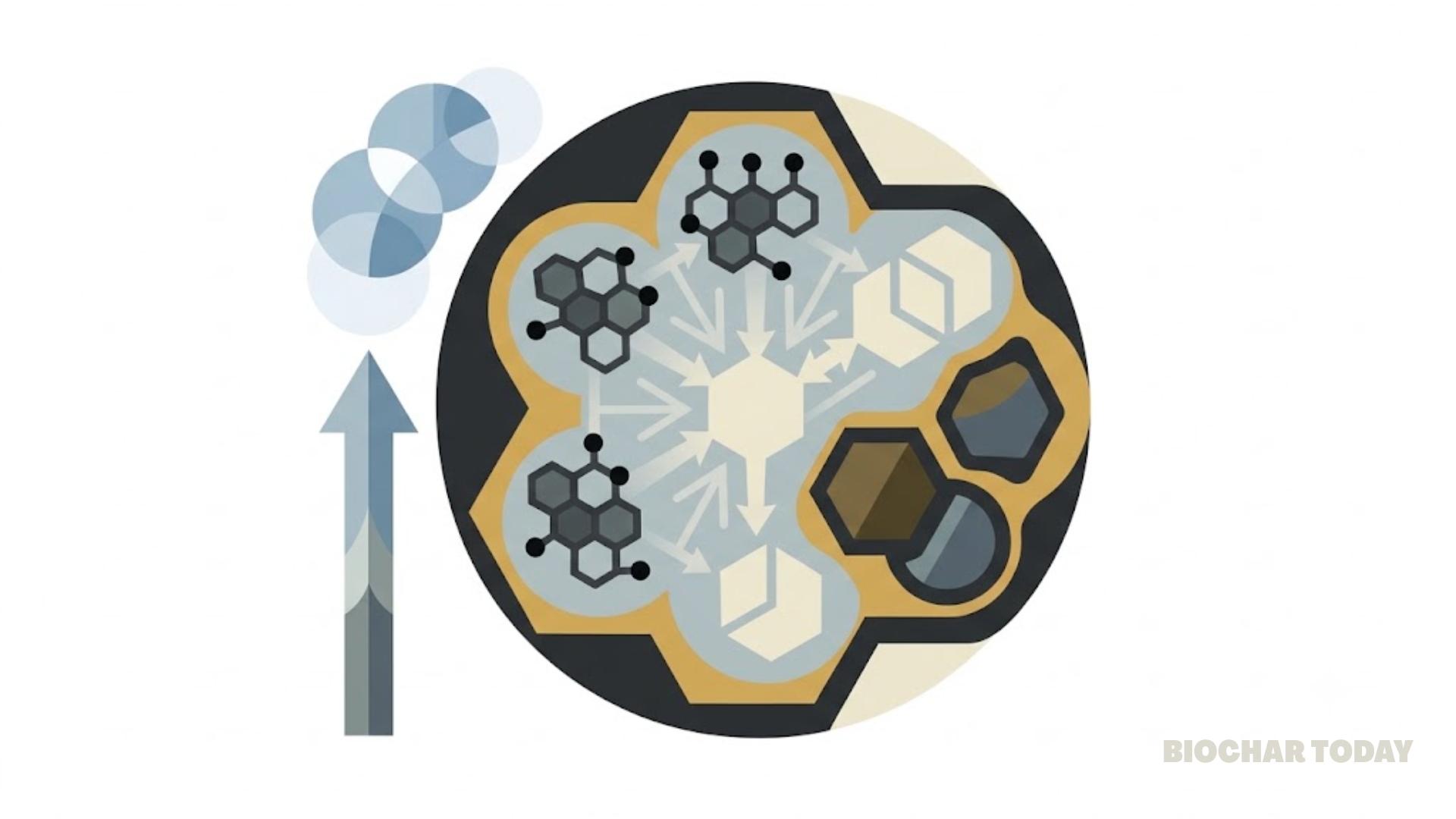
Beyond conventional agricultural uses, the study revealed that biochar excels at binding heavy metals, absorbing synthetic pesticides, and trapping persistent organic chemicals. High structural stability and porous physical architecture allow the material to capture toxic elements before they leach into groundwater supplies. Moreover, modern applications increasingly blend biochar with living plants and micro-organisms to accelerate natural ecological remediation, offering cost-effective restoration for industrial brownfields and polluted waterways. Advanced microscopic and imaging technologies now allow scientists to observe these molecular interactions directly.
Despite these advancements, critical research gaps remain that hinder widespread commercial deployment. Regulatory frameworks in the United States currently lack standardized legal definitions for biochar as a soil amendmentA soil amendment is any material added to the soil to enhance its physical or chemical properties, improving its suitability for plant growth. Biochar is considered a soil amendment as it can improve soil structure, water retention, nutrient availability, and microbial activity. More, creating market uncertainty for agricultural producers. Furthermore, long-term field studies investigating how biochar interacts over decades with plant genetics and local soil microbiomes are still scarce. Overcoming these barriers will require interdisciplinary cooperation among plant geneticists, soil ecologists, and environmental engineers to establish standardized production parameters and ensure sustainable global adoption.
Source: Ngaba, M. J. Y., Yemele, O. M., Hu, B., & Rennenberg, H. (2025). Biochar application as a green clean-up method: bibliometric analysis of current trends and future perspectives. Biochar, 7(1), 83.




Leave a Reply