
Key Takeaways
- Enriched biocharBiochar is a carbon-rich material created from biomass decomposition in low-oxygen conditions. It has important applications in environmental remediation, soil improvement, agriculture, carbon sequestration, energy storage, and sustainable materials, promoting efficiency and reducing waste in various contexts while addressing climate change challenges. More significantly increases the harvest volumes of major agricultural crops like corn, soybeans, and millet.
- Using spent biochar sorbents as fertilizer recycles nutrients and directly supports a closed-loop circular economy.
- The material enhances overall soil health by improving water retention, boosting enzyme activity, and raising organic matter content.
- Sulfur-modified biochar successfully immobilizes dangerous heavy metals such as arsenic and mercury in contaminated farm soils.
- The amendment provides powerful antibacterial protection against destructive foodborne and plant pathogens.
The international research community is increasingly focused on finding sustainable, resource-oriented methods to manage environmental pollutants while supporting agricultural productivity. A comprehensive scientific review published in Separation and Purification Reviews by researchers Anna M. Kisiela-Czajka, Temifemi Agbebunmi, Krzysztof M. Czajka, and Izabela Michalak highlights an innovative strategy that utilizes biochar produced from diverse organic waste streams. These source materials include agricultural byproducts, wood residues, food waste, municipal waste, and algae. The core investigation examines how these biochars can first be deployed as efficient filters to adsorb harmful gaseous sulfur compounds from industrial emissions and then be repurposed as highly effective soil fertilizers. By integrating industrial waste management with agricultural cultivation, this dual-use approach successfully closes the nutrient loop and advances the practical implementation of a circular economy.
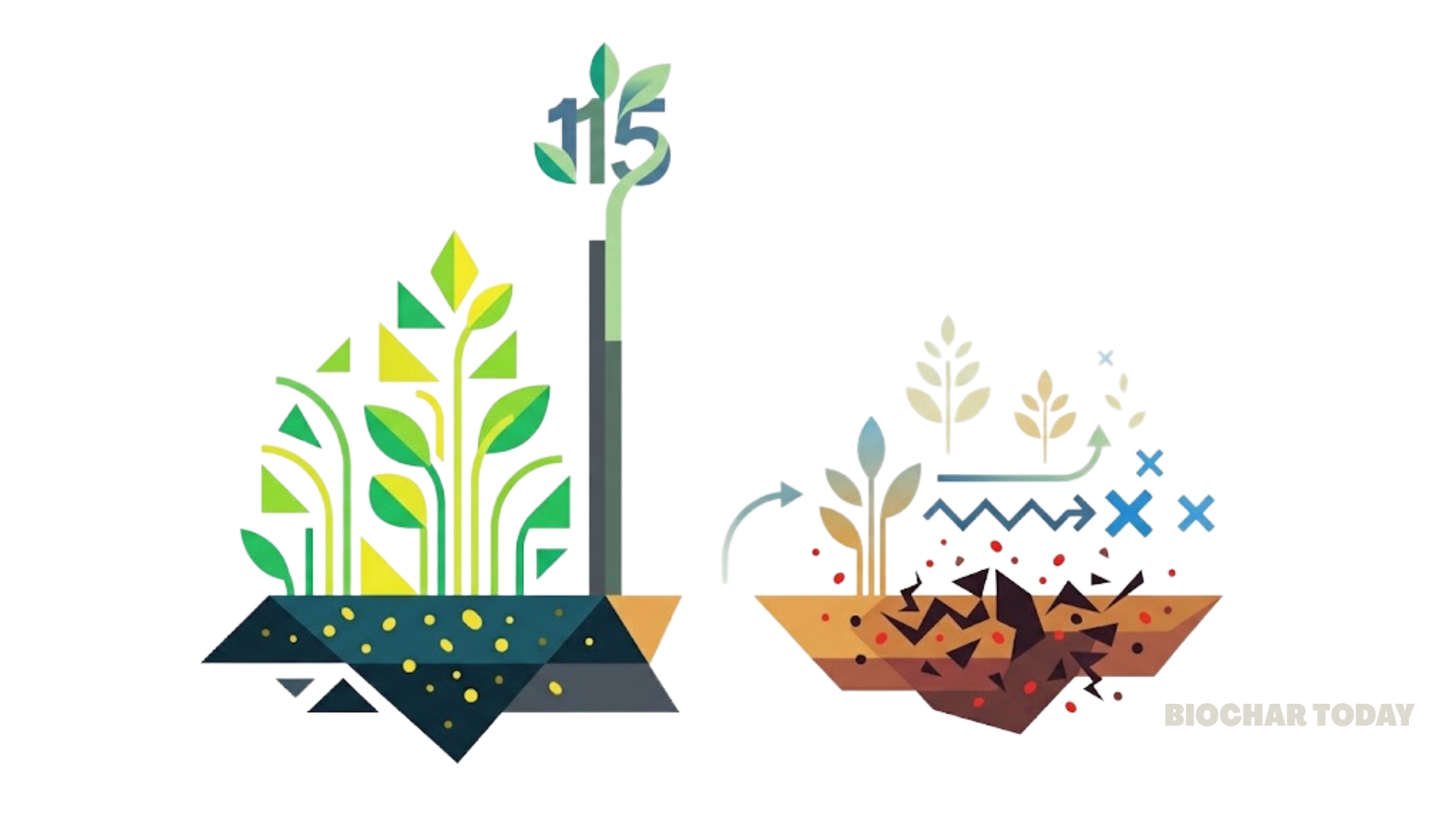
The synthesis of the collected data reveals that the chemical transformation of the captured gases significantly increases the presence of vital plant nutrients within the carbon matrix. When biochar is exposed to gases such as hydrogen sulfide or sulfur dioxide, the surface undergoes complex chemical reactions. Subsequent oxidation of these trapped gases converts the captured pollutants into stable sulfates, which are the primary and most accessible form of sulfur required for plant uptake. The research demonstrates that this slow-release mechanism delivers remarkable improvements in crop production. Specifically, the application of sulfur-enriched biochar resulted in corn yield increases ranging from 31 to 49 percent, soybean yield improvements between 4 and 14 percent, and a substantial 115 percent increase in millet yields. The localized acidification caused by microbial sulfur oxidation also increases the solubility and bioavailability of other crucial macroelements like phosphorus, which typically suffers from low solubility in calcareous and alkaline soils.
Beyond driving impressive crop yields, the study details how the physical and biological properties of agricultural soil undergo positive shifts following the integration of the enriched material. The porous structure of the biochar significantly increases the moisture-holding capacity of the substrate, with recorded improvements in soil water content reaching up to 35 percent in specific field trials. This improved structural architecture simultaneously optimizes the soil bulk density, increases total porosityPorosity of biochar is a key factor in its effectiveness as a soil amendment and its ability to retain water and nutrients. Biochar’s porosity is influenced by feedstock type and pyrolysis temperature, and it plays a crucial role in microbial activity and overall soil health. Biochar More, and enhances the overall cation exchange capacity. Furthermore, the introduction of the organosulfur compounds acts as a powerful catalyst for the biological community residing in the root zone. The amendment stimulates vital soil microorganisms and dramatically boosts the operational activity of key soil enzymes, including urease, catalase, dehydrogenase, and alkaline phosphatase, which are fundamental to ongoing organic matter decomposition and nutrient cycling.
The investigation highlights the exceptional capacity of sulfur-functionalized biochar to safeguard crops against severe environmental pressures, notably heavy metal contamination and biological pathogens. Because sulfur-based functional groups possess a powerful chemical affinity for toxic metal ions, the amended biochar effectively immobilizes dangerous contaminants within the soil matrix. This lock-in mechanism minimizes the mobility and bioavailability of hazardous substances like arsenic and mercury, preventing their dangerous accumulation inside the roots and shoots of food crops. For instance, the sorption capacity of the modified material toward mercury ions was found to be 73 percent higher than that of raw, unmodified options. Additionally, the material demonstrates robust antimicrobial properties. By accelerating specific sulfur reduction and oxidation reactions, the biochar generates free radicals that exhibit powerful bactericidal efficacy against widespread foodborne pathogens like Escherichia coli and destructive plant diseases such as Ralstonia solanacearum.
Despite these clear environmental and structural performance advantages, the authors emphasize that several critical operational hurdles must be overcome before wide-scale commercial adoption can occur. The vast majority of existing data originates from short-term laboratory experiments and controlled greenhouse pot tests, meaning comprehensive long-term field validation across diverse weather conditions and heterogeneous soil profiles is still urgently required. There is also a distinct lack of standardized global regulations governing production methods and quality metrics, as different international certifying bodies currently maintain conflicting thresholds for allowable contaminant levels. Furthermore, the review identifies significant gaps in foundational processing knowledge, noting that more research must be directed toward optimizing fast pyrolysisPyrolysis is a thermochemical process that converts waste biomass into bio-char, bio-oil, and pyro-gas. It offers significant advantages in waste valorization, turning low-value materials into economically valuable resources. Its versatility allows for tailored products based on operational conditions, presenting itself as a cost-effective and efficient More techniques, managing reactor pressures, and refining the initial grinding and drying protocols of raw feedstocks to ensure a reliable and uniformly high-quality end product.
Source: Kisiela-Czajka, A. M., Agbebunmi, T., Czajka, K. M., & Michalak, I. (2026). Sulfur-enriched biochar derived from waste biomassBiomass is a complex biological organic or non-organic solid product derived from living or recently living organism and available naturally. Various types of wastes such as animal manure, waste paper, sludge and many industrial wastes are also treated as biomass because like natural biomass these More: A sustainable soil amendmentA soil amendment is any material added to the soil to enhance its physical or chemical properties, improving its suitability for plant growth. Biochar is considered a soil amendment as it can improve soil structure, water retention, nutrient availability, and microbial activity. More?. Separation & Purification Reviews.





Leave a Reply