

Key Takeaways
- Combining biocharBiochar is a carbon-rich material created from biomass decomposition in low-oxygen conditions. It has important applications in environmental remediation, soil improvement, agriculture, carbon sequestration, energy storage, and sustainable materials, promoting efficiency and reducing waste in various contexts while addressing climate change challenges. More with helpful bacteria creates a powerful system that cleans contaminated farm soils much better than using either material alone.
- This hybrid material acts as a safe shelter that shields beneficial bacteria from extreme weather and helps them live longer in the dirt.
- Applying these specially treated particles can raise soil pHpH is a measure of how acidic or alkaline a substance is. A pH of 7 is neutral, while lower pH values indicate acidity and higher values indicate alkalinity. Biochars are normally alkaline and can influence soil pH, often increasing it, which can be beneficial More and dramatically increase its capacity to hold onto essential plant nutrients.
- This organic approach eliminates up to ninety-five percent of heavy metals and ninety percent of chemical pollutants found in degraded agricultural zones.
- Using this natural combination significantly stimulates root development and can increase total food production on farms by more than half.
In a review article published in Biochar, researchers Xinyi Li, Qianyi Lyu, Caiting Han, Na Duan, Zhidan Liu, Miao Gao, and Xiao Zhao conducted a data-driven analysis summarizing advancements in combining carbon-rich biochar with functional microorganisms. By evaluating information compiled across eighty-five lab-scale pot experiments and eleven field applications, the authors clarified how this unified strategy offers a transformative path for restoring degraded farmlands. The hybrid system effectively bridges laboratory innovations with real-world farmland practicality to address global threats to agricultural sustainability.
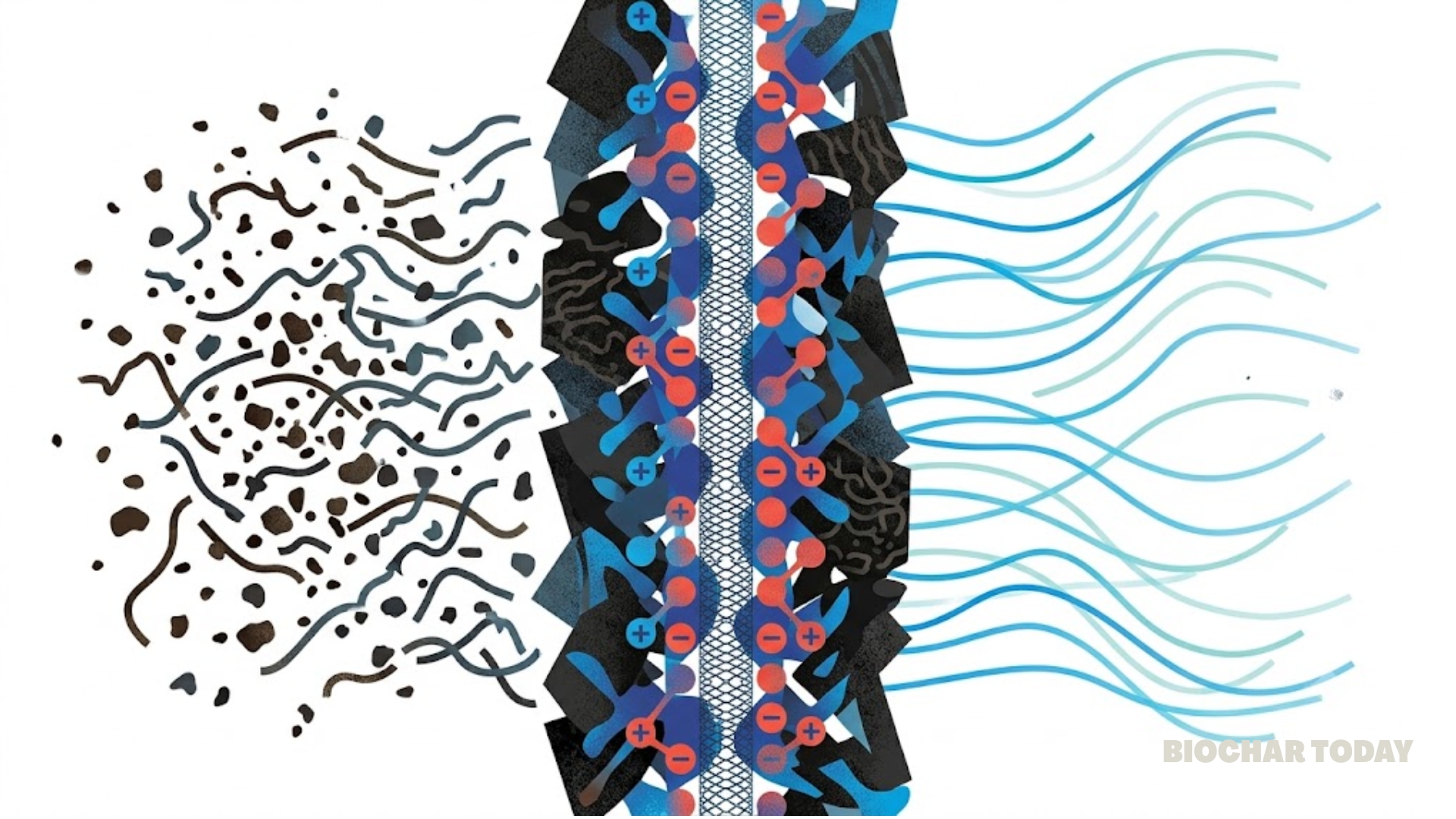
The synthesis compiled from dozens of published datasets highlights that biochar acts as an exceptional structural habitat that encourages microbial colonization through protective physical and chemical bonding methods. This porous support matrix shields introduced functional bacteria from hostile soil conditions and aggressive local competition. Physically, the micro-pores allow moisture, essential substrates, and air to pass freely while preventing the helpful bacteria from seeping out into the surrounding environment. Chemically, specialized oxygen-containing functional groups present on the charcoalCharcoal is a black, brittle, and porous material produced by heating wood or other organic substances in a low-oxygen environment. It is primarily used as a fuel source for cooking and heating. More surface serve as active anchoring sites that bind tightly to the bacterial cell walls to secure their long-term survival.
The compiled performance results show that applying these immobilized microbial complexes induces substantial biological and chemical improvements in the soil matrix. The treatment routinely neutralizes heavily acidic conditions, raising soil pH values by 0.5 to 1.5 units as alkaline ions pull harmful hydrogen ions out of commission. Concurrently, the overall soil cation exchange capacity increases by 12.25% to 39.05%, which significantly enhances the dirt’s natural ability to trap and retain critical nutrients like nitrogen, phosphorus, and potassium. This enhanced nutrient reservoir prevents fertilizer leachingLeaching is the process where nutrients are dissolved and carried away from the soil by water. This can lead to nutrient depletion and environmental pollution. Biochar can help reduce leaching by improving nutrient retention in the soil. More and stimulates vital soil enzyme activities that fuel root development.
Beyond simple fertilization benefits, the combined material displays extraordinary efficiency when deployed to clean up heavily polluted agricultural zones. The dual action creates an efficient cycle where the biochar rapidly adsorbs contaminants from the surrounding dirt, focusing them into localized zones where the concentrated bacteria can safely metabolize or stabilize them. This synergistic pairing achieves impressive purification rates, removing up to 95% of heavy metals and up to 90% of toxic organic pollutants from treated farm plots. Standalone biochar or single bacterial treatments underperform drastically by comparison because they lack this joint capture-and-destroy mechanism.
Most importantly, actual field validations reveal that these soil improvements translate directly to superior plant growth and food security. By introducing active plant growth-promoting bacteria housed inside the stable biochar framework, the system drastically increases root length by 32.10% and root dry weight by 40.05% under controlled trials. Farmland applications highlight that this robust root expansion and enhanced stress tolerance allow targeted crops to thrive, boosting final agricultural yields by up to 53%. The authors conclude that further optimization of application doses and tracking of microbial survival under variable climates will solidify this technology as a scalable green tool for sustainable global agriculture.
Source: Li, X., Lyu, Q., Han, C., Duan, N., Liu, Z., Gao, M., & Zhao, X. (2026). Biochar immobilized microbes for sustainable soil remediation and agriculture enhancement: from lab to farmland. Biochar, 8(107), 1-22.




Leave a Reply