
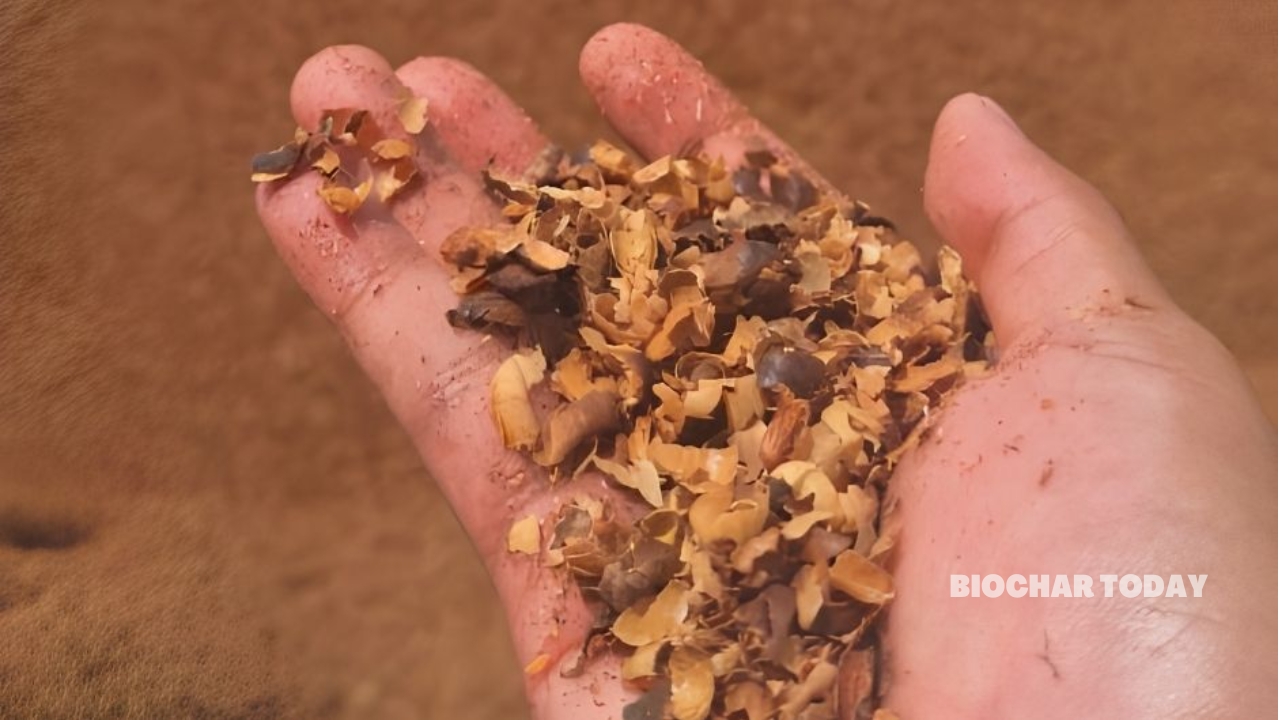
Researchers from Embrapa Acre conducted technical field evaluations across five agricultural properties in the Brazilian municipalities of Acrelândia, Cruzeiro do Sul, and Mâncio Lima to assess the utilization of local biomassBiomass is a complex biological organic or non-organic solid product derived from living or recently living organism and available naturally. Various types of wastes such as animal manure, waste paper, sludge and many industrial wastes are also treated as biomass because like natural biomass these More residues for biocharBiochar is a carbon-rich material created from biomass decomposition in low-oxygen conditions. It has important applications in environmental remediation, soil improvement, agriculture, carbon sequestration, energy storage, and sustainable materials, promoting efficiency and reducing waste in various contexts while addressing climate change challenges. More production. The investigation focused on repurposing regional organic waste—specifically coffee husks, açaí seeds, and Brazil nut shells—as soil amendments. Led by researcher Thiago Viana, the initiative aims to address agricultural sustainability in northern Brazil by converting raw crop residues into nutrient-dense soil conditioners via controlled thermal processing.
Farmers in remote Brazilian regions face severe economic pressures due to high logistical expenses that significantly inflate the price of imported mineral fertilizers. While some local growers apply raw coffee husks directly to fields or burn biomass for thermal energy in grain dryers, these unprocessed methods offer lower nutrient efficiency. The primary challenge lies in establishing a localized, scientifically sound framework that reduces farm input costs while efficiently managing agricultural waste streams across remote Amazonian supply chains.
To resolve these logistical and agronomic bottlenecks, Embrapa is evaluating pyrolysisPyrolysis is a thermochemical process that converts waste biomass into bio-char, bio-oil, and pyro-gas. It offers significant advantages in waste valorization, turning low-value materials into economically valuable resources. Its versatility allows for tailored products based on operational conditions, presenting itself as a cost-effective and efficient More technology to process potassium-rich coffee husks and other abundant regional feedstocks into biochar. Controlled carbonization concentrates essential plant nutrients into a stable, high-efficiency soil conditioner, drastically reducing overall waste volume while improving soil structure. To ensure technical rigor, the research team emphasizes the need for specialized pyrolysis machinery adapted for farm-level operations alongside structured technical training for local producers.
Implementing standardized biochar processing offers tangible outcomes for regional agriculture, including reduced reliance on expensive synthetic fertilizers, lower crop production expenses, and improved nutrient retention in soils. By expanding this pyrolysis framework to additional biomass streams like açaí and Brazil nut waste, Embrapa’s initiative creates a scalable model for regional circular agriculture. Successful adoption promises to enhance both the economic viability and environmental resilience of farming operations across Acre.



Leave a Reply