

Liu, et al (2025) Novel soybean dregs biocharBiochar is a carbon-rich material created from biomass decomposition in low-oxygen conditions. It has important applications in environmental remediation, soil improvement, agriculture, carbon sequestration, energy storage, and sustainable materials, promoting efficiency and reducing waste in various contexts while addressing climate change challenges. More concrete: Characterization and evaluation of the mechanical properties and microstructure. Construction and Building Materials. https://doi.org/10.1016/j.conbuildmat.2024.139512
Biochar derived from soybean processing waste is gaining attention as a sustainable concrete additive. A recent study explored how soybean dregs biochar, produced through high-temperature pyrolysisPyrolysis is a thermochemical process that converts waste biomass into bio-char, bio-oil, and pyro-gas. It offers significant advantages in waste valorization, turning low-value materials into economically valuable resources. Its versatility allows for tailored products based on operational conditions, presenting itself as a cost-effective and efficient More, affects concrete’s mechanical properties and microstructure.
The study revealed that pyrolyzing soybean dregs at 700°C creates a biochar with high surface area and rich pore structure. When incorporated into concrete, this biochar improves compressive and tensile strength, particularly when used as a partial replacement for sand. The optimal replacement rate was determined to be 3%, leading to a 12.3% increase in compressive strength and a 16.4% rise in tensile strength.
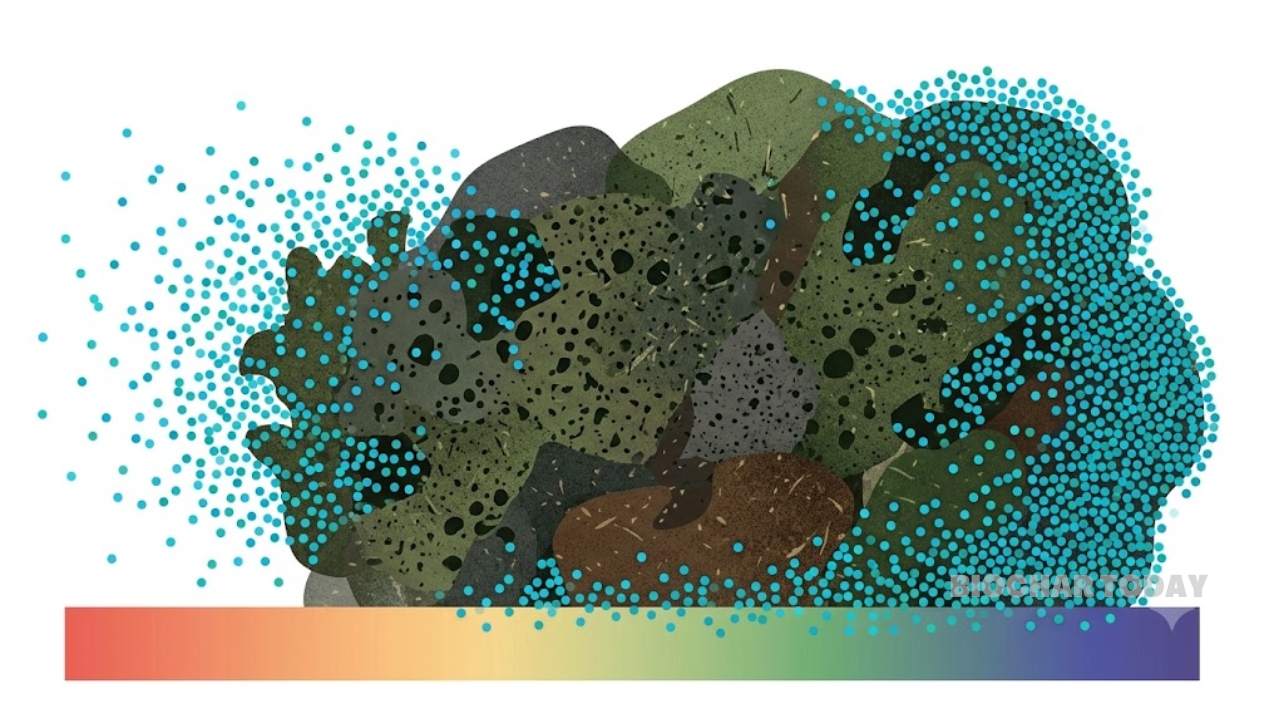
These performance enhancements are attributed to biochar’s ability to fill microscopic voids in the concrete matrix, improving its density and supporting hydration reactions. However, excessive biochar content can reduce workability and strength due to increased water absorption and particle agglomeration.
While the study focused on mechanical improvements, future research could assess long-term durability and environmental benefits, such as reduced carbon emissions. This innovative use of soybean waste highlights a promising pathway for sustainable construction practices.



Leave a Reply