
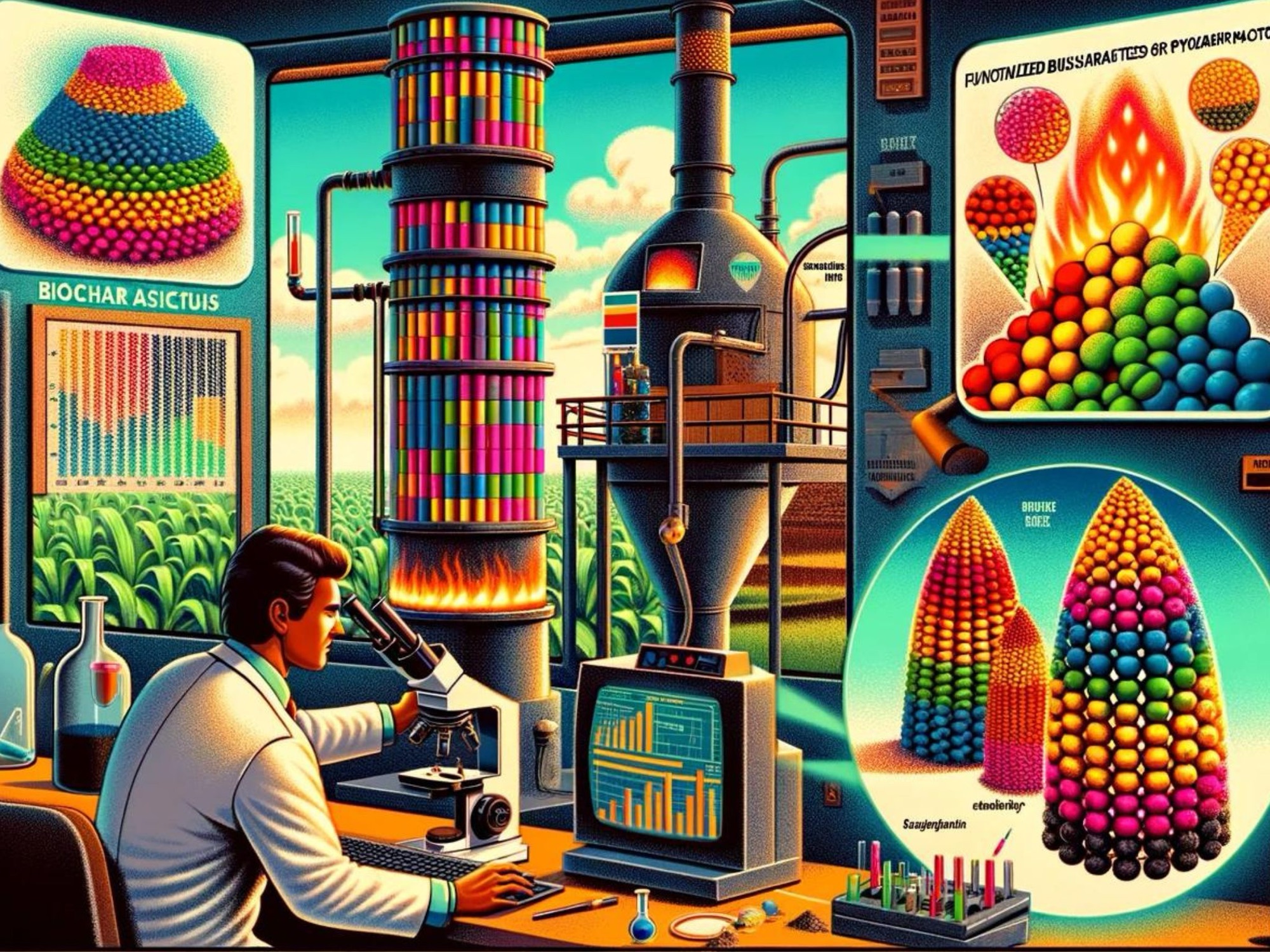
Behnam, et al (2024) Pb2+ adsorption on functionalized biocharBiochar is a carbon-rich material created from biomass decomposition in low-oxygen conditions. It has important applications in environmental remediation, soil improvement, agriculture, carbon sequestration, energy storage, and sustainable materials, promoting efficiency and reducing waste in various contexts while addressing climate change challenges. More nanoparticles: Insights from nanoparticle characterization and kinetic-isotherm analysis. Soil Science of America Journal. https://doi.org/10.1002/saj2.20669
ABSTRACT
There has been an ongoing discussion about whether using functionalized biochar nanoparticles for pollutant removal is practical. The existing uncertainty surrounding functionalized biochar nanoparticles raises questions regarding their effectiveness in unraveling this problem. In this study, functionalized biochar nanoparticles were produced from corn (Zea mays L.) residues and Conocarpus erectus L. wood at 400°C and 700°C using the H2SO4/HNO3 treatment. The synthesized nanoparticles were used to explore their sorption properties for Pb2+. Various adsorption kinetic and isotherm models were evaluated using linear and nonlinear regression techniques. The functionalized biochar nanoparticles originated from wood at 400°C had the largest (80.74 mg g−1) Pb2+adsorption capacity due to their highest O/C and the most negative zeta potential. In comparison, nanoparticles fabricated from corn residues at 700°C showed the lowest (70.47 mg g−1) Pb2+ adsorption capacity. PyrolysisPyrolysis is a thermochemical process that converts waste biomass into bio-char, bio-oil, and pyro-gas. It offers significant advantages in waste valorization, turning low-value materials into economically valuable resources. Its versatility allows for tailored products based on operational conditions, presenting itself as a cost-effective and efficient More temperature affected the sorption process. Functionalized biochar nanoparticles produced at 400°C were more successful in sorbing the pollutant than those fabricated at 700°C. Linear and nonlinear pseudo-second-order kinetic models described Pb2+ adsorption kinetics well, indicating the rate-controlling step. The nonlinear Freundlich model described the equilibrium relationship between adsorbate concentration and capacity, elucidating adsorption site heterogeneity and biochar nanoparticles’ affinity for Pb2+. Our study shows that functionalized biochar nanoparticles could help develop procedures for remediating polluted environments.




Leave a Reply