
Key Takeaways
- Plant waste and industrial residues can be transformed into specialized carbon materials to clean polluted water effectively.
- Modified carbon filters capture heavy metals, pharmaceutical drugs, and industrial chemicals far better than untreated materials.
- Integrating these carbon filters into wastewater systems helps remove excess nutrients that cause harmful algae blooms in natural water bodies.
- Using waste materials for water treatment reduces overall environmental impact and supports green energy and net-zero climate goals.
- Life cycle and economic evaluations show that these carbon technologies offer a cost-effective alternative to traditional commercial purification methods.
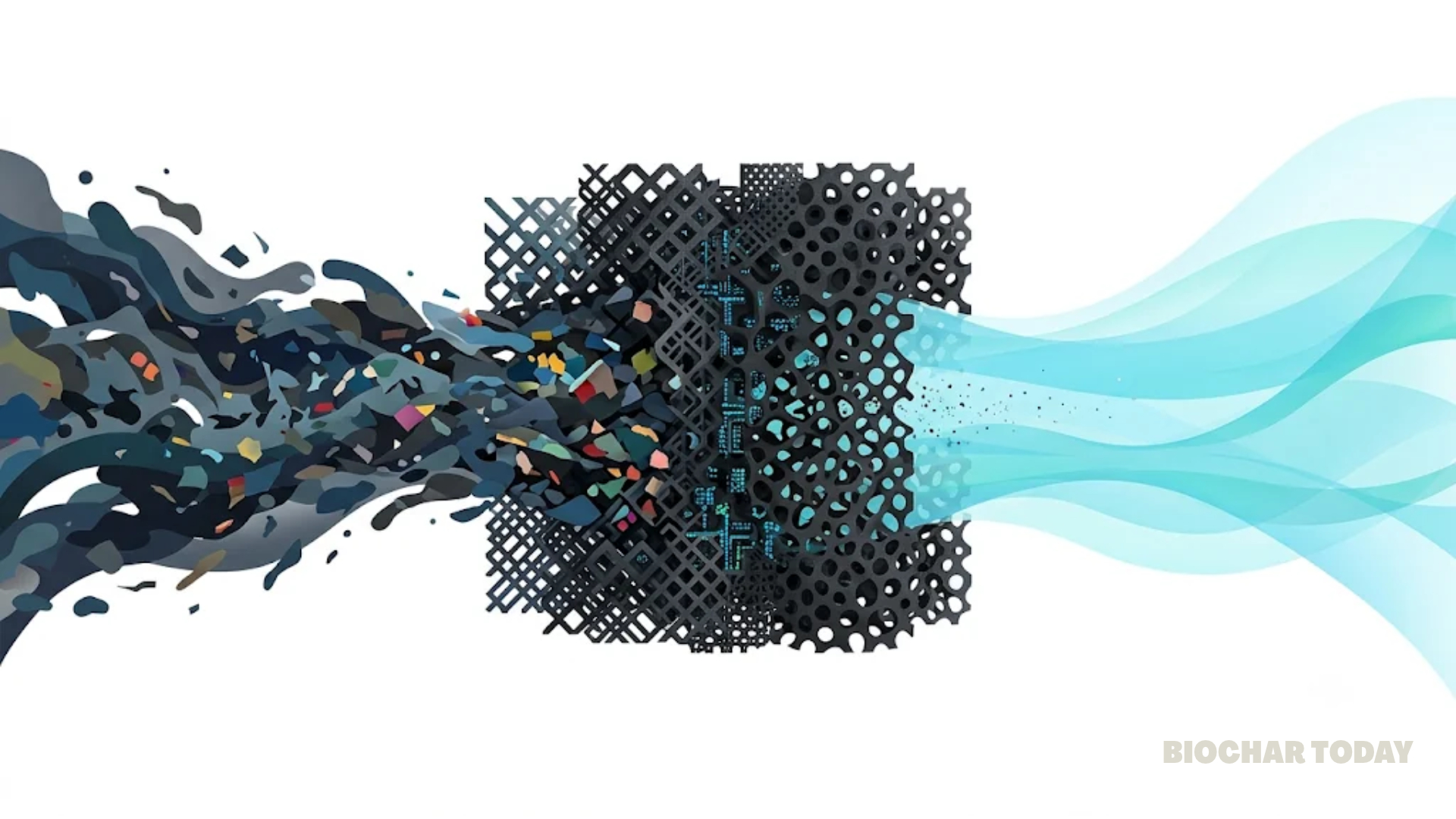
Researchers at institutions including the Korea University, the National University of Singapore, the University of Alberta, Laurentian University, the University of Nevada, Las Vegas, and National Taiwan University evaluated how carbon materials derived from agricultural, municipal, and industrial waste can revolutionize water purification. Traditionally utilized simply as soil amendments to improve agricultural yields, these carbonaceous structures possess high surface areas, diverse functional groups, and porous architectures that make them exceptionally effective at capturing hazardous substances from contaminated aquatic environments. As global populations expand and industrial activities intensify, municipal and industrial wastewater streams increasingly carry complex chemical mixtures that threaten natural ecosystems and human health. Finding sustainable, scalable solutions to remove these persistent pollutants remains a critical priority for modern environmental management.
The scientific investigation demonstrated that modifying these carbon structures through chemical activations, metal oxide doping, and physical processing significantly enhances their pollutant removal capabilities. When deployed in wastewater treatment systems, these engineered materials successfully eliminate heavy metals, industrial dyes, herbicides, pesticides, and persistent synthetic chemicals like per- and polyfluoroalkyl substances. For instance, specialized modifications enable the materials to achieve removal rates exceeding ninety percent for nutrients like nitrogen and phosphorus, which are primary drivers of aquatic eutrophication. Furthermore, integrating these materials into biological treatment processes such as anaerobic digestion increases methane gas generation, turning waste management operations into localized energy producers.
Comprehensive environmental and economic evaluations included in the research confirm that these customized carbon filters offer a practical and affordable alternative to commercial activated carbonActivated carbon is a form of carbon that has been processed to create a vast network of tiny pores, increasing its surface area significantly. This extensive surface area makes activated carbon exceptionally effective at trapping and holding impurities, like a molecular sponge. It is commonly More. Life cycle assessments demonstrate that producing carbon materials from regional biomassBiomass is a complex biological organic or non-organic solid product derived from living or recently living organism and available naturally. Various types of wastes such as animal manure, waste paper, sludge and many industrial wastes are also treated as biomass because like natural biomass these More feedstocks functions as a net carbon sink, sequestering greenhouse gases while purifying water. Techno-economic calculations show that treatment costs remain low, particularly when utilizing locally available agricultural and industrial residues. By transforming unwanted waste into high-performance purification agents, this technology bridges the gap between effective pollution control and sustainable resource recovery.
Source: Senadheera, S. S., Lee, J. T. E., Klimchuk, K., Kenney, J. P. L., Khan, E., Hou, C. H., Alessi, D. S., & Ok, Y. S. (2026). BiocharBiochar is a carbon-rich material created from biomass decomposition in low-oxygen conditions. It has important applications in environmental remediation, soil improvement, agriculture, carbon sequestration, energy storage, and sustainable materials, promoting efficiency and reducing waste in various contexts while addressing climate change challenges. More for sustainable wastewater remediation. Water Science & Technology, wst2026359.


Leave a Reply