
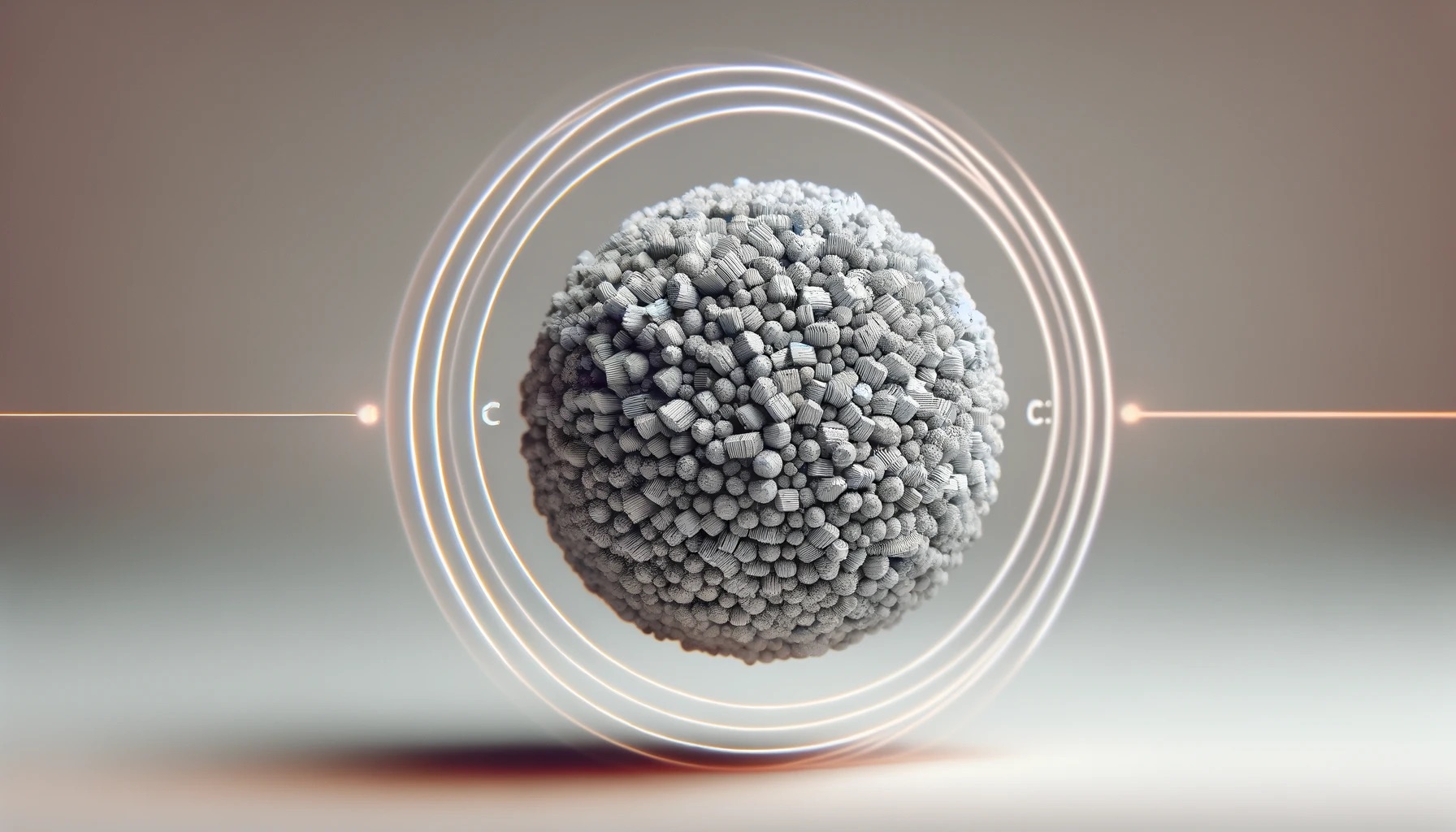
Liu, C., Ju, W., Wang, Y., Dong, S., Li, X., Fan, X., & Wang, S. (2024). Magnetic field-assisted adsorption of phosphate on biocharBiochar is a carbon-rich material created from biomass decomposition in low-oxygen conditions. It has important applications in environmental remediation, soil improvement, agriculture, carbon sequestration, energy storage, and sustainable materials, promoting efficiency and reducing waste in various contexts while addressing climate change challenges. More loading amorphous Zr–Ce (carbonate) oxide composite. Environmental Research, 252(4), 119058. https://doi.org/10.1016/j.envres.2024.119058
In the latest issue of Environmental Research, a study introduces an innovative biochar material infused with amorphous zirconium-cerium (Zr–Ce) carbonate oxides, demonstrating enhanced phosphate adsorption capabilities. The composite, termed BZCCO-13, shows significant promise in environmental remediation, particularly in phosphate recovery from wastewater.
The researchers synthesized BZCCO-13 by loading biochar with Zr–Ce (carbonate) oxides, then tested its phosphate adsorption performance under various magnetic field conditions. They found that applying a magnetic field beside the adsorbent significantly improved its efficiency. The maximum adsorption capacity of BZCCO-13 reached 123.67 mg of phosphate per gram, a 14% increase compared to conditions without a magnetic field. Additionally, the adsorption process under the magnetic field was much faster, achieving 90% of the maximum capacity in 83% less time.
The study identified key mechanisms behind these enhancements. Under the magnetic field, the “magnetophoresis” effect of cerium ions (Ce3+) played a crucial role, along with increased surface roughness, larger pore sizes, and the presence of oxygen vacancies. These factors collectively improved mass transfer and adsorption efficiency through electrostatic attraction and carbonate-dominated ligand exchange.
The composite showed a wide pHpH is a measure of how acidic or alkaline a substance is. A pH of 7 is neutral, while lower pH values indicate acidity and higher values indicate alkalinity. Biochars are normally alkaline and can influence soil pH, often increasing it, which can be beneficial More application range (5.0 to 10.0) and high selectivity and reusability, making it a viable option for phosphate recovery. This research provides a novel strategy for designing effective phosphate adsorbents and highlights the potential of rare earth metal-based adsorbents in combination with magnetic fields for environmental applications.


![Eucalyptus Wood Waste-Derived Biochar Achieves a Ninety-Eight Percent Removal Efficiency for Benzo[ghi]perylene in Vehicle-Wash Wastewater](https://biochartoday.com/wp-content/uploads/2026/10/SCIENCE-BLOGS-2026-2026-10-19T160523.703.jpg)

Leave a Reply