
Key Takeaways
- Researchers successfully transformed waste from the Java-olive tree into a powerful, high-performance material that can clean water and store energy.
- The newly created activated carbonActivated carbon is a form of carbon that has been processed to create a vast network of tiny pores, increasing its surface area significantly. This extensive surface area makes activated carbon exceptionally effective at trapping and holding impurities, like a molecular sponge. It is commonly More features a massive internal surface area, allowing it to trap large amounts of pollutants like dyes and heavy metals.
- Adding this carbon material to biodegradable plastics makes them much stronger and more durable for use in car parts and construction.
- The process uses natural fibers and heat, offering an eco-friendly alternative to synthetic materials that often harm the environment.
- This breakthrough turns agricultural waste into a valuable resource, supporting the global move toward sustainable and green engineering.
A recent study published in the journal Results in Chemistry by Srinivasa Rao Pedada, R.S.S. Srikanth Vemuri, Ch. V. Kameswara Rao, Srinivas Rao, Golagani Karri Lavanya, Manoj Kumar Regulagadda, and Anitha Kumari Mosya explores the impressive potential of Sterculia foetida, commonly known as the Java-olive, as a source for high-performance activated carbon. The researchers focused on the valorization of agricultural waste, specifically the fruit shell fibers, to create multifunctional carbon materials. By subjecting these fibers to controlled heating and chemical treatment, the team produced a material that excels in structural, thermal, and mechanical performance. This work is particularly relevant to the growing demand for sustainable alternatives to synthetic materials in industries like aerospace, automotive manufacturing, and environmental remediation. The findings underscore how nature-derived waste can be re-engineered into sophisticated tools for modern technology.
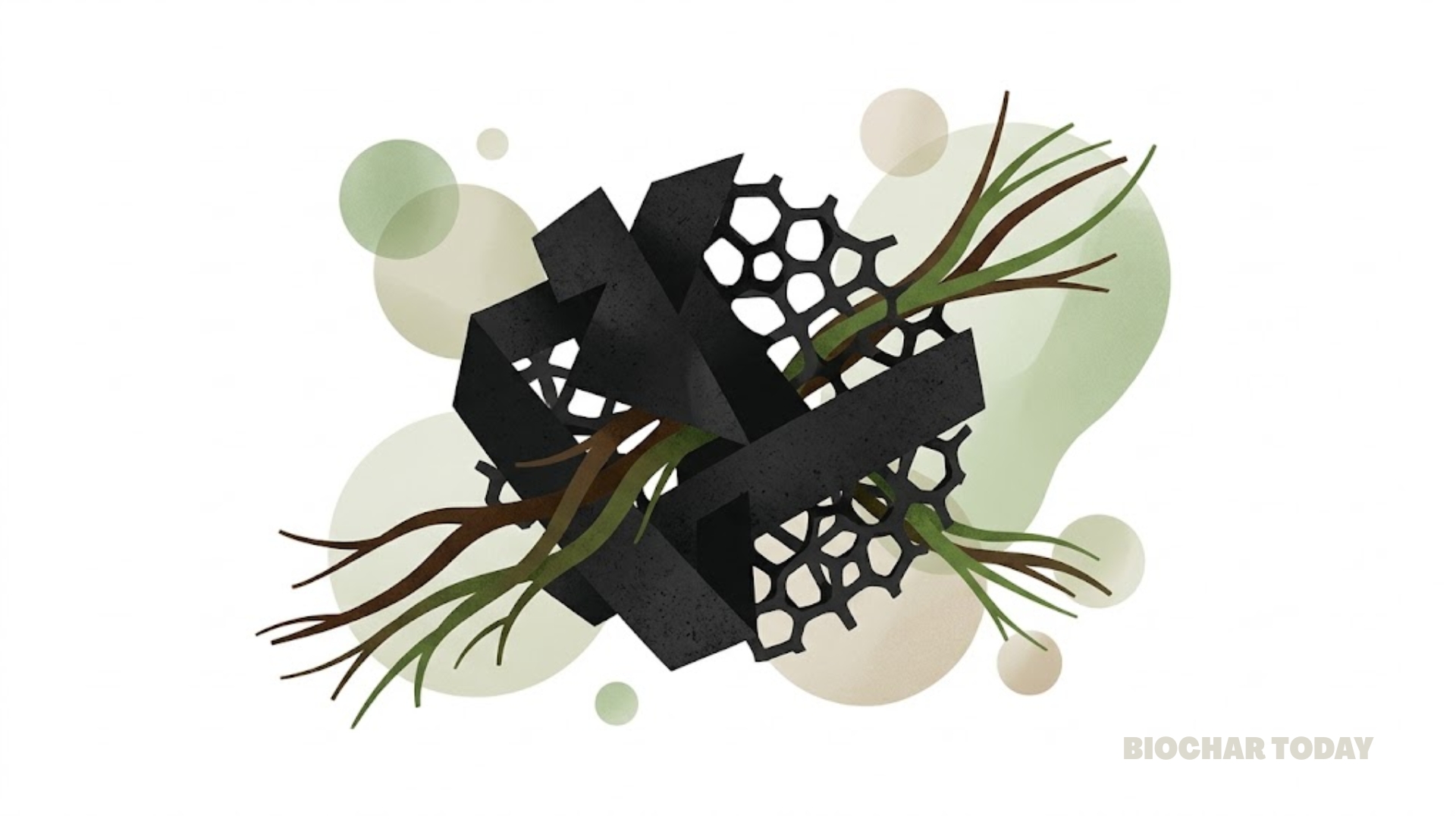
The most striking result of this research is the massive internal surface area achieved by the activated carbon. At an optimal processing temperature of 600 degrees Celsius, the material reached a specific surface area of 2594 square meters per gram. To visualize this, a single gram of this refined waste material has enough internal surface area to cover nearly half a football field. This extreme porosityPorosity of biochar is a key factor in its effectiveness as a soil amendment and its ability to retain water and nutrients. Biochar’s porosity is influenced by feedstock type and pyrolysis temperature, and it plays a crucial role in microbial activity and overall soil health. Biochar More is critical for its effectiveness because it provides a vast number of sites where pollutants can be trapped. The study confirmed that this hierarchical pore structure, consisting of both tiny micropores and slightly larger mesopores, significantly enhances the material’s ability to adsorb dyes and heavy metals from wastewater. This makes the Java-olive carbon a promising candidate for high-efficiency water purification systems.
In addition to its cleaning capabilities, the study found that this activated carbon is an exceptional reinforcing agent for composite materials. When integrated into an epoxy resin, the activated carbon particulates dramatically improved the mechanical properties of the resulting composite. Specifically, the researchers observed that a composite containing only ten percent activated carbon reached a peak tensile strength of 871.54 megapascals. This is a massive improvement over the strength of the base resin alone. The formation of hard ceramic-like particles during the carbonization process, such as silicon and zinc carbides, contributes to this increased toughness. These results suggest that Java-olive waste can be used to create lightweight yet incredibly strong materials for car interior panels, dashboards, and construction boards.
The thermal analysis of the Java-olive fibers and the resulting carbon also provided significant insights into their durability. The raw fibers showed stability up to approximately 250 to 300 degrees Celsius, which is sufficient for many industrial manufacturing processes. However, once converted into activated carbon, the material demonstrated even higher thermal resistance. The researchers noted that as the carbonization temperature increased, the structural ordering of the carbon atoms improved, moving from a disordered amorphous state toward a more organized, stable framework. This structural evolution is important because it ensures the material can withstand the heat generated in applications like energy storage devices or protective air filters without breaking down. The presence of oxygen-containing functional groups on the surface also helps the carbon interact better with other materials in a mixture.
Morphological examinations using advanced microscopy further detailed the physical transformation of the Java-olive waste. While the raw fruit shell surface appeared dense and flat with no visible holes, the activated version was covered in a complex network of regular pores. The researchers found that the activation process with phosphoric acid effectively carved out these cavities by removing volatile substances. Interestingly, the particle size of the material shrank significantly during this transformation. The raw fiber particles averaged about 2.5 microns in size, but the activated carbon particles were reduced to just 97 nanometers. This transition into the nanoscale range is a key factor in why the material performs so well as a reinforcement, as smaller particles can fill tiny gaps within a composite and prevent structural weaknesses.
Ultimately, this research provides a comprehensive map for turning a common tropical waste product into a high-value industrial asset. The authors conclude that Java-olive fibers are not just a sustainable alternative to synthetic fibers but are in many ways superior when processed correctly. The high fixed carbon percentage, which increased from roughly nineteen percent to nearly ninety-five percent after activation, highlights the efficiency of the conversion process. While challenges remain in scaling up the fiber extraction process to an industrial level, the scientific proof of its viability is clear. By utilizing renewable biomassBiomass is a complex biological organic or non-organic solid product derived from living or recently living organism and available naturally. Various types of wastes such as animal manure, waste paper, sludge and many industrial wastes are also treated as biomass because like natural biomass these More that would otherwise be discarded, this study contributes to a circular economy where waste becomes the foundation for the next generation of green, high-strength, and environmentally friendly materials.
Source: Pedada, S. R., Vemuri, R. S. S. S., Rao, C. V. K., Rao, S., Lavanya, G. K., Regulagadda, M. K., & Mosya, A. K. (2026). Morphological, chemical, thermal, and mechanical characteristics of Sterculia Foetida (Java-olive) fiber activated carbon for sustainable applications in biodegradable materials. Results in Chemistry, 13, 103332.

![Eucalyptus Wood Waste-Derived Biochar Achieves a Ninety-Eight Percent Removal Efficiency for Benzo[ghi]perylene in Vehicle-Wash Wastewater](https://biochartoday.com/wp-content/uploads/2026/10/SCIENCE-BLOGS-2026-2026-10-19T160523.703.jpg)


Leave a Reply