
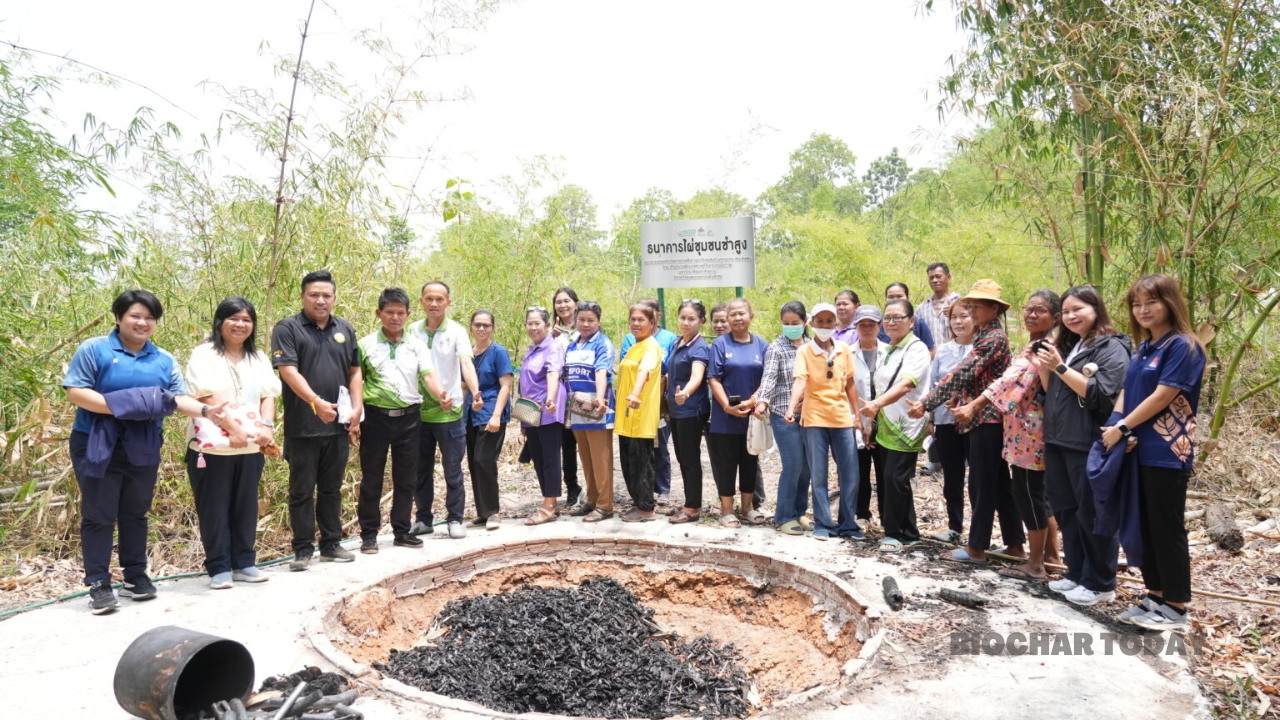
Researchers from the Faculty of Science at Khon Kaen University in Thailand have introduced an integrated agricultural technology to the Sam Sung district, combining biocharBiochar is a carbon-rich material created from biomass decomposition in low-oxygen conditions. It has important applications in environmental remediation, soil improvement, agriculture, carbon sequestration, energy storage, and sustainable materials, promoting efficiency and reducing waste in various contexts while addressing climate change challenges. More production with specialized microbial cultures. In collaboration with the Ministry of Higher Education, Science, Research and Innovation, the university conducted a specialized workshop for thirty-eight farmers representing five local agricultural networks. The program focused on upgrading traditional bamboo charcoalCharcoal is a black, brittle, and porous material produced by heating wood or other organic substances in a low-oxygen environment. It is primarily used as a fuel source for cooking and heating. More production into a “microbe-infused biochar” capable of improving soil structure and suppressing plant pathogens. This initiative represents a strategic effort to transition local agricultural practices toward more sustainable, bio-based solutions that utilize local resources.
The primary challenge addressed by the Khon Kaen University team is the degradation of agricultural land in the region, specifically issues related to soil hardening and increased salinity. These conditions are the direct result of prolonged and intensive chemical fertilizer use, which has stripped the soil of its natural organic matter and disrupted the local ecosystem. For the farmers of the Sam Sung Sustainable Agriculture Community Enterprise, these soil quality issues have led to diminished crop yields and a reliance on expensive synthetic inputs, creating an unsustainable cycle that threatens both their livelihoods and the environment.
The solution implemented by the university involves a dual-action approach: the use of high-quality biochar as a substrate and the introduction of beneficial microorganisms. By leveraging the community’s existing high-heat pyrolysisPyrolysis is a thermochemical process that converts waste biomass into bio-char, bio-oil, and pyro-gas. It offers significant advantages in waste valorization, turning low-value materials into economically valuable resources. Its versatility allows for tailored products based on operational conditions, presenting itself as a cost-effective and efficient More kilns, the researchers demonstrated how to transform bamboo into a highly porous carbon material. This biochar is then infused with laboratory-cultured microbes, specifically Trichoderma. This “hero microbe” acts as a biological control agent against root rot while producing auxin, a hormone that stimulates root development. This symbiotic relationship allows the biochar to serve as a protected habitat for the microbes, ensuring their survival and effectiveness in the soil.
The outcomes of this project include a measurable shift toward organic-led farming and the creation of a premium, value-added agricultural product. Farmers are now equipped with the technical knowledge to multiply microbial cultures using low-cost molasses solutions, significantly reducing their dependence on chemical fertilizers. By integrating these biological agents into the biochar, the community can effectively restore soil porosityPorosity of biochar is a key factor in its effectiveness as a soil amendment and its ability to retain water and nutrients. Biochar’s porosity is influenced by feedstock type and pyrolysis temperature, and it plays a crucial role in microbial activity and overall soil health. Biochar More, increase water retention, and sequester carbon. This transfer of green technology not only improves local food security and soil resilience but also establishes a scalable model for circular agricultural economies within the region.




Leave a Reply