
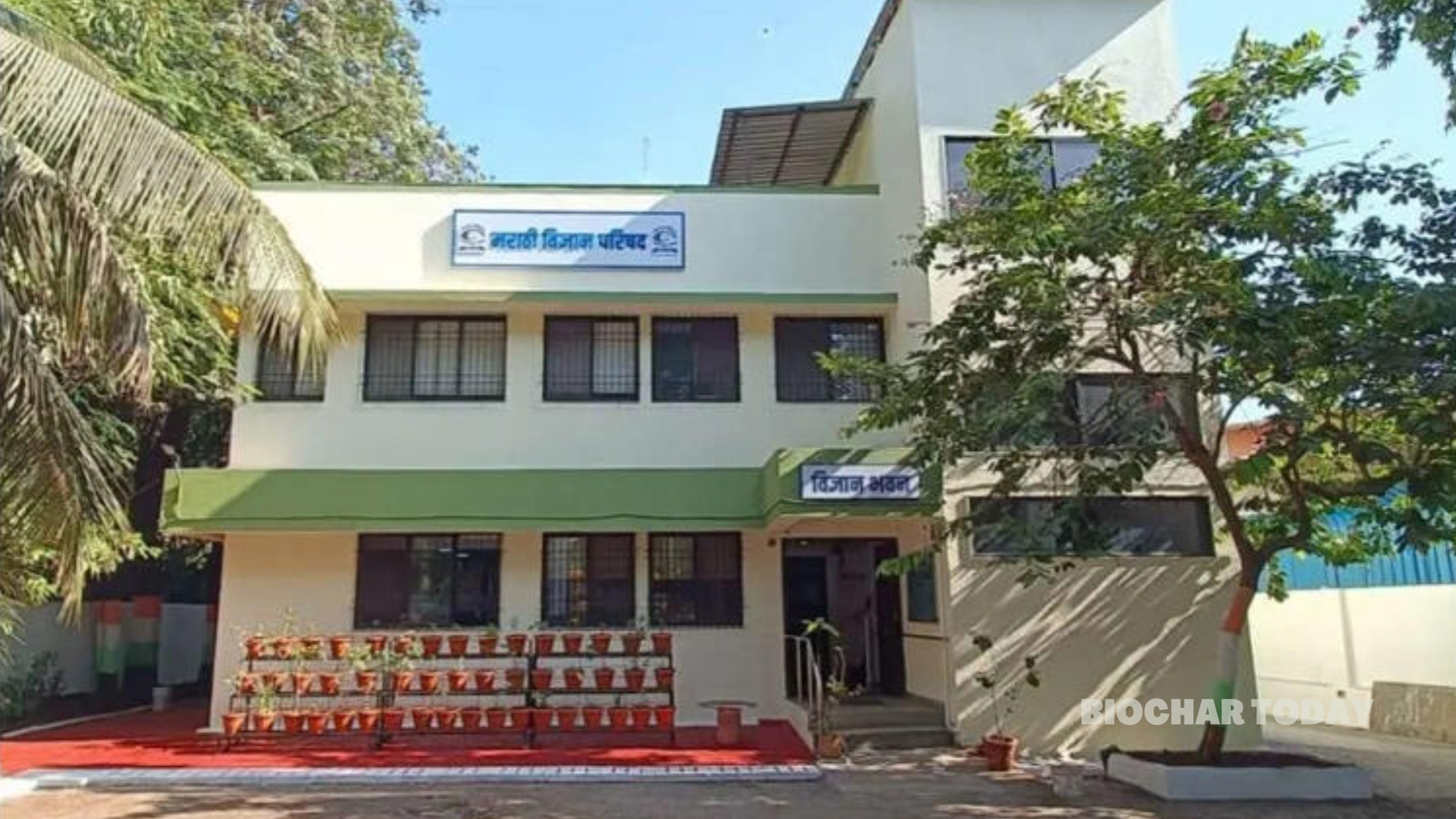
The regional science communication organization Marathi Vidnyan Parishad (MVP) in India completed 60 years of operation, highlighting an institutional transition from textbook theory to applied rural sustainability. Founded in 1966 by R V Sathe and M N Gogate, the Mumbai-headquartered group operates through a network of nearly 70 branches to promote scientific literacy and resource conservation across the state of Maharashtra. As part of its modern “science for society” mandates, the organization has actively facilitated the translation of local laboratory breakthroughs into practical field applications. A prominent example includes the widespread regional dissemination of agricultural biocharBiochar is a carbon-rich material created from biomass decomposition in low-oxygen conditions. It has important applications in environmental remediation, soil improvement, agriculture, carbon sequestration, energy storage, and sustainable materials, promoting efficiency and reducing waste in various contexts while addressing climate change challenges. More production strategies derived directly from recent regional institutional trials.
The primary systemic hurdle addressed by this outreach model is the traditional isolation of advanced agronomic discoveries within elite academic journals, which restricts field-level implementation. In many agricultural regions of India, smallholder farmers face severe soil degradation, volatile crop yields, and high input costs, yet they lack direct exposure to scientific validation or optimized processing methodologies. Meanwhile, valuable research demonstrating the capability of farm residue materials to mitigate these exact resource deficits remains locked in university archives. This clear communication gap prevents rural agricultural networks from successfully adopting sustainable soil amendments or transforming post-harvest crop waste into productive assets.
To resolve these distribution bottlenecks, the MVP established an advocacy and science translation pipeline to deliver empirical research directly to rural farming operations. When institutional research conducted by investigator Dr. Rohan Oak demonstrated that localized biochar applications could optimize crop development, the organization utilized its branch infrastructure to bypass conventional academic silos. The network translated complex technical metrics into accessible operational guides and structured regional field workshops. This systematic strategy focused heavily on educating local farming groups on how to execute controlled thermal conversion using their existing post-harvest farm residue.
The execution of this science communication initiative produced significant economic and agronomic outcomes for regional soybean growers in Masur village within the Karad region of Satara. By translating Dr. Oak’s scientific findings into practical farming methods, local cultivator groups successfully adopted targeted biochar applications, which resulted in a 25 percent increase in soybean yields. Furthermore, this processing model enabled rural communities to convert problematic post-harvest agricultural residues into value-added soil amendments, lowering open-field burning hazards. By validating and standardizing decentralized manufacturing, the organization’s long-term framework demonstrates how structured public science education can directly improve crop yields and promote regional environmental resilience.


![Eucalyptus Wood Waste-Derived Biochar Achieves a Ninety-Eight Percent Removal Efficiency for Benzo[ghi]perylene in Vehicle-Wash Wastewater](https://biochartoday.com/wp-content/uploads/2026/10/SCIENCE-BLOGS-2026-2026-10-19T160523.703.jpg)

Leave a Reply