
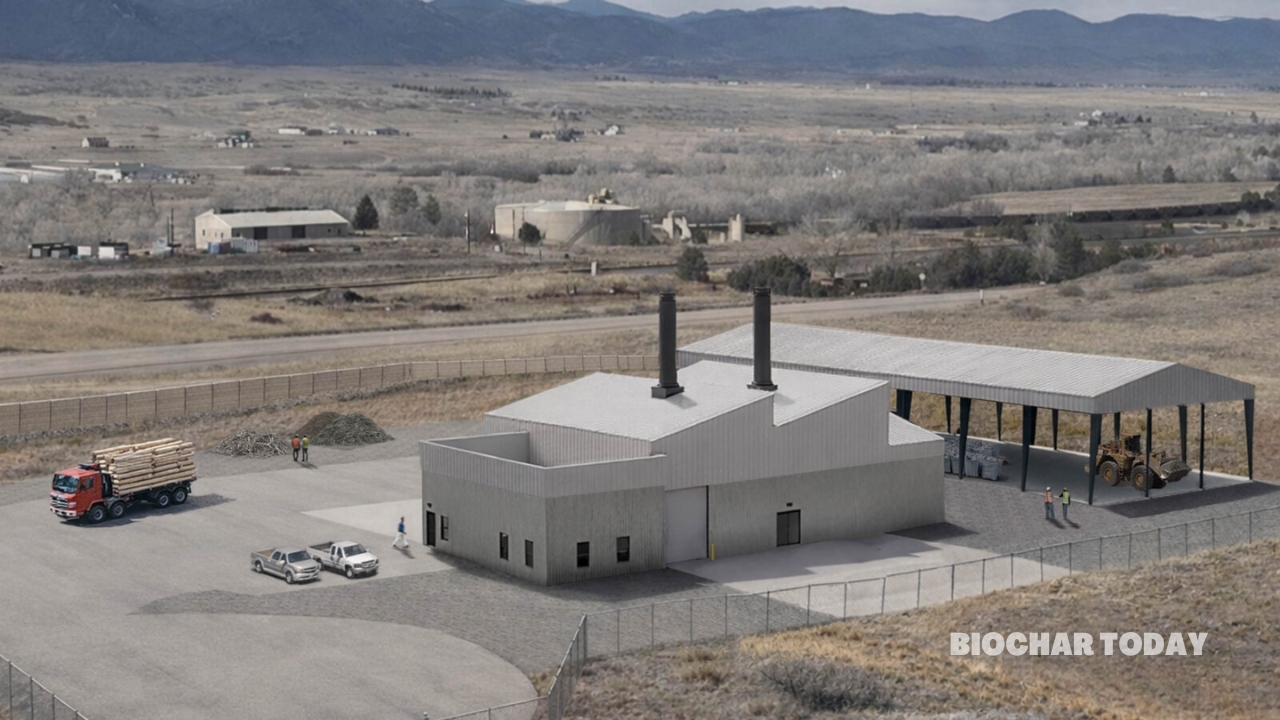
The Board of Douglas County Commissioners in Colorado, United States, has unanimously approved a $7.88 million construction contract with Bauen Studios to develop a centralized biocharBiochar is a carbon-rich material created from biomass decomposition in low-oxygen conditions. It has important applications in environmental remediation, soil improvement, agriculture, carbon sequestration, energy storage, and sustainable materials, promoting efficiency and reducing waste in various contexts while addressing climate change challenges. More and recycling facility. This project, situated in Sedalia, represents the first county-led biochar initiative of its kind in the nation. By integrating biochar production with a broader waste management framework dubbed “GreenWorks,” the county intends to streamline hazardous waste disposal and recycling services while simultaneously addressing critical forestry management needs. The facility is expected to begin processing feedstockFeedstock refers to the raw organic material used to produce biochar. This can include a wide range of materials, such as wood chips, agricultural residues, and animal manure. More by September 2026, with full biochar production scheduled to commence in January 2027.
A significant challenge prompting this investment is the logistical and financial burden associated with wildfire mitigation. Douglas County currently generates substantial volumes of woody debris, or “slash,” from forest thinning and fire prevention activities. Historically, hauling this dead timber to distant disposal sites has proven prohibitively expensive, limiting the scope of mitigation efforts. Furthermore, the county has identified a need for more accessible recycling options for electronics and household hazardous waste, as residents previously faced long travel distances and annual caps on disposal volumes, leading to inefficient waste management and potential environmental liabilities.
To address these issues, the county is deploying a localized solution centered on pyrolysisPyrolysis is a thermochemical process that converts waste biomass into bio-char, bio-oil, and pyro-gas. It offers significant advantages in waste valorization, turning low-value materials into economically valuable resources. Its versatility allows for tailored products based on operational conditions, presenting itself as a cost-effective and efficient More technology. The new facility will house two biochar production units designed to convert low-value forest residues into high-value biocarbon products. This infrastructure allows the county to process slash on-site, significantly reducing transportation costs and emissions. The site will also serve as a comprehensive “GreenWorks” hub, expanding green waste operations from 30 days a year to approximately 300 days. This centralized approach transforms the liability of wildfire-prone timber into a multipurpose asset used for soil enhancement, water conservation, and pollutant filtration.
The projected outcomes for Douglas County include substantial environmental and fiscal benefits. Operationally, the facility is expected to save taxpayers over $420,000 annually in hauling and disposal costs. Financially, the county anticipates full capital recovery in under a decade, with biochar sales projected to generate $1.9 million per year once the second production unit is operational in 2029. Environmentally, the project will reduce wildfire risk across more acreage by providing an affordable outlet for slash. Additionally, the localized recycling model is estimated to eliminate over 400,000 miles of annual resident travel, further decreasing the community’s carbon footprint while fostering a circular economy.


Leave a Reply