
Key Takeaways
- Transforming farm waste into stable carbon provides a clean alternative to landfills and open burning.
- Tree and palm branch residues produce significantly more carbon material than soft leaf and vegetable waste.
- Specialized woody carbon develops an extremely porous structure that is ideal for locking away pollutants and cleaning water.
- Green farm waste creates a material that is highly enriched with nutrients, making it excellent for revitalizing desert soils.
- All tested agricultural waste materials are completely safe and free from toxic heavy metal contamination.
The scientific investigation, recently published in the journal Scientific Reports, was led by researchers Rashad Al-Gaashani, Omar Shahid, Ojima Z. Wada, Simjo Simson, Tricia A. Gomez, Mujaheed Pasha, Omar El Hassan, Abdulaziz Suwailem, Kashif Rasool, Gordon McKay, Tareq Al-Ansari, and Khaled A. Mahmoud. The research team explored how managing local farm residues through controlled thermochemical conversion can address municipal waste challenges while supporting regional infrastructure. Qatar currently generates more than two million tons of agricultural waste every single year, but less than twenty percent of this material is recycled or repurposed. The rest is commonly sent to landfills or subjected to open burning, which contributes to greenhouse gas emissions and environmental degradation. By subjecting this waste to slow pyrolysisPyrolysis is a thermochemical process that converts waste biomass into bio-char, bio-oil, and pyro-gas. It offers significant advantages in waste valorization, turning low-value materials into economically valuable resources. Its versatility allows for tailored products based on operational conditions, presenting itself as a cost-effective and efficient More under varying temperatures and processing times, the researchers established a reliable, data-driven roadmap to convert these troublesome residues into stable, value-added assets for arid regions.
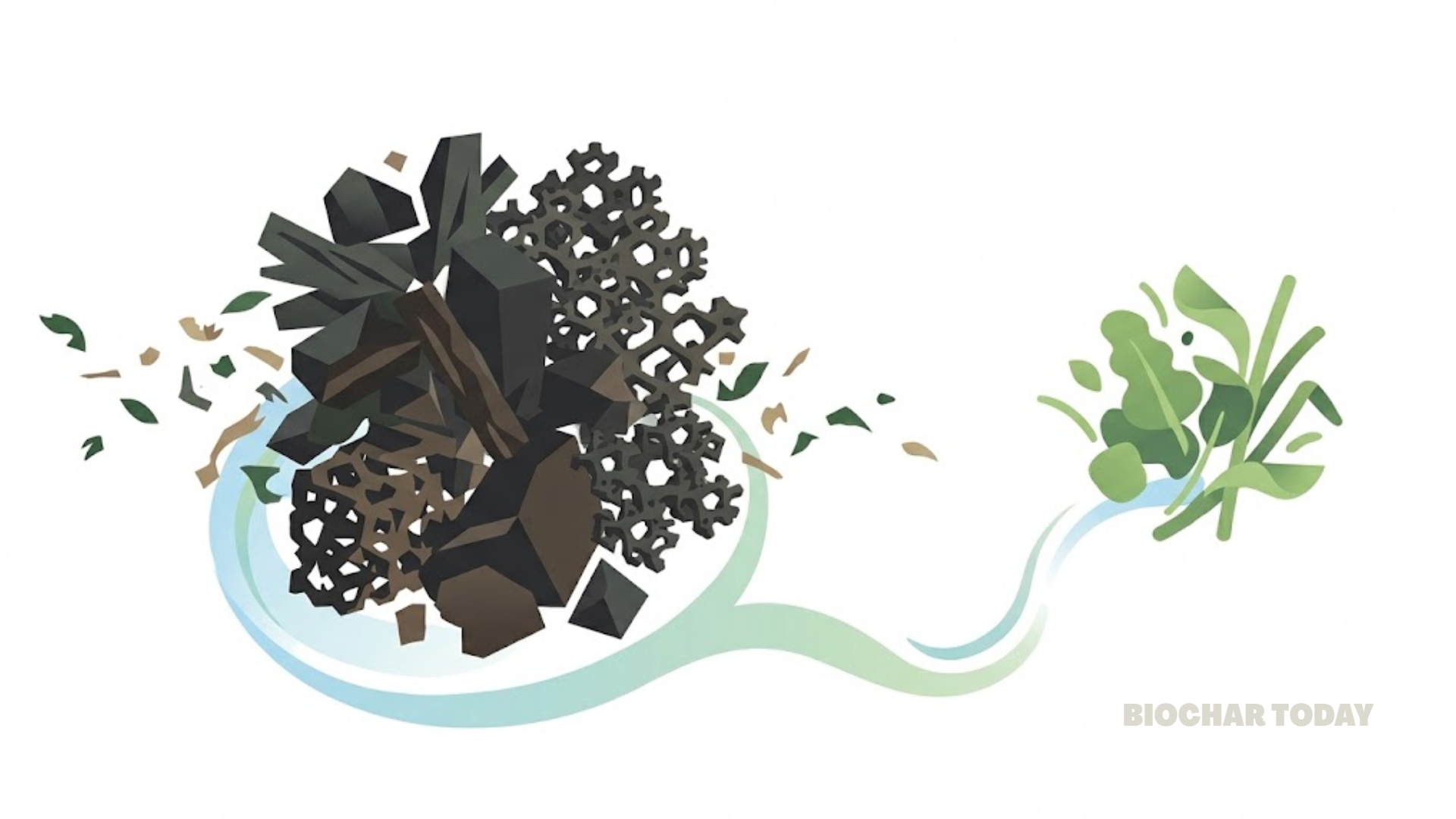
The findings reveal a fundamental divergence in how different types of agricultural waste break down and evolve during thermal treatment. The researchers categorized the local farm waste into two distinct composite groups: woody agricultural waste, which included dense lignocellulosic materials like date palm fronds and Sidra tree branches, and green agricultural waste, which consisted of soft biomassBiomass is a complex biological organic or non-organic solid product derived from living or recently living organism and available naturally. Various types of wastes such as animal manure, waste paper, sludge and many industrial wastes are also treated as biomass because like natural biomass these More like leaves, stems, and discarded vegetables. When processed at lower thermal severity, the woody biomass demonstrated superior solid productivity, achieving its peak material yield of over seventy-one percent. Under identical low-temperature conditions, the soft green farm waste reached a peak yield of only sixty percent. This difference highlights the superior carbonization efficiency of woody feedstocks, which inherently contain a higher proportion of thermally stable components that resist structural breakdown.
As processing temperatures were increased to maximum thermal severity, the woody residues underwent exceptional structural development. The woody material developed a highly advanced, porous framework that reached a specific surface area about three times higher than that of the green waste. This extensive network of microscopic pores makes the woody material ideal for demanding environmental infrastructure applications, such as the adsorption-based treatment of brackish water and industrial wastewater. Conversely, the soft green waste followed an entirely different evolutionary pathway, transforming into a nutrient-active medium. Instead of developing a high surface area, the green waste concentrated high levels of essential plant nutrients like potassium and calcium into stable mineral phases. This chemical composition makes the green-derived material highly effective as a slow-release fertilizer and soil conditioner to improve nutrient retention in desert farming.
A critical finding from the multi-scale characterization suite is the exceptional safety profile of the final materials. Comprehensive elemental screening for over thirty target metals confirmed that all produced samples were completely free from hazardous heavy metals. Dangerous elements of major public health concern, including arsenic, cadmium, chromium, lead, and mercury, all fell safely below analytical detection thresholds. Radioactive elements like uranium and thorium were also entirely absent. This clean baseline ensures that utilizing these recycled agricultural materials poses no risk of introducing harmful contaminants into regional soil or water networks. While the preliminary economic evaluation indicates that laboratory-scale operations carry high energy demands, the proven environmental benefits establish a clear path forward for scaling this technology into full-scale commercial waste management systems.
Source: Al-Gaashani, R., Shahid, O., Wada, O. Z., Simson, S., Gomez, T. A., Pasha, M., El Hassan, O., Suwailem, A., Rasool, K., McKay, G., Al-Ansari, T., & Mahmoud, K. A. (2026). Productivity evaluation, multi-scale characterisation, and safety assessment of biocharBiochar is a carbon-rich material created from biomass decomposition in low-oxygen conditions. It has important applications in environmental remediation, soil improvement, agriculture, carbon sequestration, energy storage, and sustainable materials, promoting efficiency and reducing waste in various contexts while addressing climate change challenges. More derived from green and woody agricultural biomass in Qatar. Scientific Reports.




Leave a Reply