
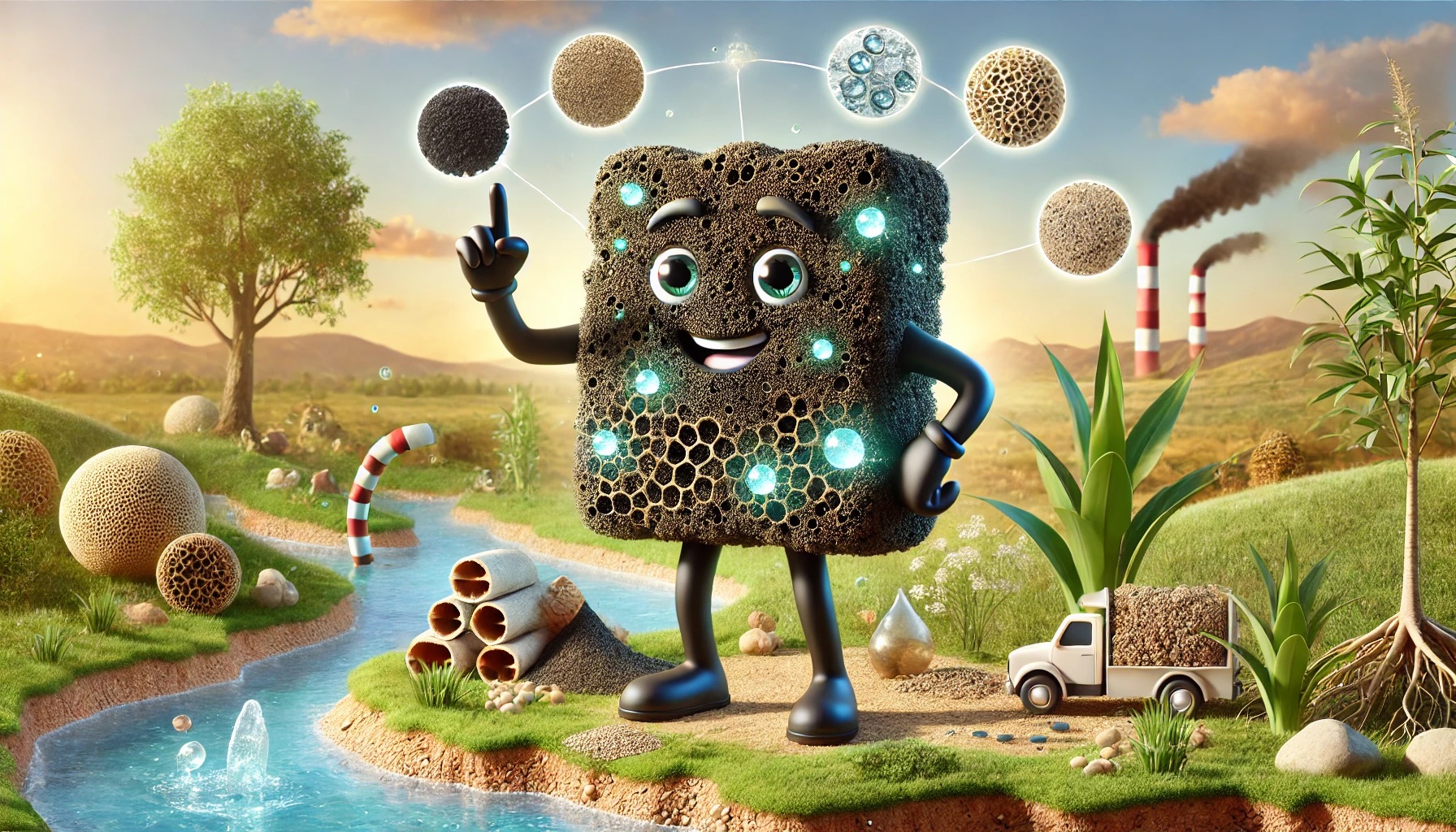
Nostratabad, et al (2024) Exploring Nanomaterial-modified BiocharBiochar is a carbon-rich material created from biomass decomposition in low-oxygen conditions. It has important applications in environmental remediation, soil improvement, agriculture, carbon sequestration, energy storage, and sustainable materials, promoting efficiency and reducing waste in various contexts while addressing climate change challenges. More for Environmental Remediation Applications. Heliyon. https://doi.org/10.1016/j.heliyon.2024.e37123
Environmental pollution, especially from heavy metals and toxic substances, is a growing concern worldwide. Traditional remediation methods often face challenges such as high costs and limited effectiveness. Biochar, a carbon-rich material derived from the pyrolysisPyrolysis is a thermochemical process that converts waste biomass into bio-char, bio-oil, and pyro-gas. It offers significant advantages in waste valorization, turning low-value materials into economically valuable resources. Its versatility allows for tailored products based on operational conditions, presenting itself as a cost-effective and efficient More of organic matter, has gained attention for its potential in environmental cleanup. However, in its unmodified form, biochar’s capabilities are constrained by its low adsorption capacity and limited pHpH is a measure of how acidic or alkaline a substance is. A pH of 7 is neutral, while lower pH values indicate acidity and higher values indicate alkalinity. Biochars are normally alkaline and can influence soil pH, often increasing it, which can be beneficial More adaptability.
Recent advancements have focused on enhancing biochar’s properties through the incorporation of nanomaterials. This innovative approach has shown significant promise in improving the material’s ability to adsorb and remove contaminants from soil, water, and air. Nanomaterial-modified biochar, particularly those infused with metal nanoparticles, has demonstrated enhanced effectiveness in targeting a broad range of pollutants, including heavy metals and organic contaminants.
The process of creating these advanced biochars involves modifying either the original biomassBiomass is a complex biological organic or non-organic solid product derived from living or recently living organism and available naturally. Various types of wastes such as animal manure, waste paper, sludge and many industrial wastes are also treated as biomass because like natural biomass these More before pyrolysis or the biochar post-production, using various techniques such as coprecipitation, impregnation with metal salts, or activation with chemical agents. These modifications increase the surface area, introduce new functional groups, and enhance the biochar’s overall reactivity.
This emerging field holds considerable potential for large-scale environmental applications, offering a sustainable and cost-effective solution to pollution. However, further research is necessary to optimize these materials and fully understand their interactions with different contaminants, ensuring their safe and effective use in diverse environmental settings.


Leave a Reply