
Key Takeaways
- BiocharBiochar is a carbon-rich material created from biomass decomposition in low-oxygen conditions. It has important applications in environmental remediation, soil improvement, agriculture, carbon sequestration, energy storage, and sustainable materials, promoting efficiency and reducing waste in various contexts while addressing climate change challenges. More helps reduce harmful greenhouse gas emissions in dry upland farming areas by slowing down the activity of certain bacteria and fungi.
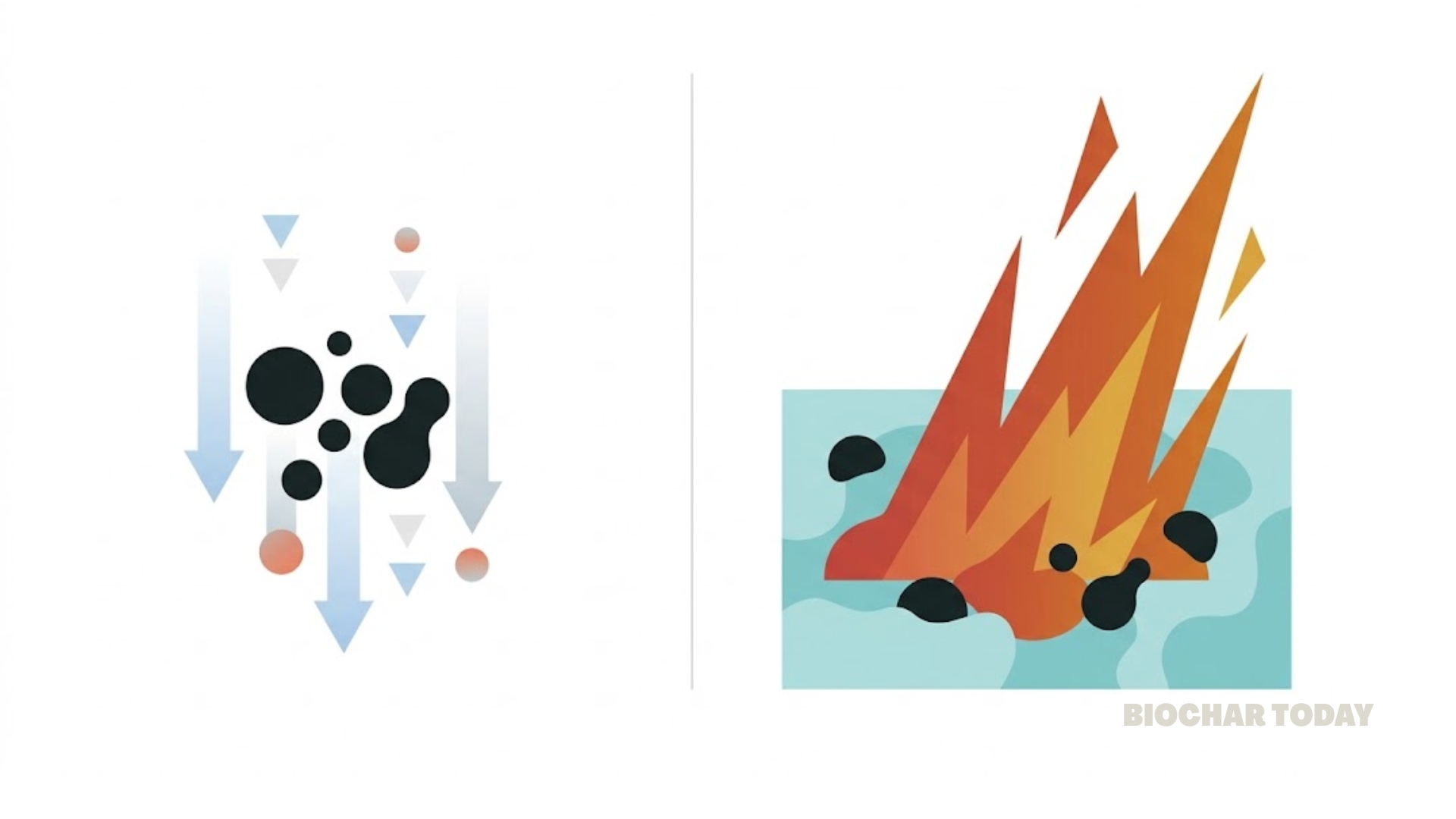
- In flooded rice fields, adding biochar surprisingly causes a massive increase in greenhouse gas production instead of helping the environment.
- The researchers found that the way biochar affects the soil depends entirely on whether the land is dry or underwater.
- These findings show that farmers need to be very careful and use specific strategies for different types of land when trying to use biochar to fight climate change.
The study, published in the journal Nitrogen Cycling by lead authors Cheng Chu and Ahmed S. Elrys, explored how maize straw biochar affects the release of nitrous oxide, a potent greenhouse gas, in two different agricultural environments. Nitrous oxide is particularly concerning because it has a global warming potential 265 times greater than carbon dioxide and significantly contributes to the depletion of the ozone layer. While previous research often suggested biochar as a universal solution for mitigating these emissions, this investigation reveals that its effectiveness is highly dependent on land-use types and water management.
In acidic upland soils, the researchers observed that biochar served as an effective mitigation tool. When applied at a 5% rate, biochar reduced cumulative nitrous oxide emissions by approximately 18% compared to the control. This reduction was notably more effective than using quicklime, a traditional soil amendmentA soil amendment is any material added to the soil to enhance its physical or chemical properties, improving its suitability for plant growth. Biochar is considered a soil amendment as it can improve soil structure, water retention, nutrient availability, and microbial activity. More. The study attributed this success to the way biochar interacts with soil microorganisms. Specifically, the biochar suppressed the activity of both bacteria and fungi that typically produce nitrous oxide during the denitrification process. A key finding was the reduction in the abundance of Chaetomium, a specific fungal genus known for its high production of this greenhouse gas. Additionally, biochar enhanced the expression of specific genes that help convert nitrous oxide into harmless nitrogen gas, effectively closing the loop on potential emissions.
The results in flooded paddy soils, however, presented a stark and paradoxical contrast. Instead of reducing emissions, biochar application led to a dramatic surge in nitrous oxide production. At the highest application rate of 5%, emissions were 14.4 times higher than those in the control group. Even a more modest 3% application rate caused a fivefold increase. Unlike the upland soil, where specific microbial pathways were suppressed, biochar in the flooded paddy soil stimulated every measured pathway of nitrous oxide production. The researchers believe this is due to the unique environment created by the thin layer of water over the soil, which facilitates high microbial activity and rapid nitrogen transformation when biochar is present.
The investigation also highlighted how biochar changes soil chemistry beyond just shifting the pHpH is a measure of how acidic or alkaline a substance is. A pH of 7 is neutral, while lower pH values indicate acidity and higher values indicate alkalinity. Biochars are normally alkaline and can influence soil pH, often increasing it, which can be beneficial More level. In upland soils, biochar increased the soil organic carbon and the carbon-to-nitrogen ratio, which helped limit the availability of substrates that microbes use to create nitrous oxide. In the flooded paddy fields, however, the existing high levels of carbon and nitrogen, combined with the alkaline nature of biochar, seemed to fuel a microbial surge. The study suggests that the “electron shuttle” function of biochar, which can sometimes help reduce emissions by facilitating the final step of denitrification, was overwhelmed in the paddy environment by the sheer volume of gas being produced through other pathways.
These findings carry significant implications for global agricultural management and climate mitigation strategies. They suggest that large-scale biochar application should not be implemented without a nuanced understanding of local soil conditions and water regimes. While biochar remains a promising tool for sustainable soil management in dryland agriculture, its use in flooded systems like rice paddies could inadvertently worsen greenhouse gas outputs. The researchers emphasize that future studies should focus on developing land-use-specific strategies to ensure that environmental amendments achieve their intended goals without causing secondary ecological issues.
Mechanistic insights gained from this research show that the contrasting responses in upland and flooded soils are driven by complex interactions between biochar, soil nutrients, and specific microbial communities. By partitioning the sources of nitrous oxide, the authors have provided a clearer picture of why these inconsistencies occur, laying the groundwork for more precise and effective agricultural practices.
Source: Chu, C., Elrys, A. S., Dai, S., Wen, T., Xu, J., Cai, Z., Zhang, J., Jansen-Willems, A. B., Kleineidam, K., & Müller, C. (2026). Biochar’s contrasting effects on N2O emissions in acidic upland and flooded paddy soils. Nitrogen Cycling, 2, e009.





Leave a Reply