
Sakib (2024) Innovative Food Waste Recycling Methods for Agricultural Sustainability. Academic Journal on Business Administration, Innovation and Sustainability. https://doi.org/10.69593/ajbais.v4i3.107
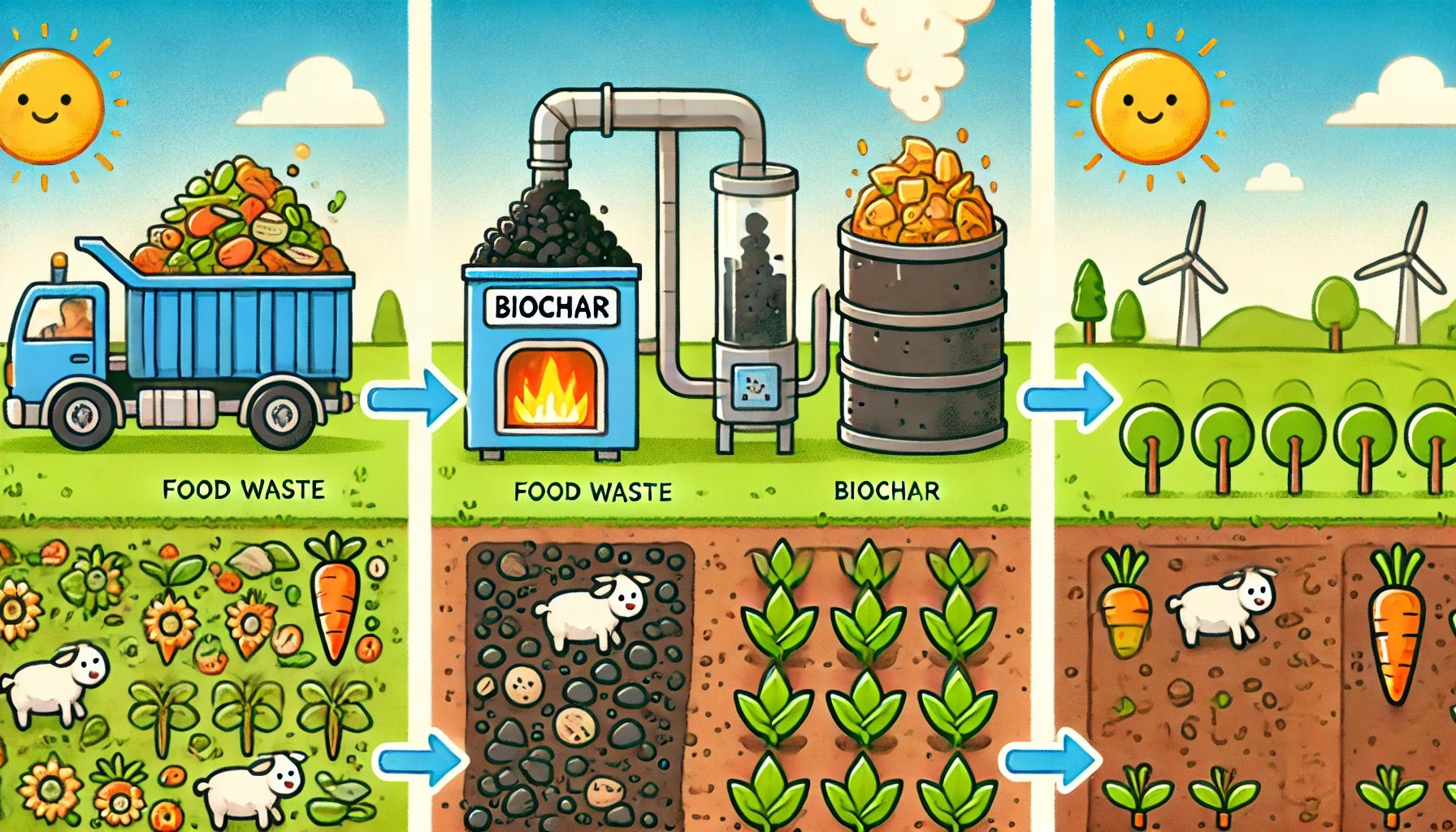
A recent systematic review highlights biocharBiochar is a carbon-rich material created from biomass decomposition in low-oxygen conditions. It has important applications in environmental remediation, soil improvement, agriculture, carbon sequestration, energy storage, and sustainable materials, promoting efficiency and reducing waste in various contexts while addressing climate change challenges. More production as a promising food waste recycling method with significant benefits for agricultural sustainability. Produced through pyrolysisPyrolysis is a thermochemical process that converts waste biomass into bio-char, bio-oil, and pyro-gas. It offers significant advantages in waste valorization, turning low-value materials into economically valuable resources. Its versatility allows for tailored products based on operational conditions, presenting itself as a cost-effective and efficient More, biochar is a stable form of carbon that can improve soil health while sequestering carbon, contributing to climate change mitigation. Its porous structure enhances soil aeration and water retention, making it particularly useful in regions prone to drought. Studies reviewed showed that biochar-treated soils exhibited up to a 40% increase in water-holding capacity, directly boosting crop resilience and productivity.
Biochar also helps in reducing the need for chemical fertilizers, as it retains nutrients, promoting healthier soil ecosystems. Additionally, biochar’s long-term carbon sequestration potential makes it a valuable tool for addressing global environmental challenges.
However, economic barriers prevent widespread adoption. The high cost of pyrolysis equipment and energy requirements make biochar production expensive, limiting its use primarily to larger agricultural operations. There is a need for cost-effective solutions and further research to improve accessibility, particularly for small-scale farmers.
Despite these challenges, biochar remains a key part of a sustainable agricultural future, offering both environmental and economic benefits. With advancements in technology and policy support, biochar could play a significant role in promoting a circular agricultural economy.





Leave a Reply