
Key Takeaways
- Converting sugarcane waste into fertilizer helps reduce air pollution caused by burning crop residues.
- This new organic fertilizer contains eight essential nutrients that help plants grow stronger and healthier.
- The material acts like a sponge, allowing soil to hold much more water for longer periods.
- Using this biochar-based product can help crops survive during dry weather without needing as much irrigation.
- This sustainable approach turns industrial waste into a valuable resource that improves soil health and protects the environment.
The Journal of Applied Biology and Biotechnology recently published a study by Aida Treesa Sojan and a team of researchers including Smitha John Kundukulam, T. Geetha, Shanthi Prabha Viswanathan, V. Thulasi, V. I. Beena, C. Santhosh, S. Anitha and P. S. Muhammed Abdullah investigating the transformation of sugarcane bagasse into a high-value soil amendmentA soil amendment is any material added to the soil to enhance its physical or chemical properties, improving its suitability for plant growth. Biochar is considered a soil amendment as it can improve soil structure, water retention, nutrient availability, and microbial activity. More. Sugarcane bagasse is an abundant agro-industrial byproduct, with India alone producing over 91 million tons annually. Traditionally, this material has been disposed of through incineration, a practice that contributes to severe air pollution, releases carbon monoxide, and degrades soil microbial diversity. The researchers sought a more sustainable alternative by converting this waste into a multi-nutrient-enriched biochar-based fertilizer designed specifically for the challenges of laterite soils.
The findings reveal that the resulting fertilizer is a highly effective tool for waste valorization and agricultural productivity. Through a process of low-temperature pyrolysisPyrolysis is a thermochemical process that converts waste biomass into bio-char, bio-oil, and pyro-gas. It offers significant advantages in waste valorization, turning low-value materials into economically valuable resources. Its versatility allows for tailored products based on operational conditions, presenting itself as a cost-effective and efficient More followed by nutrient impregnation, the raw bagasse was converted into a carbon-rich material with a highly developed porous structure. One of the most significant results was the dramatic improvement in the physical properties of the material compared to raw bagasse or standard biocharBiochar is a carbon-rich material created from biomass decomposition in low-oxygen conditions. It has important applications in environmental remediation, soil improvement, agriculture, carbon sequestration, energy storage, and sustainable materials, promoting efficiency and reducing waste in various contexts while addressing climate change challenges. More. The enriched biochar exhibited a porosityPorosity of biochar is a key factor in its effectiveness as a soil amendment and its ability to retain water and nutrients. Biochar’s porosity is influenced by feedstock type and pyrolysis temperature, and it plays a crucial role in microbial activity and overall soil health. Biochar More of 71.15%, which is a vital characteristic for improving soil aeration and providing sites for nutrient and water storage. This sieve-like appearance and diverse pore size facilitate the binding of multiple metal ions, ensuring that essential nutrients remain available to plants rather than leachingLeaching is the process where nutrients are dissolved and carried away from the soil by water. This can lead to nutrient depletion and environmental pollution. Biochar can help reduce leaching by improving nutrient retention in the soil. More away into the groundwater.
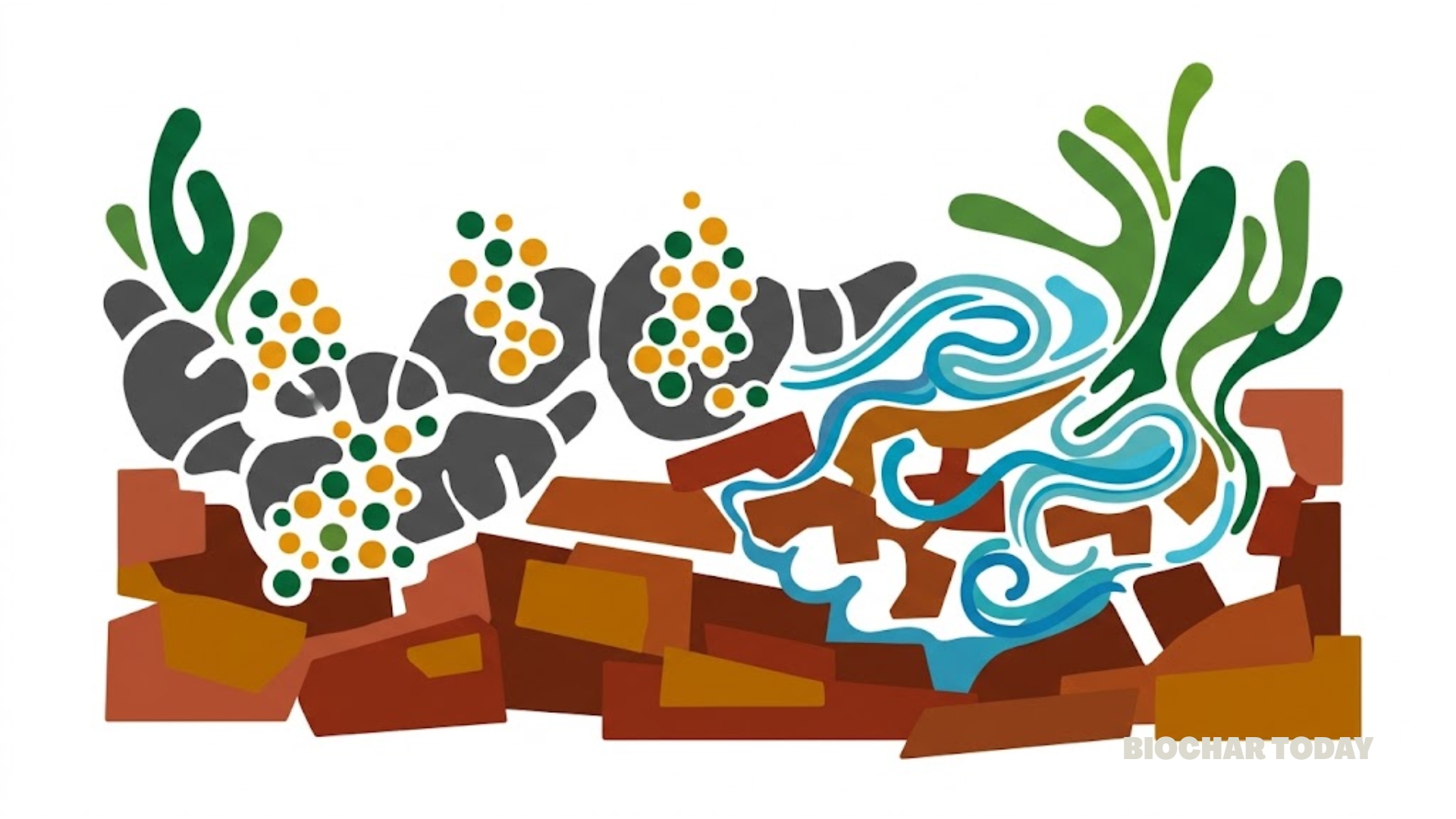
Water management is a critical focus of the study, and the quantitative results are particularly compelling for farmers in moisture-deficient regions. The enriched biochar demonstrated a water absorption capacity of 56.5% and an equilibrium water content of 95.8%. When applied to laterite soils, which are typically characterized by their acidic nature and poor moisture retention, the material consistently maintained higher water levels than untreated soil over a ten-day observation period. This ability to hold moisture is attributed to the internal microporosity of the biochar and the way fine particles occupy gaps between soil particles, effectively increasing the soil’s capacity to provide water essential for plant growth.
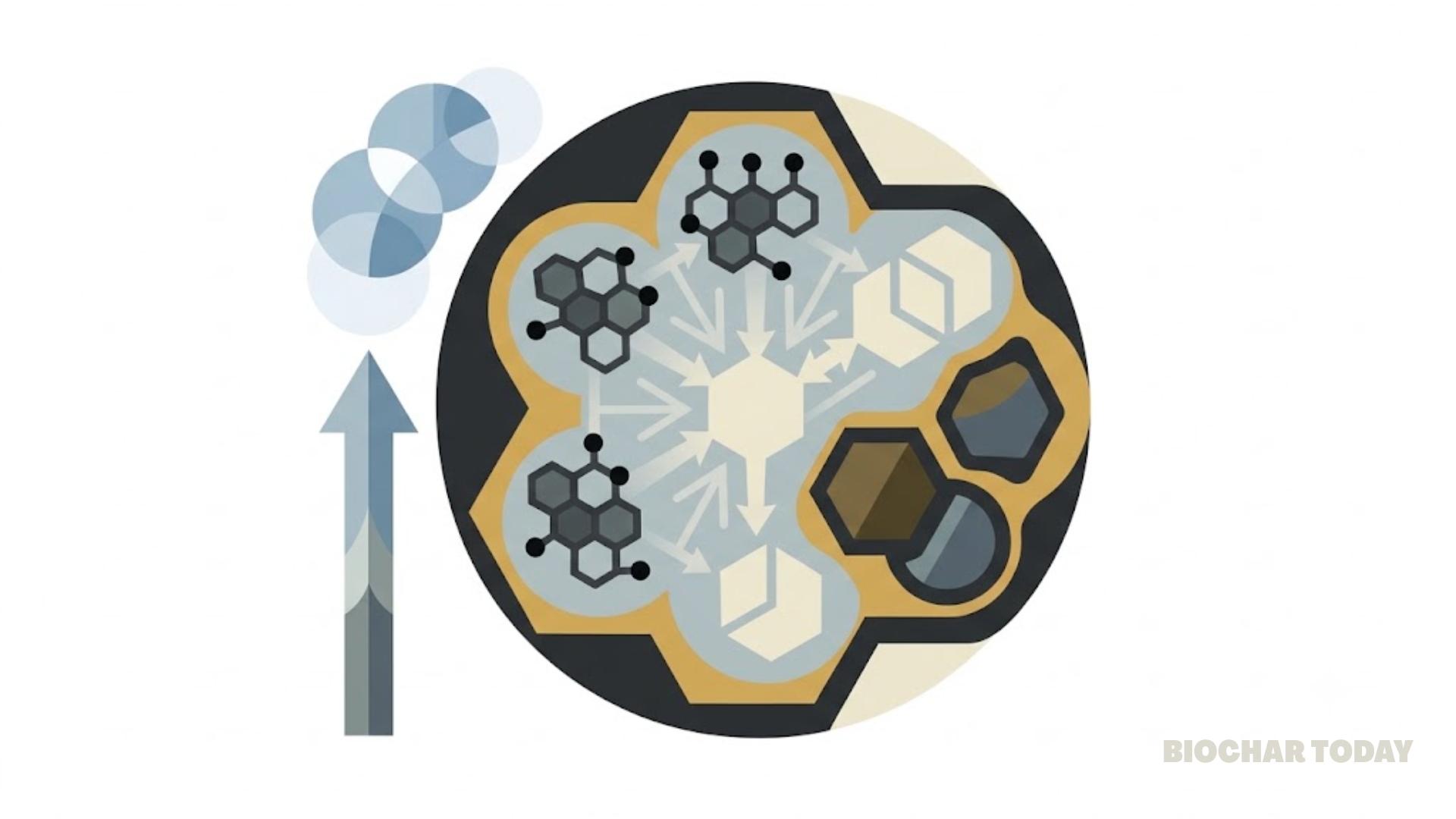
Beyond physical structure, the researchers successfully loaded the biochar with a comprehensive suite of eight essential elements, including nitrogen, potassium, zinc, boron, copper, iron, manganese, and molybdenum. Unlike previous fertilizers that often focused only on a few primary macronutrients, this multi-nutrient approach provides a more balanced nutritional profile for crops. The study found that nutrient impregnation also shifted the pHpH is a measure of how acidic or alkaline a substance is. A pH of 7 is neutral, while lower pH values indicate acidity and higher values indicate alkalinity. Biochars are normally alkaline and can influence soil pH, often increasing it, which can be beneficial More of the material toward a more neutral level, which can help mitigate the high acidity often found in laterite soils. The thermal stability of the product was also enhanced through the loading process, ensuring the fertilizer remains effective under varying environmental temperatures.
The implications of this research extend to the broader goals of a circular bioeconomy and sustainable development. By transforming a bulky, problematic waste product into a concentrated, nutrient-dense agro-input, the study offers a scalable method for reducing the environmental footprint of the sugar industry. The outcomes suggest that this enriched biochar can delay the onset of water stress in crops and improve irrigation efficiency, which is increasingly important in the face of changing climate patterns. This dual-purpose strategy not only addresses waste management but also provides a climate-smart solution for long-term soil health and food security.
Source: Sojan, A. T., Kundukulam, S. J., Geetha, T., Viswanathan, S. P., Thulasi, V., Beena, V. I., Santhosh, C., Anitha, S., & Abdullah, P. S. M. (2026). Sugarcane bagasse-derived multi-nutrient-enriched biochar as a soil amendment for laterite soils. Journal of Applied Biology & Biotechnology, 14(Suppl 1), 47-54.




Leave a Reply