
Delgado-Rebolledo, et al (2024) An Evaluation of BiocharBiochar is a carbon-rich material created from biomass decomposition in low-oxygen conditions. It has important applications in environmental remediation, soil improvement, agriculture, carbon sequestration, energy storage, and sustainable materials, promoting efficiency and reducing waste in various contexts while addressing climate change challenges. More Derived from Agro-Industrial Waste as an Alternative Material for the Elimination of Pathogenic Load from Water. Processes. https://doi.org/10.3390/pr12102283
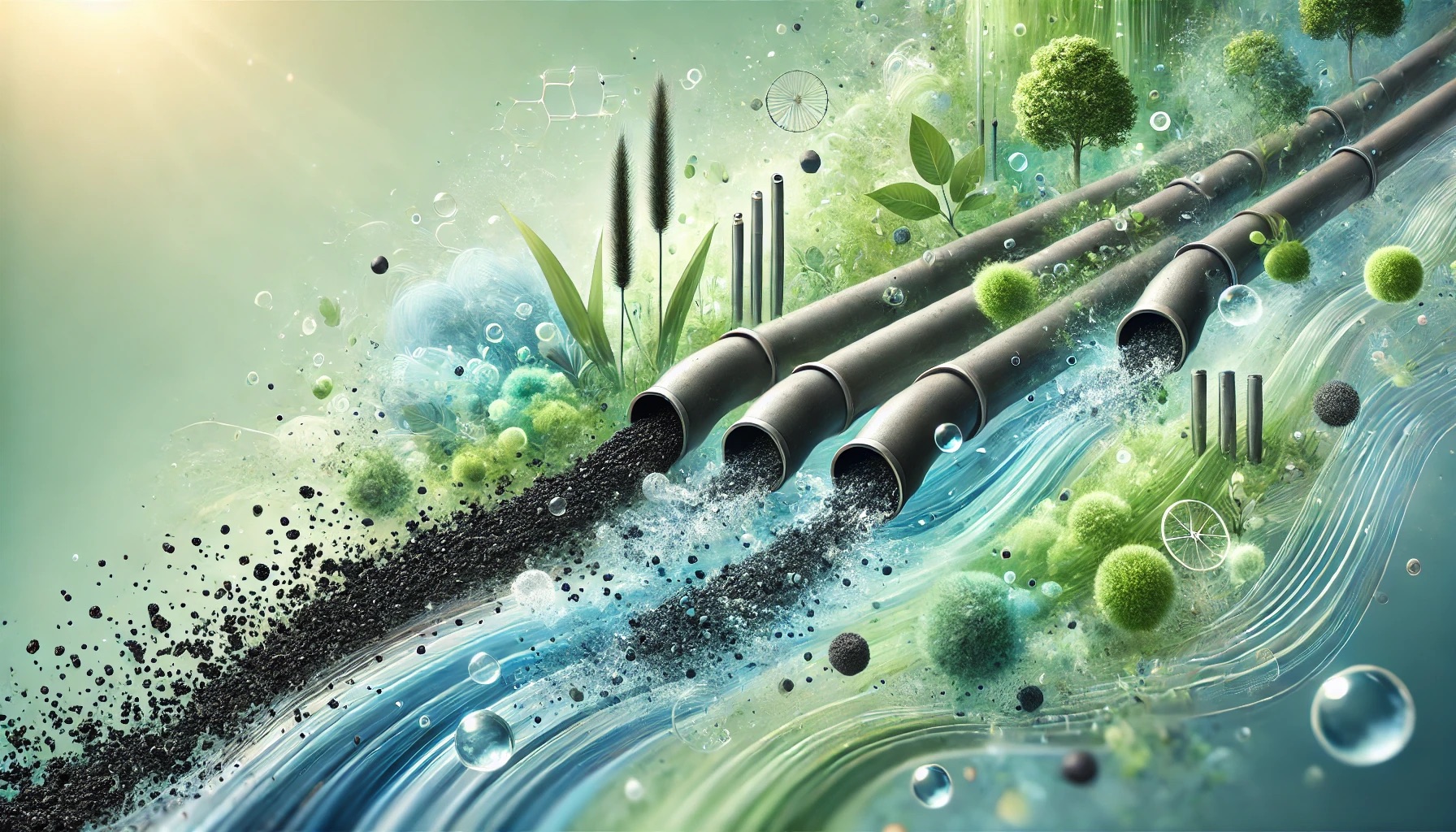
Biochar, a carbon-rich material derived from the thermal conversion of agricultural and agro-industrial waste, is emerging as an effective alternative for water treatment. With increasing water pollution from pathogens, heavy metals, and chemicals in wastewater, traditional treatment methods are often energy-intensive and inefficient. Biochar offers a sustainable approach by leveraging its high adsorption capacity, which effectively removes contaminants without producing harmful byproducts.
Biochar production involves various techniques such as pyrolysisPyrolysis is a thermochemical process that converts waste biomass into bio-char, bio-oil, and pyro-gas. It offers significant advantages in waste valorization, turning low-value materials into economically valuable resources. Its versatility allows for tailored products based on operational conditions, presenting itself as a cost-effective and efficient More, gasificationGasification is a high-temperature, thermochemical process that converts carbon-based materials into a gaseous fuel called syngas and solid by-products. It takes place in an oxygen-deficient environment at temperatures typically above 750°C. Unlike combustion, which fully burns material to produce heat and carbon dioxide (CO2), gasification More, and hydrothermal carbonization, with pyrolysis being the most commonly used. Agricultural waste, like sugarcane bagasse and rice husks, is often used as feedstockFeedstock refers to the raw organic material used to produce biochar. This can include a wide range of materials, such as wood chips, agricultural residues, and animal manure. More. Biochar not only improves water quality by eliminating pathogens such as E. coli and fecal coliforms, but also aligns with the principles of the circular bioeconomy. This approach promotes the reuse of waste materials, contributing to resource efficiency and environmental sustainability.
The adsorption mechanisms of biochar—like ion exchange and electrostatic attraction—allow for the effective removal of both organic and inorganic pollutants, including heavy metals. Biochar’s application extends to water treatment plants, stormwater management, and artificial wetlands, where it improves the removal of nutrients and pathogens.
Despite its potential, further research is needed to scale biochar production for large wastewater treatment plants. Its integration into water treatment processes can significantly advance sustainable development goals, particularly in water management and waste recycling.





Leave a Reply