
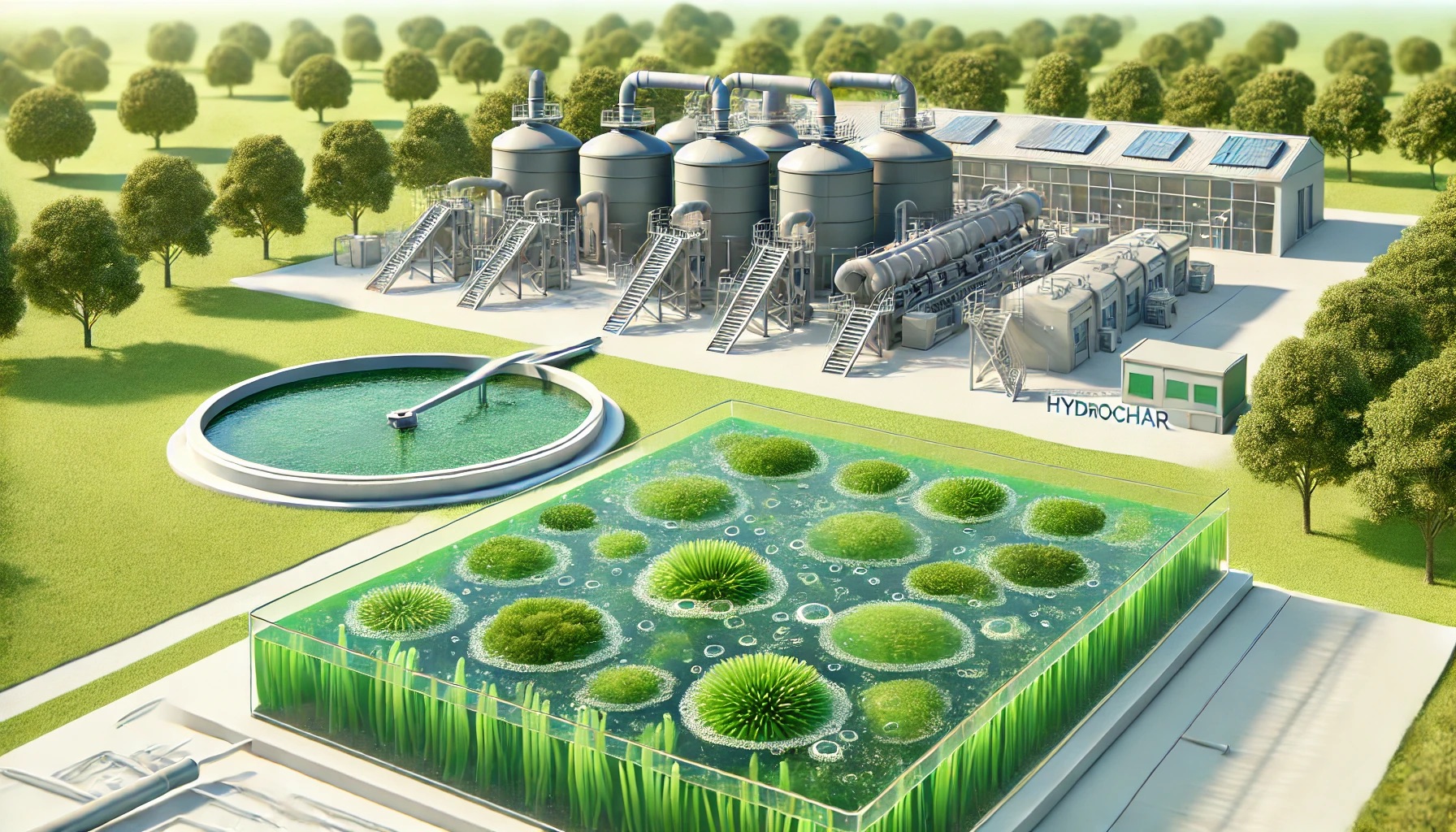

Biochar and hydrochar, derived from algal and terrestrial biomassBiomass is a complex biological organic or non-organic solid product derived from living or recently living organism and available naturally. Various types of wastes such as animal manure, waste paper, sludge and many industrial wastes are also treated as biomass because like natural biomass these More, are carbon-rich materials produced through thermochemical processes like pyrolysisPyrolysis is a thermochemical process that converts waste biomass into bio-char, bio-oil, and pyro-gas. It offers significant advantages in waste valorization, turning low-value materials into economically valuable resources. Its versatility allows for tailored products based on operational conditions, presenting itself as a cost-effective and efficient More and hydrothermal carbonization. These materials are increasingly recognized as cost-effective, environmentally friendly adsorbents for wastewater treatment. Due to their enhanced surface properties, biochar and hydrochar are effective in metal biosorption, soil fertility enhancement, and carbon sequestration.
The review highlights the advantages of using algae as a biomass source for producing biochar and hydrochar. Algae have low lignin content, which makes the conversion process more cost-effective. The resulting chars have higher porosityPorosity of biochar is a key factor in its effectiveness as a soil amendment and its ability to retain water and nutrients. Biochar’s porosity is influenced by feedstock type and pyrolysis temperature, and it plays a crucial role in microbial activity and overall soil health. Biochar More and diverse functional groups, enhancing their ability to remove pollutants from wastewater. Additionally, the presence of inorganic metals in algal chars improves their cation exchange capacity and pHpH is a measure of how acidic or alkaline a substance is. A pH of 7 is neutral, while lower pH values indicate acidity and higher values indicate alkalinity. Biochars are normally alkaline and can influence soil pH, often increasing it, which can be beneficial More buffering properties, which are beneficial for stabilizing the pH during treatment processes.
Algal biochar and hydrochar have shown greater efficiency in removing organic pollutants, including toxic dyes and antibiotics, due to their low oxygen-to-carbon content. Despite these benefits, the high water content in algal biomass poses logistical challenges, increasing production costs. Improvements in algae cultivation, harvesting, and processing technologies are needed to enhance the economic viability of algal-based products.
Overall, the review underscores the potential of algal biochar and hydrochar in wastewater treatment, calling for further research to optimize production methods and applications. Integrating wastewater treatment with the production of biochar could provide a sustainable solution for environmental remediation.



Leave a Reply