
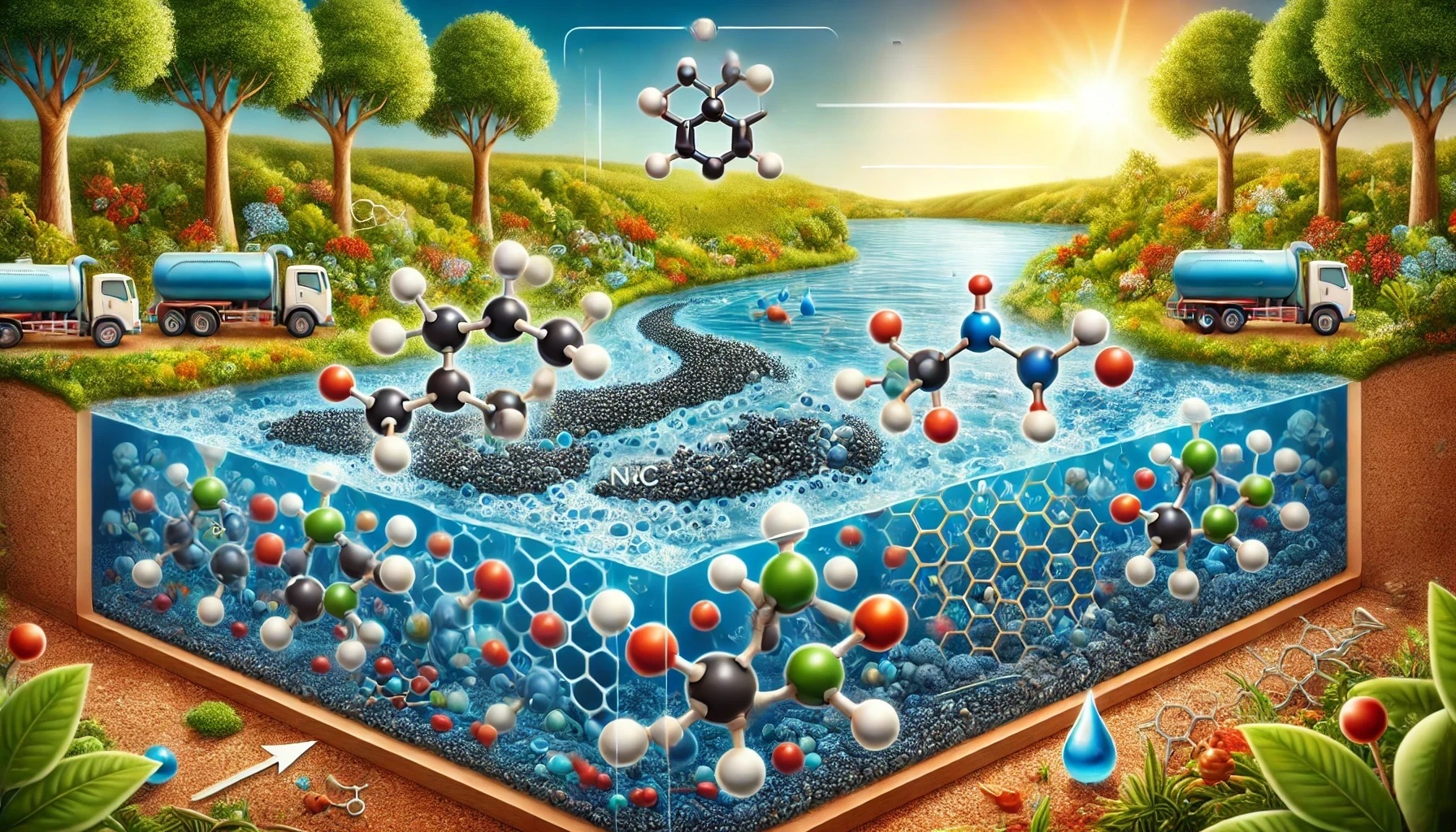

A new review in Separation and Purification Technology explores the advancements in nitrogen-doped biochar (NBC) for removing organic pollutants from water. The paper, authored by Ziwei Li and colleagues, provides a comprehensive overview of NBC’s synthesis, mechanisms, and applications. Nitrogen doping is highlighted as an effective method for enhancing biochar’s ability to adsorb and degrade pollutants. This review is significant as few previous studies have thoroughly examined these aspects.
NBC is synthesized using various nitrogen sources, and its effectiveness in removing organic contaminants is due to its improved surface properties and increased active sites. The authors discuss the different fabrication methods, the specific mechanisms by which NBC adsorbs and degrades pollutants, and the advantages of various modification techniques.
The review also identifies key factors influencing NBC’s performance, such as dosage, pollutant concentration, and pHpH is a measure of how acidic or alkaline a substance is. A pH of 7 is neutral, while lower pH values indicate acidity and higher values indicate alkalinity. Biochars are normally alkaline and can influence soil pH, often increasing it, which can be beneficial More levels. Understanding these factors is crucial for optimizing NBC’s use in real-world applications. Additionally, the paper offers perspectives on future developments to enhance NBC’s efficacy and broaden its use in water treatment.
This study underscores the importance of advanced materials like NBC in addressing water pollution. By improving the efficiency of biochar through nitrogen doping, researchers aim to provide more effective and sustainable solutions for environmental remediation. This detailed analysis serves as a valuable resource for scientists and engineers working on water purification technologies.





Leave a Reply