

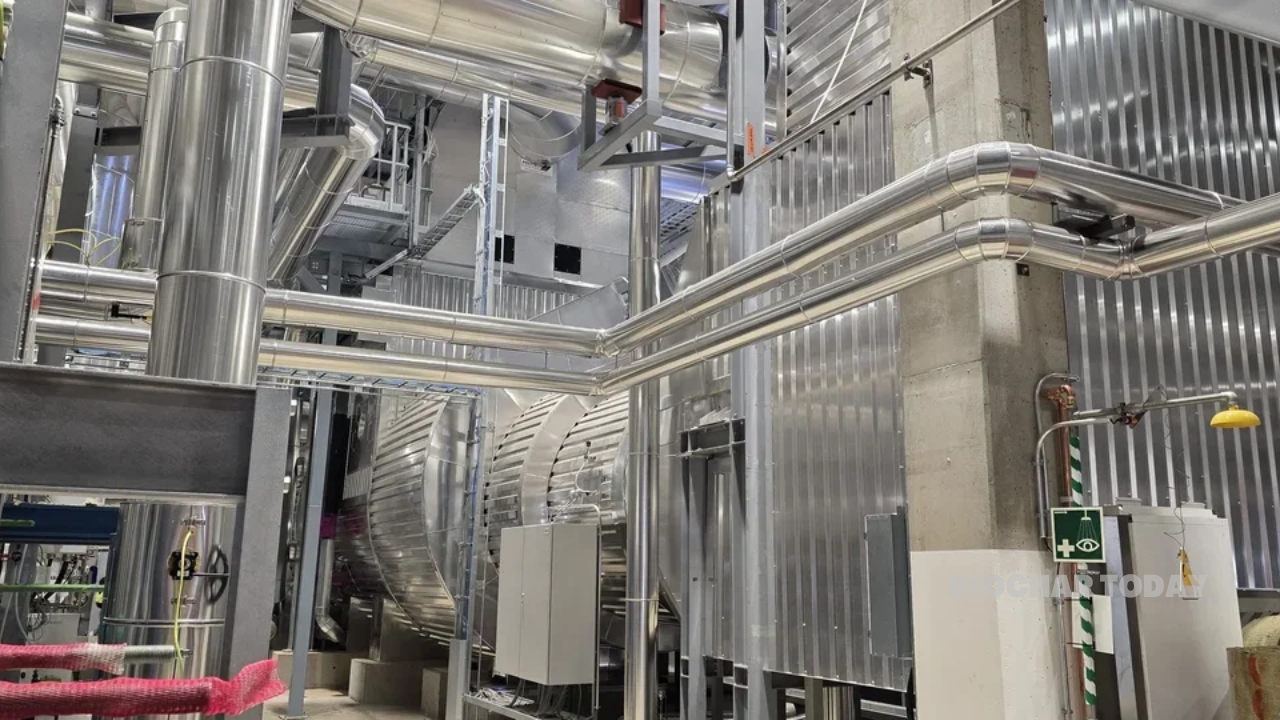
A recent video presentation by Sebastian Manhart at Carbonfuture, featuring work by Ibero Massa Florestal in Portugal, explains the strategic conversion of fire-prone forest biomassBiomass is a complex biological organic or non-organic solid product derived from living or recently living organism and available naturally. Various types of wastes such as animal manure, waste paper, sludge and many industrial wastes are also treated as biomass because like natural biomass these More into stable biocharBiochar is a carbon-rich material created from biomass decomposition in low-oxygen conditions. It has important applications in environmental remediation, soil improvement, agriculture, carbon sequestration, energy storage, and sustainable materials, promoting efficiency and reducing waste in various contexts while addressing climate change challenges. More. The project focuses on the lifecycle of forest residues—material that would otherwise decompose or fuel catastrophic wildfires—to solve the problem of excessive fuel loads in Mediterranean forest ecosystems. By harvesting these residuals and processing them through pyrolysisPyrolysis is a thermochemical process that converts waste biomass into bio-char, bio-oil, and pyro-gas. It offers significant advantages in waste valorization, turning low-value materials into economically valuable resources. Its versatility allows for tailored products based on operational conditions, presenting itself as a cost-effective and efficient More, the project attempts to protect forest health while simultaneously creating a high-value, durable carbon sink. This initiative demonstrates a practical application of circular economy principles by turning a significant environmental liability into a regenerative asset for the local economy.
The significance of this video for the readers of Biochar Today lies in its demonstration of biochar as a dual-purpose tool for climate adaptation and mitigation. By moving beyond laboratory theory into the active management of forest landscapes, the project illustrates how biochar production can be integrated into existing wildfire prevention strategies to bridge the gap between ecological safety and carbon removal. This information informs current soil restoration and carbon sequestration practices by highlighting the necessity of sourcing feedstocks that provide additional environmental benefits, such as reduced wildfire risk. Furthermore, the collaboration between Carbonfuture and Ibero Massa Florestal provides a replicable model for verifying high-quality carbon removal credits within the global circular economy.


Leave a Reply