
Key Takeaways
- DOM is essential for cleanup: Biochar’s ability to remove lead is not just about its solid structure. Soluble components called DOM (dissolved organic matter) are critical.
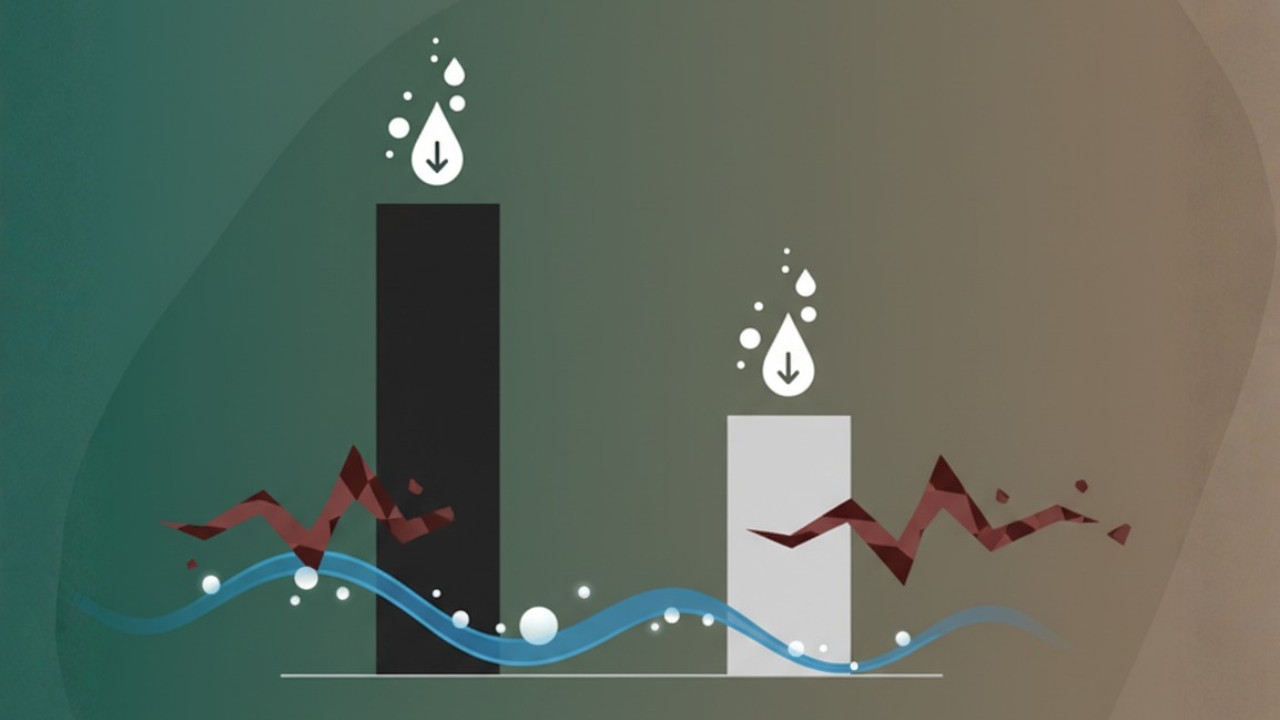
- A 64% drop in performance: BiocharBiochar is a carbon-rich material created from biomass decomposition in low-oxygen conditions. It has important applications in environmental remediation, soil improvement, agriculture, carbon sequestration, energy storage, and sustainable materials, promoting efficiency and reducing waste in various contexts while addressing climate change challenges. More with its DOM removed saw its lead adsorption capacity fall from 96.2 mg/g to just 35.0 mg/g.
- Oxygen groups do the work: Lead is chemically captured by oxygen-rich functional groups (like hydroxyls and carboxyls) on the DOM.
- Carboxyls react first: Of all the active sites, carboxyl groups are the “first responders” that bind to lead the most rapidly, kicking off the decontamination process.
- Lead is locked away: The DOM first binds the lead (complexation) and then helps turn it into a stable, solid mineral, effectively locking it away.
Heavy metal pollution is a critical global challenge, and lead (Pb(II)) is one of the most persistent and toxic offenders, posing severe risks to ecosystems and human health. For years, scientists have championed biochar as a promising tool for remediation. When added to soil or water, biochar can effectively immobilize heavy metals. However, biochar also leaches soluble substances known as dissolved organic matter (DOM). This has created a crucial question: does this DOM help or hinder the cleanup? A new study in the journal Biochar by Fuxiang Zhang, Boyang Zhou, and colleagues provides a definitive answer, showing that this DOM is not just a byproduct but a critical active ingredient in the fight against lead pollution.
The research team investigated this by comparing the performance of untreated corn-straw biochar (BC) with biochar that had been thoroughly washed with water (WBC) to remove its soluble DOM. The results were striking. The untreated biochar demonstrated an outstanding adsorption capacity, pulling 96.2 milligrams of lead out of the solution for every gram of biochar used. In contrast, the washed biochar, which lacked the DOM, saw its adsorption capacity plummet to just 35.0 mg/g. This nearly 64% reduction in effectiveness clearly demonstrates that the DOM is essential, playing a vital role in enhancing the biochar’s ability to capture lead. The adsorption is not just a simple physical trapping; kinetic analysis confirmed it is a chemical process where lead is actively bonding with the material.
So, what are these “active ingredients” within the DOM? Using advanced spectroscopic analyses (FTIR and XPS), the study confirmed that oxygen-containing functional groups—specifically hydroxyl, carboxyl, carbonyl, and ether groups—are the active sites that complex with the lead ions. The researchers observed that after the biochar was exposed to lead, the chemical signatures of these oxygen groups (particularly C-O and C=O bonds) changed, proving they were directly involved in the binding. This complexation is the dominant mechanism for lead removal. Once bound, the lead is further immobilized through co-precipitation, forming a stable mineral which effectively locks the toxic metal into a solid, less bioavailable form.
The team then went deeper, using sophisticated fluorescence spectroscopy (EEM-PARAFAC) to parse the complex soup of DOM into its distinct components. They identified three main humic-like components, labeled C1, C2, and C3. Of these, Component C3, a mix of humic-like and tyrosine-like substances, exhibited the strongest binding affinity for lead, making it the most valuable part of the DOM for remediation. But the most precise finding came from mapping the reaction sequence itself. Using an advanced technique called Hetero-2DCOS, the scientists determined which functional groups react first when lead is introduced. The answer was unequivocal: carboxyl groups in the humic-like substances are the “first responders”. They bind to the lead most rapidly, initiating the complexation process before other groups, like phenols, get involved.
This research provides a clear molecular-level blueprint of how biochar immobilizes lead. It transforms our understanding of DOM from a simple leachate to a potent and necessary ally in remediation. The findings suggest that to create more effective biochar for lead pollution, we should aim to produce materials specifically enriched with these highly active, carboxyl-rich humic components. By understanding exactly which parts of biochar do the heavy lifting, we can optimize its production for a cleaner, safer environment.
Source: Zhang, F., Zhou, B., Fu, Q., Jia, H., Li, Y. F., Ding, Y., & Cui, S. (2025). Binding mechanisms of Pb(II) adsorption by biochar-derived dissolved organic matter: Unraveling site heterogeneity and kinetics through advanced spectral analysis. Biochar, 7(116).



Leave a Reply