
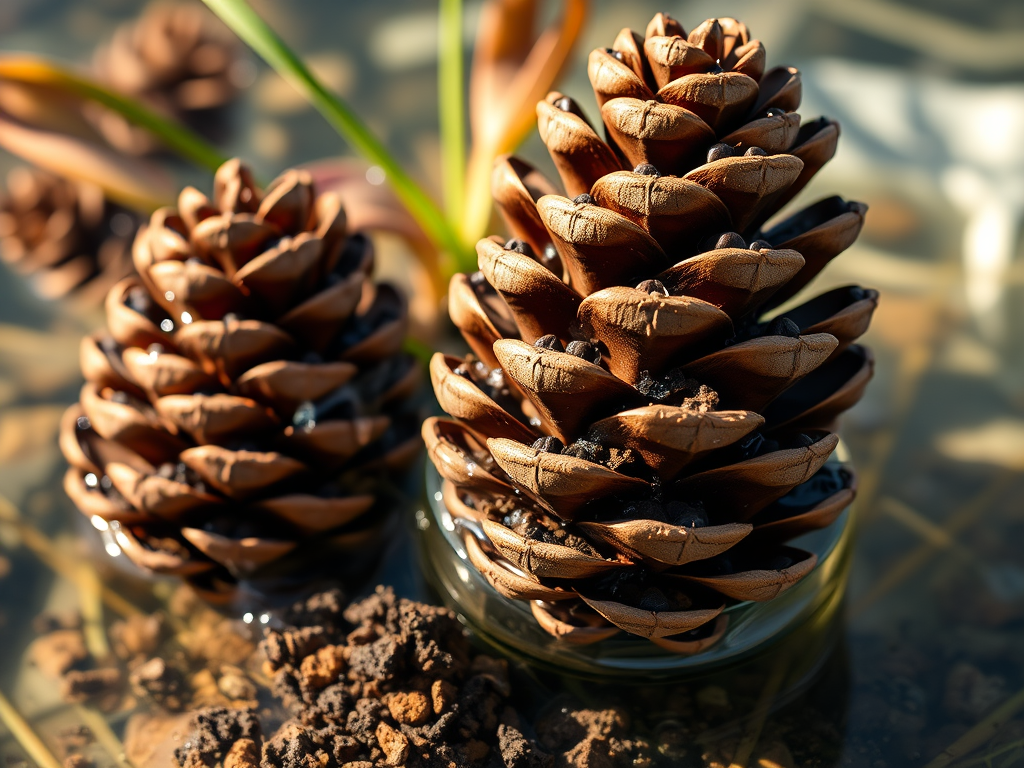
In a world grappling with increasing water pollution, scientists are constantly seeking innovative and sustainable solutions to purify our precious water resources. He et al., in a study published in Clean Materials (CleanMat), explored the potential of pinecone derived biocharBiochar is a carbon-rich material created from biomass decomposition in low-oxygen conditions. It has important applications in environmental remediation, soil improvement, agriculture, carbon sequestration, energy storage, and sustainable materials, promoting efficiency and reducing waste in various contexts while addressing climate change challenges. More in this fight.
The researchers focused on removing chloramphenicol (CAP), a potent antibiotic, from water. CAP is a widely used antibiotic, but its presence in water bodies poses a significant threat to human and environmental health. It can persist in the environment, leading to antibiotic resistance and harming aquatic life. The researchers transformed pinecones into biochar, a charcoal-like material with a remarkable ability to adsorb pollutants. They enhanced the biochar’s adsorption capacity by activating it with potassium hydroxide (KOH). The resulting activated biochar demonstrated exceptional efficiency in removing CAP from water.
The study revealed that the biochar activated with a 4:1 ratio of KOH to carbonized sample (PCK4-800) had the highest surface area and pore volume, leading to the most efficient removal of CAP. At a neutral pHpH is a measure of how acidic or alkaline a substance is. A pH of 7 is neutral, while lower pH values indicate acidity and higher values indicate alkalinity. Biochars are normally alkaline and can influence soil pH, often increasing it, which can be beneficial More, PCK4-800 removed up to 92% of CAP from a 100 mg/L solution, outperforming other adsorbents. The adsorption process was mainly attributed to chemical interactions, with pore filling and π-π interactions as the primary mechanisms. Additionally, PCK4-800 maintained over 80% removal efficiency after five regeneration cycles, demonstrating its potential for sustainable water treatment.
This research highlights the potential of biochar derived from pinecones as a sustainable and cost-effective solution for water treatment. By effectively removing harmful pollutants like CAP, biochar can contribute to safeguarding our water resources and protecting public health.
SOURCE: He, X., Islam, M. A., Zhao, T., Eljamal, O., & Saha, B. B. (2025). KOH-Activated Pinecone Biochar for Efficient Chloramphenicol Removal From Aqueous Solutions. CleanMat, 2025(00), 1–13. https://doi.org/10.1002/clem.21





Leave a Reply