
Key Takeaways
- Agricultural waste from palm shells can be processed into tiny particles to create advanced plastic materials.
- Treating these tiny particles with a special chemical coating helps them mix perfectly with plastic for better strength.
- The new material acts as a heat shield, making it much harder for heat to pass through the plastic.
- This discovery allows plastic to become significantly more fire-resistant and safer for use in buildings and packaging.
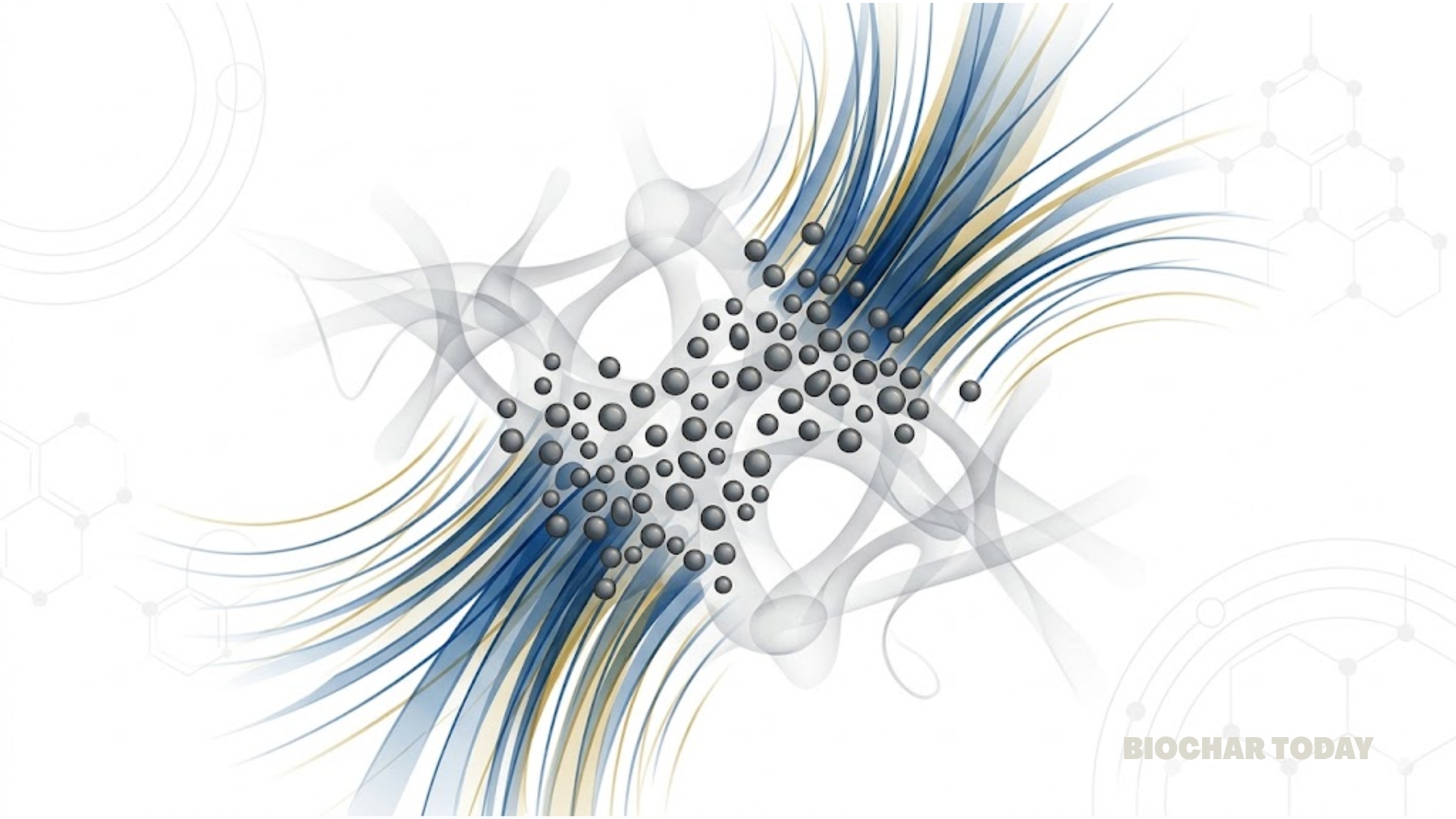
Scientists are increasingly turning to sustainable materials to improve the safety and efficiency of common plastics. A recent study published in the journal Discover Chemistry by author David Abutu and a team of researchers explores the potential of using palm kernel shells to create high-performance plastic composites. Low-density polyethylene is a widely used plastic valued for its flexibility and low cost, but it typically burns easily and does not provide good heat insulation. To solve these problems, the researchers developed a silanized nano-biochar derived from agricultural waste that has been shrunk down to a microscopic scale and chemically treated to bond more effectively with plastic.
The research findings demonstrate that this modified biocharBiochar is a carbon-rich material created from biomass decomposition in low-oxygen conditions. It has important applications in environmental remediation, soil improvement, agriculture, carbon sequestration, energy storage, and sustainable materials, promoting efficiency and reducing waste in various contexts while addressing climate change challenges. More significantly changes how the plastic handles heat and fire. When the researchers added a specific amount of the treated biochar to the plastic, they observed a 25 percent reduction in thermal conductivity. This means the material became much better at blocking the movement of heat, which is a critical feature for insulation in electronics or construction. Furthermore, the study found that the microscopic biochar particles created a complex internal network that slowed down the melting and burning of the plastic. This internal structure acts as a physical barrier, trapping heat and preventing the rapid spread of flames that usually occurs with standard polyethylene.
Fire safety saw the most dramatic improvement when the biochar was used alongside traditional flame-retardant chemicals. The best-performing version of the material achieved a top-tier V-0 fire rating, meaning it stopped burning quickly after being ignited and did not produce dangerous flaming drips. The heat release rate, which measures how intensely a fire burns, was cut in half compared to pure plastic. These results are particularly impressive because they were achieved using much lower amounts of additives than traditional fire-resistant plastics require. By using less material to achieve better results, this method offers a more efficient and environmentally friendly way to produce safe materials for the industry.
Beyond safety, the addition of the treated biochar actually made the plastic stronger and stiffer. The microscopic particles were so well-dispersed that they helped the plastic carry heavier loads without breaking. This is unusual, as adding fire-retardant powders often makes plastic more brittle and prone to cracking. The secret to this success was the chemical coating applied to the biochar, which acted like a bridge between the natural carbon particles and the synthetic plastic. This bridge ensured that the two very different materials worked together as a single, unified structure. The result is a multifunctional plastic that is strong, insulates against heat, and provides superior protection against fire.
The implications of this work extend to the global push for a circular economy by finding a high-tech use for palm oil industry waste. Instead of being discarded or burned, palm kernel shells can now be transformed into a valuable additive that makes modern plastics safer and more efficient. This approach reduces the reliance on harsh halogen chemicals typically used in fireproofing, which are often toxic to the environment. The researchers concluded that their silanized nano-biochar provides a scalable and sustainable pathway for creating the next generation of fire-safe materials. By combining simple agricultural waste with advanced chemical engineering, this study provides a practical solution for industries ranging from food packaging to automotive manufacturing.
Source: Abutu, D., Money, B., David, A. H., Ameh, A. O., & Ujulu, P. (2026). Development of silanized nano-biochar from palm kernel shell for enhanced thermal insulation in polyethylene composites. Discover Chemistry, 3(1), 226.




Leave a Reply