
Key Takeaways
- Scientists have developed a new way to safely use coal mining waste as a filling material by locking away dangerous heavy metals.
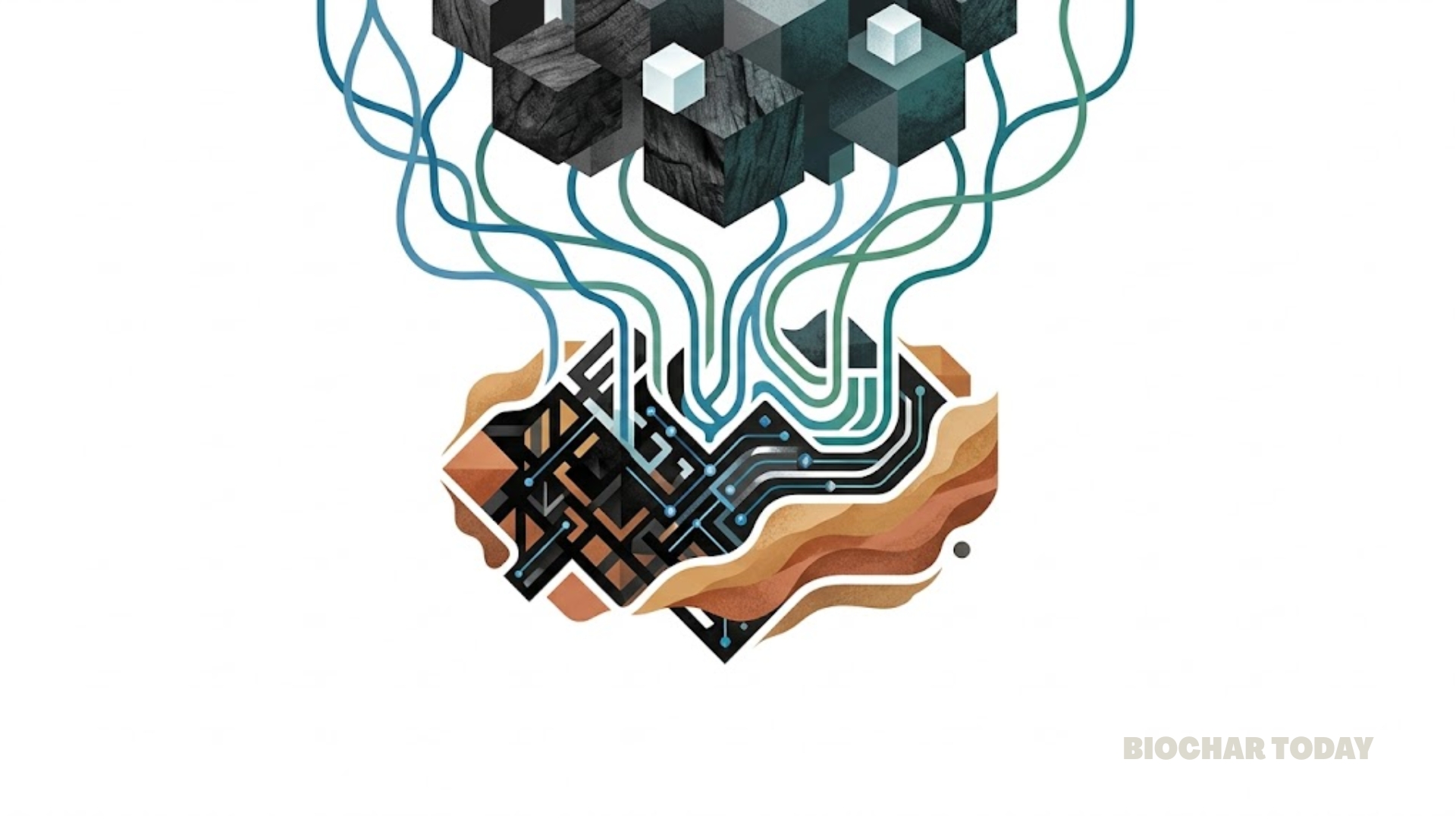
- Using a combination of rice husk biocharBiochar is a carbon-rich material created from biomass decomposition in low-oxygen conditions. It has important applications in environmental remediation, soil improvement, agriculture, carbon sequestration, energy storage, and sustainable materials, promoting efficiency and reducing waste in various contexts while addressing climate change challenges. More, clay, and nanoparticles creates a “trap” that keeps pollutants from leaking into groundwater.
- This new material is strong enough to support mining structures and actually gets stronger over time, even when soaked in salty water.
- The process helps the environment twice by recycling solid waste and capturing carbon dioxide gas to store it underground.
- This solution ensures that mine water remains safe for the surrounding environment, meeting strict water quality standards.
A recent study published in the journal RSC Advances by Zhishang Zhang, Liqiang Ma, Ichhuy Ngo, and a team of researchers from the China University of Mining and Technology presents a major step forward in green mining technology. The research addresses a dual environmental threat in coal mining regions: the accumulation of industrial solid waste and the leakage of toxic heavy metals into groundwater. As coal-fired power plants and ironmaking processes produce massive amounts of fly ashAsh is the non-combustible inorganic residue that remains after organic matter, like wood or biomass, is completely burned. It consists mainly of minerals and is different from biochar, which is produced through incomplete combustion. Ash Ash is the residue that remains after the complete More and slag, mining companies are looking for ways to use these materials as “backfill” to prevent the ground from sinking. However, when these wastes are placed back into the earth, they often encounter high-salinity mine water that can cause toxic elements like chromium, nickel, and manganese to leach out. By introducing a “synergistic” mix of natural materials and nanotechnology, the researchers have found a way to transform this waste into a stable, eco-friendly resource.
The findings demonstrate that traditional backfill materials often struggle in harsh, salty environments. High levels of salt in mine water promote the formation of expansive crystals that can crack the material, creating paths for heavy metals to escape. The researchers discovered that fly ash poses a significantly higher risk than slag, with some toxic elements leaking at levels fifty-seven times higher. To combat this, the team tested a variety of modifiers, including biochar made from rice husks, natural clay minerals like clinoptilolite and sepiolite, and alumina nanoparticles. The results were impressive. When sepiolite was used as a single modifier, it reduced the average leachingLeaching is the process where nutrients are dissolved and carried away from the soil by water. This can lead to nutrient depletion and environmental pollution. Biochar can help reduce leaching by improving nutrient retention in the soil. More of heavy metals by approximately 75.78%. This is a significant improvement that demonstrates how porous natural materials can act as a high-capacity sponge for industrial pollutants.
One of the most important results of the study was the effectiveness of the “synergistic” approach, where different modifiers work together to cover each other’s weaknesses. While a single material might be great at trapping nickel but poor at catching chromium, the combined system ensures that all detected heavy metals remain at concentrations safe enough to meet Class IV groundwater quality standards. The rice husk biochar provides a wealth of chemical “sticky spots” that bind to metals, while the clay minerals offer a complex internal structure that physically locks them away. This chemical and physical teamwork creates a dynamic equilibrium where elements that might begin to release are quickly re-adsorbed by another part of the modified matrix.
Beyond environmental safety, the researchers found that these additions actually improved the physical durability of the mining fill. In many cases, adding porous materials can make a structure weaker and more likely to crumble. However, the introduction of sepiolite increased the material’s strength by an average of 51.3% across all testing periods. The fibrous, straw-bundle structure of the sepiolite acts like a reinforced mesh, dispersing stress and preventing cracks from spreading. Furthermore, the addition of alumina nanoparticles helped fill in tiny gaps and promoted the formation of a dense, protective gel. This means that the fill can withstand the immense weight of the earth above it while remaining submerged in salty groundwater for decades without losing its integrity.
The study also highlights a clever use of carbon capture technology. The backfill is “carbonated,” meaning it is treated with carbon dioxide gas during the mixing process. This creates an alkaline environment that is perfect for mineralizing the gas into a solid form, effectively sequestering carbon underground. This process not only helps reduce atmospheric greenhouse gases but also plays a vital role in stabilizing the heavy metals. The carbonation leads to the formation of carbonate minerals that help encapsulate toxic elements within a stony matrix. The researchers used advanced microscopic imaging to prove that the heavy metals were being physically “wrapped” by these new mineral structures, providing a long-term safety barrier.
Ultimately, this research provides a comprehensive and practical strategy for the resource utilization of solid waste in complex underground environments. By turning waste fly ash and slag into a high-strength, low-pollution backfill, the mining industry can reduce its environmental footprint and protect vital water resources. The success of the rice husk biochar also provides a valuable use for agricultural waste, supporting a circular economy. The team concludes that this biochar-clay-nanomaterial strategy is a robust solution for mining areas facing high-salinity challenges, offering a clear path toward more sustainable and safe mining practices worldwide.
Source: Zhang, Z., Ma, L., Ngo, I., Yu, K., Zhai, J., Guo, Z., Zhao, Z., Peng, C., & Yang, R. (2026). Mitigating heavy metals leachability from CO2 carbonated coal-based solid waste backfill in high-salinity environments via biochar-clay-nanomaterial synergistic modification. RSC Advances, 16(26), 21201-21219.





Leave a Reply