
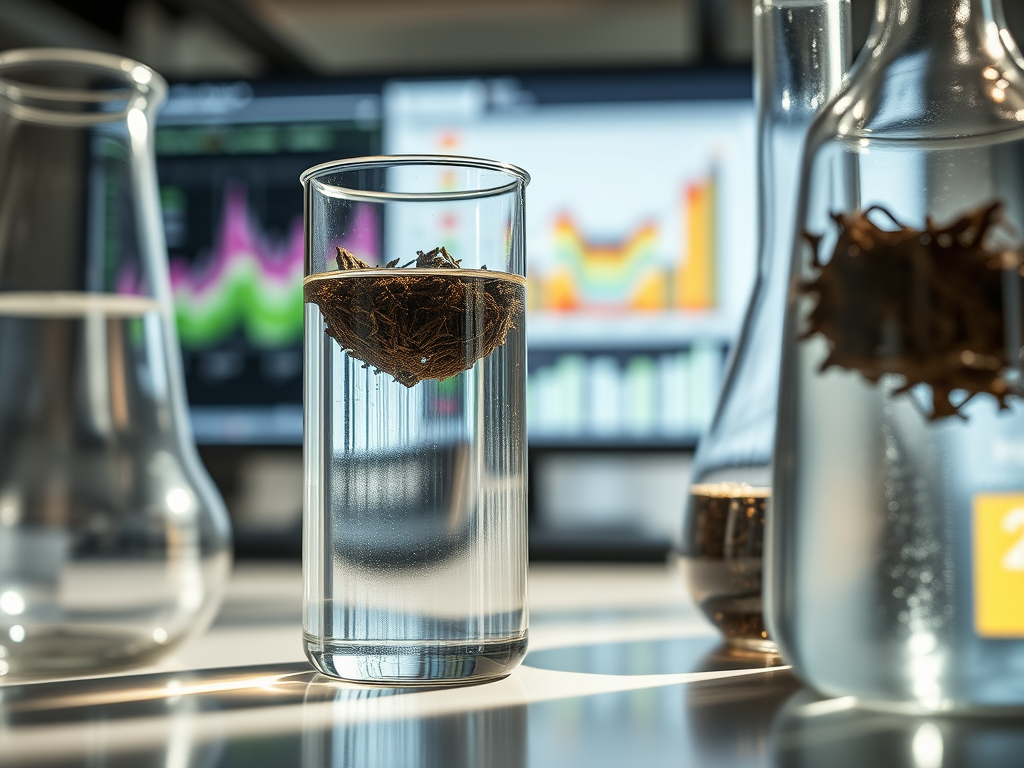
In a recent study published in the Journal of Physics: Conference Series, Jiang et al., investigated the use of modified biocharBiochar is a carbon-rich material created from biomass decomposition in low-oxygen conditions. It has important applications in environmental remediation, soil improvement, agriculture, carbon sequestration, energy storage, and sustainable materials, promoting efficiency and reducing waste in various contexts while addressing climate change challenges. More for the adsorption of arsenic ions and roxarsone (an organoarsenic compound) from water. The researchers focused on optimizing the adsorption process by exploring the influence of different reaction conditions, such as temperature, pHpH is a measure of how acidic or alkaline a substance is. A pH of 7 is neutral, while lower pH values indicate acidity and higher values indicate alkalinity. Biochars are normally alkaline and can influence soil pH, often increasing it, which can be beneficial More, and adsorbent dosage, on the removal rate.
The study employed a combination of multiple linear regression and random forest regression models to analyze the experimental data and predict the optimal conditions for arsenic removal. The results showed that the maximum adsorption capacity of arsenic ions and roxarsone increased significantly under optimized reaction conditions (temperature 30°C, pH value 6, adsorbent dosage 0.6 g/L).
The researchers also found that the degree and direction of influence of different reaction conditions on the removal rate varied. The combined model accurately reflected the influence of adsorption conditions on the removal rate, providing support for the reliability of the experimental results.
This study highlights the potential of modified biochar as an effective adsorbent for removing arsenic from water. The data-driven approach used in this research provides valuable insights into the optimization of the adsorption process, paving the way for more efficient and cost-effective arsenic removal strategies.
Source: Jiang, S., Zhang, S., Dong, Y., & Zhang, Y. (2025). Modified biochar for the adsorption of roxarsone and arsenic ions in water. Journal of Physics: Conference Series, 2964(1), 012078. doi:10.1088/1742-6596/2964/1/012078




Leave a Reply