
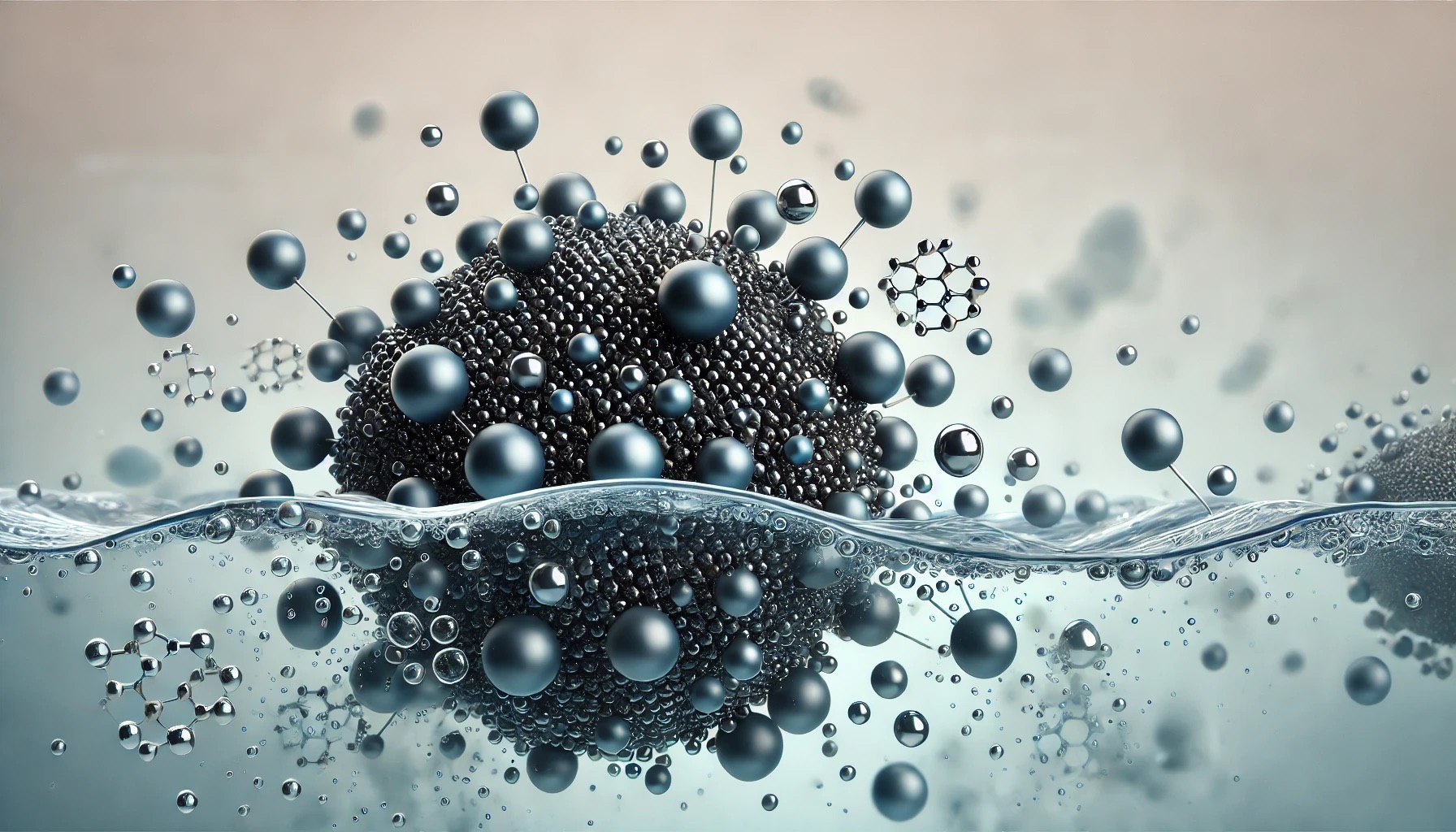
In a recent study published in Nanomaterials by Guida et al., researchers evaluated the potential of a nanomagnetite–biocharBiochar is a carbon-rich material created from biomass decomposition in low-oxygen conditions. It has important applications in environmental remediation, soil improvement, agriculture, carbon sequestration, energy storage, and sustainable materials, promoting efficiency and reducing waste in various contexts while addressing climate change challenges. More composite (MB) to remove benzotriazole (BTA), a common industrial pollutant, from water. BTA, known for its corrosion-inhibiting properties, poses significant environmental and health risks due to its persistence and bioaccumulative nature. The study compared the adsorption capabilities of biochar, nanomagnetite, and their composite under various conditions.
Results showed that at high concentrations (15 g/L of MB), the composite removed over 96% of BTA within 17 days. The removal process relied on dual mechanisms: rapid adsorption by nanomagnetite and the formation of stable complexes between biochar, calcium ions, and BTA. Interestingly, unmodified biochar achieved 50% BTA removal within 48 hours and up to 74% after 17 days when calcium ions were present, highlighting its potential in environments with natural mineral content.
The study emphasizes the scalability of biochar-based treatments due to biochar’s affordability and sustainability compared to activated carbonActivated carbon is a form of carbon that has been processed to create a vast network of tiny pores, increasing its surface area significantly. This extensive surface area makes activated carbon exceptionally effective at trapping and holding impurities, like a molecular sponge. It is commonly More. However, challenges remain, including optimizing nanomagnetite content, understanding long-term adsorbent stability, and managing industrial application costs.
This research underscores the promise of biochar composites in water treatment, offering an eco-friendly solution to mitigate emerging contaminants like BTA. Future studies are encouraged to address the regeneration of these materials and their performance in diverse wastewater conditions.
SOURCE: Guida, et al (2025) Evaluation of Nanomagnetite–Biochar Composite for BTA Removal. Nanomaterials. https://doi.org/10.3390/nano15020115



Leave a Reply