
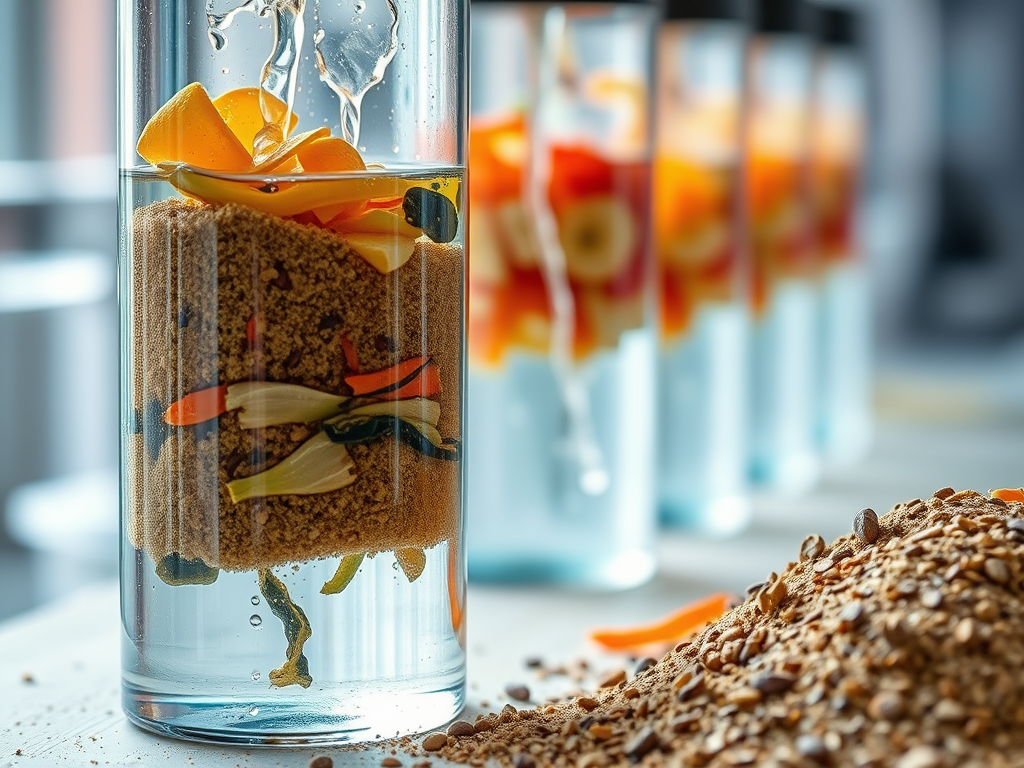
Global access to clean water is a growing concern due to persistent pollution from industrial and household waste, particularly from non-biodegradable dyes. In a recent article published in Scientific Reports, researchers Ghenwa Kataya, May Issa, Adnan Badran, David Cornu, Mikhael Bechelany, Salah Jellali, Mejdi Jeguirim, and Akram Hijazi propose an innovative, low-cost solution: a biochar-sand composite filter made from kitchen waste. Their research focuses on creating an efficient and scalable water treatment system using readily available materials, which is especially beneficial for regions with limited infrastructure.
The team prepared the biocharBiochar is a carbon-rich material created from biomass decomposition in low-oxygen conditions. It has important applications in environmental remediation, soil improvement, agriculture, carbon sequestration, energy storage, and sustainable materials, promoting efficiency and reducing waste in various contexts while addressing climate change challenges. More, named kitchen waste-derived biochar (KWDB), from a mixture of orange peels, potato peels, banana peels, and coffee residue. The waste was pyrolyzed, or heated in the absence of oxygen, at 400°C for one hour. This process converts the waste into a solid, carbon-rich material. To create a simple filter, two grams of this biochar were placed between two 15-gram layers of beach sand inside a laboratory column. The sand layers ensured uniform water flow, while the biochar served as the primary adsorbent for removing dyes from the water.
The biochar-sand filter was tested against two common artificial dyes: Methylene Blue (MB), a cationic dye, and Methyl Orange (MO), an anionic dye. The results showed that the filter’s performance varied significantly depending on the type of dye. For Methylene Blue, the filter achieved an extremely high and consistent removal efficiency, reaching a maximum of 99.5%. The research showed that only 30 minutes of contact time was enough to achieve a removal rate of over 99.5%. The filter’s high effectiveness for Methylene Blue, a dye known for its toxicity, high solubility, and resistance to conventional treatment, is a major finding. The Langmuir isotherm model, which assumes a uniform surface for adsorption, best described the Methylene Blue removal, suggesting that the dye molecules formed a single layer on the biochar’s surface. The maximum adsorption capacity was determined to be 30.40 mg/g, a value higher than many other biochars derived from lignocellulosic biomassBiomass is a complex biological organic or non-organic solid product derived from living or recently living organism and available naturally. Various types of wastes such as animal manure, waste paper, sludge and many industrial wastes are also treated as biomass because like natural biomass these More.
In contrast, the filter’s performance against Methyl Orange was less effective. The removal of Methyl Orange was highly dependent on contact time, with the highest removal rate of 29% occurring only after 24 hours. The Freundlich isotherm model, which describes multilayer, heterogeneous adsorption, was a better fit for the Methyl Orange data, indicating a different adsorption mechanism at play. The maximum adsorption capacity for Methyl Orange was 25.15 mg/g, a value comparable to biochars from poultry or sheep manure but less than half of that for Methylene Blue. This difference is likely due to the chemical properties of the dyes and their specific interactions with the biochar surface. The study’s FTIR analysis confirmed the presence of oxygen-containing functional groups on the biochar, which facilitate electrostatic attraction and hydrogen bonding, as well as aromaticity that aids in π-π stacking interactions, all of which are key to the adsorption process.
The study successfully demonstrates that biochar derived from common kitchen waste can be a viable and eco-friendly material for water purification. The simple production method, combined with its high efficacy against Methylene Blue, makes this biochar-sand filter a promising solution for regions lacking advanced water treatment infrastructure. These findings support the design of specialized biochar filters for specific pollutants and highlight the potential of turning waste into a valuable resource for environmental protection.
Source: Kataya, G., Issa, M., Badran, A., Cornu, D., Bechelany, M., Jellali, S., Jeguirim, M., & Hijazi, A. (2025). Dynamic removal of methylene blue and methyl orange from water using biochar derived from kitchen waste. Scientific Reports, 15(1), 29907.



Leave a Reply