
Key Takeaways
- BiocharBiochar is a carbon-rich material created from biomass decomposition in low-oxygen conditions. It has important applications in environmental remediation, soil improvement, agriculture, carbon sequestration, energy storage, and sustainable materials, promoting efficiency and reducing waste in various contexts while addressing climate change challenges. More applied to fields faces physical break down and structural modifications from weather and living organisms.
- The degradation of this material can lead to a significant loss of stored carbon through movement in the soil.
- Soil conditions and specific farming techniques directly change how quickly the material breaks down over long periods.
- Changes in the material alter its capacity to trap heavy metals and dangerous pollutants in agricultural grounds.
The application of biochar as a soil amendmentA soil amendment is any material added to the soil to enhance its physical or chemical properties, improving its suitability for plant growth. Biochar is considered a soil amendment as it can improve soil structure, water retention, nutrient availability, and microbial activity. More has generated substantial interest due to its capacity to store carbon and remediate contaminated grounds. Published in the journal Biochar, a comprehensive review by Nanthi Bolan and an international team of researchers explores how the material changes when exposed to natural field conditions over extended periods. Although this substance consists of highly stabilized carbon structures produced through the oxygen-free burning of biomassBiomass is a complex biological organic or non-organic solid product derived from living or recently living organism and available naturally. Various types of wastes such as animal manure, waste paper, sludge and many industrial wastes are also treated as biomass because like natural biomass these More, it is not entirely immune to environmental forces. Once introduced to the field, it undergoes a complex combination of physical, chemical, and biological aging processes. These ongoing weathering actions alter the primary characteristics, surface chemistry, and internal reactivity of the material, which ultimately changes its long-term environmental value.
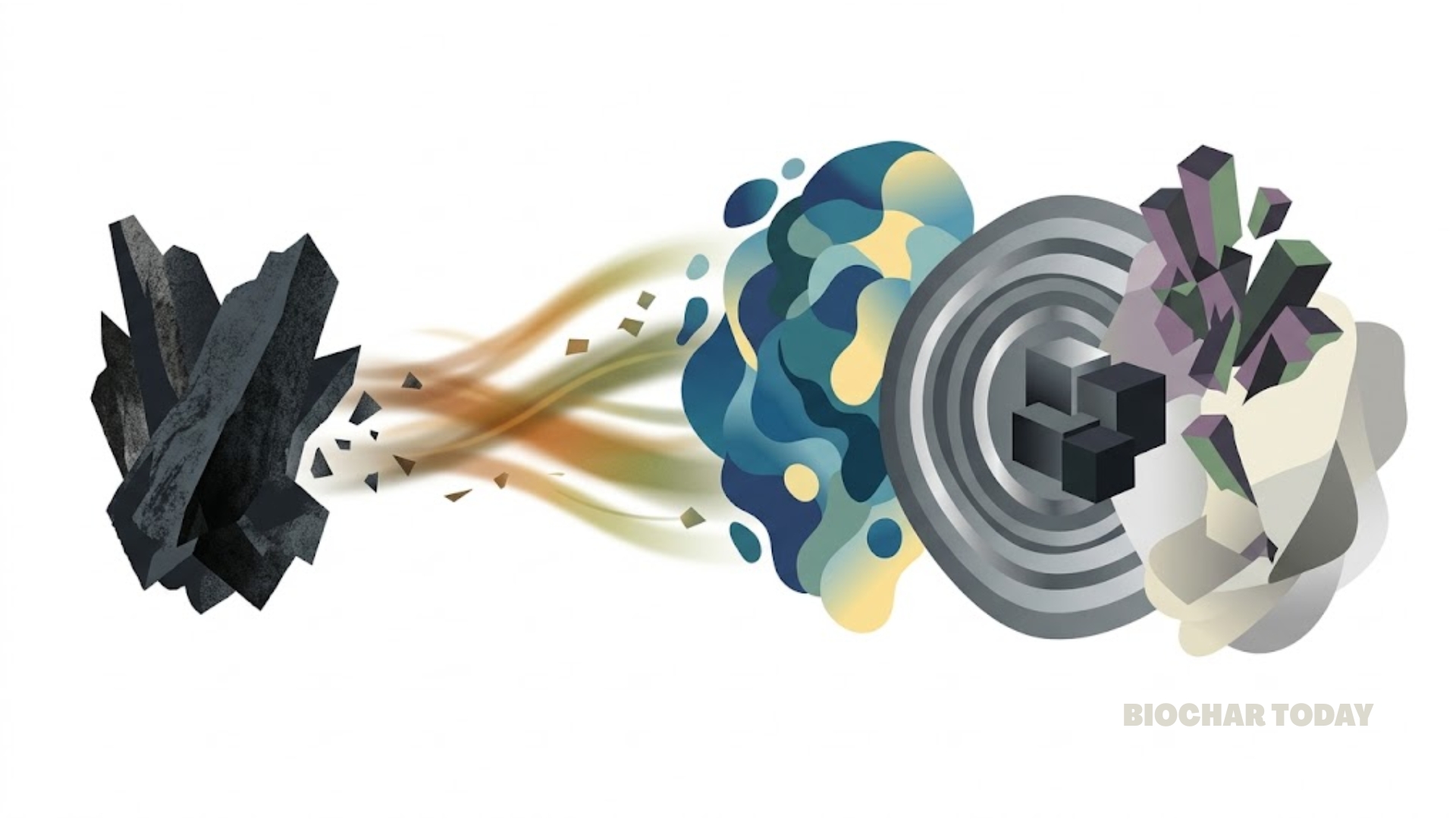
Physical weathering represents a primary pathway of alteration, driven by mechanical forces such as regular soil cultivation, wetting and drying cycles, and seasonal freezing and thawing. These processes cause the material to fragment into microscopic particles, which can easily wash through soil pores or blow away with the wind. Chemical changes occur simultaneously as moisture and oxygen interact with the material, leading to surface oxidation and the formation of new chemical groupings that make the substance more water-attracting. Additionally, soil microorganisms play a major role by colonizing the surface and slowly breaking down the less stable components. The speed and nature of these combined weathering processes depend heavily on the original feedstockFeedstock refers to the raw organic material used to produce biochar. This can include a wide range of materials, such as wood chips, agricultural residues, and animal manure. More, local climate conditions, specific soil properties, and chosen agricultural practices.
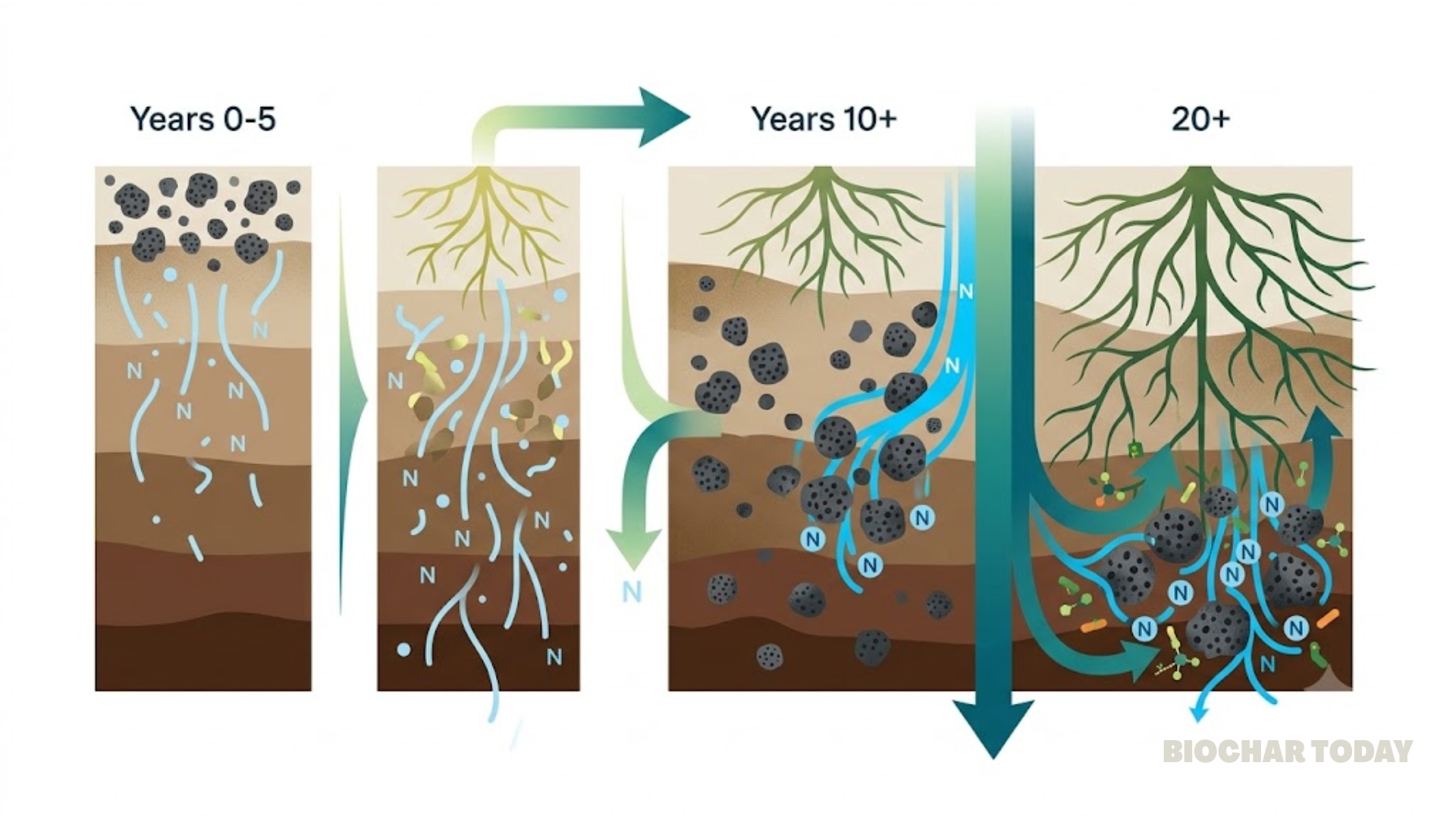
The physical fragmentation of the material has major consequences for the landscape, directly leading to a notable reduction in net carbon storage. As the structures break apart, fine fragments suspend in the soil solution and migrate away via underground water infiltration and surface runoff. This structural breakdown can account for a total mass loss ranging from 1 percent up to 49 percent depending on the nature of the material. However, even as particles break down and move, the core aromatic structure tends to remain intact over decades, meaning that the fundamental carbon removal mechanism functions continuously despite the loss of total mass. The net impact on atmospheric carbon removal is also tied to how the material alters the breakdown of existing natural soil organic matter.
Soil remediation efforts are also profoundly affected by these aging processes because weathering modifies how the material interacts with dangerous underground pollutants. Oxidation generally increases the abundance of functional groups on the surface, which can enhance the electrostatic attraction and trapping of toxic metal cations like copper. Conversely, weathering reduces the alkalinity and ashAsh is the non-combustible inorganic residue that remains after organic matter, like wood or biomass, is completely burned. It consists mainly of minerals and is different from biochar, which is produced through incomplete combustion. Ash Ash is the residue that remains after the complete More content of the material, hindering its ability to cause heavy metals to form stable precipitates. For instance, the ability of certain straw-based materials to immobilize cadmium through carbonate precipitation disappears entirely after weathering. In acidic soils, the initial benefits of biochar are often temporary; as the soil eventually returns to its original acidic state, previously trapped contaminants can become mobile again.
Farming practices further dictate the longevity of the material and its subsequent agricultural impacts. Intensive tillage practices accelerate breakdown by physically disrupting the ground and maximizing exposure to ambient oxygen, whereas no-till farming systems help preserve structural integrity over time. Applying the material alongside compost can also safeguard the particles from excessive mechanical disruption and degradation. Ultimately, while weathered material continues to support soil health by lowering bulk density and increasing water retention capacity, researchers emphasize that long-term land management strategies must account for these shifting chemical behaviors to ensure both economic viability and accurate environmental safety assessments.
Source: Bolan, N., Mukherjee, S., Bolan, S., Sharma, S., Spokas, K., Melo, J. L. M., Padilla, J. T., Houben, D., Veloso, M., Gross, A., Chadalavada, S., & Siddique, K. H. M. (2026). Weathering of biochar: implications to soil health, carbon sequestration and soil remediation. Biochar, 8(102), 1-31.



Leave a Reply