
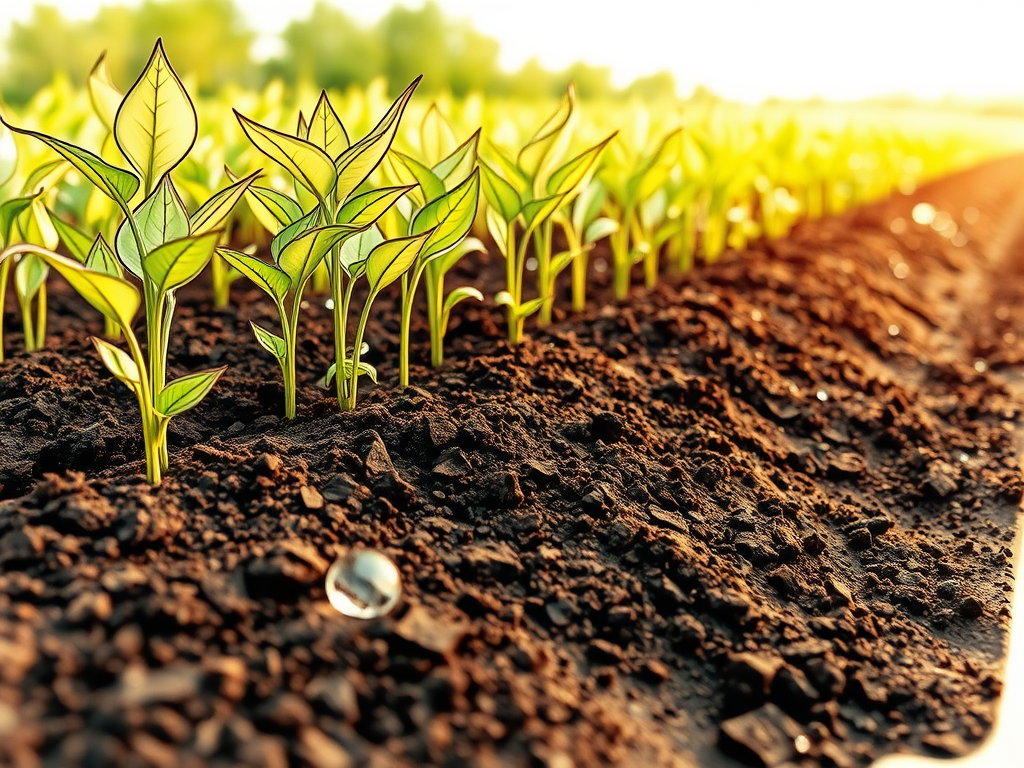
In a recent review published in the Malaysian Journal of Sustainable Agriculture, Abdullahi Bamidele Olayemi, Sharhabil Musa Yahaya, and Musa Modu Ayami explore the diverse benefits of biocharBiochar is a carbon-rich material created from biomass decomposition in low-oxygen conditions. It has important applications in environmental remediation, soil improvement, agriculture, carbon sequestration, energy storage, and sustainable materials, promoting efficiency and reducing waste in various contexts while addressing climate change challenges. More in revolutionizing agricultural practices. The review emphasizes biochar’s potential to enhance soil quality, promote environmental safety, and improve crop yield, addressing critical sustainability challenges in modern agriculture.
Biochar is gaining recognition for its ability to improve soil health. The incorporation of biochar into soil enhances its water retention capacity. For example, research indicates that soil moisture retention increases by approximately 1.2% with every 1% increase in biochar application, up to a 20% concentration. This heightened water retention is attributed to biochar’s porous structure, which creates additional water-holding sites within the soil.
Moreover, biochar contributes to reducing soil bulk density. Its presence in the soil helps to fill voids between soil grains and can replace soil particles, leading to less compacted soil and improved porosityPorosity of biochar is a key factor in its effectiveness as a soil amendment and its ability to retain water and nutrients. Biochar’s porosity is influenced by feedstock type and pyrolysis temperature, and it plays a crucial role in microbial activity and overall soil health. Biochar More. This is particularly advantageous for root development, as it allows for easier penetration and growth.
The use of biochar also enhances soil aggregate stability, protecting the soil from erosion and degradation. Biochar fosters the growth of beneficial soil microbes, whose mycelia bind soil particles together. It also increases soil organic carbon levels, further stabilizing soil structure.
In addition to improving soil physical properties, biochar plays a crucial role in enhancing soil chemistry. It increases soil nutrient retention through surface oxidation reactions, благодаря functional groups on its surface. Biochar can also modify soil pHpH is a measure of how acidic or alkaline a substance is. A pH of 7 is neutral, while lower pH values indicate acidity and higher values indicate alkalinity. Biochars are normally alkaline and can influence soil pH, often increasing it, which can be beneficial More, neutralizing acidity or alkalinity to create optimal conditions for plant growth.
Moreover, biochar promotes a thriving soil ecosystem by increasing microbial abundance and diversity. Its porous structure and dark color provide a protective habitat for beneficial microbes, shielding them from predators and enhancing their activity.
The benefits of biochar extend beyond soil enhancement to environmental remediation. It has demonstrated effectiveness in immobilizing heavy metals in contaminated soils. For instance, studies have shown that biochar can reduce the bioavailability of heavy metals like cadmium by up to 94%, significantly decreasing their environmental risk.
Biochar’s high adsorption capacity also makes it useful for removing pollutants from wastewater. Research has indicated that biochar can adsorb substantial amounts of heavy metals, such as lead (83%) and copper (76%), from wastewater within 24 hours.
Additionally, biochar contributes to mitigating the adverse effects of pesticides in agricultural soils. Studies have shown that biochar can reduce pesticide leachingLeaching is the process where nutrients are dissolved and carried away from the soil by water. This can lead to nutrient depletion and environmental pollution. Biochar can help reduce leaching by improving nutrient retention in the soil. More by up to 45%, thus preventing groundwater contamination.
The role of biochar in mitigating greenhouse gas emissions is particularly noteworthy. Research has shown that biochar can reduce nitrous oxide emissions by an average of 16.2%. It also aids in carbon sequestration, effectively removing carbon dioxide from the atmosphere and storing it in the soil for extended periods.
In conclusion, the review highlights biochar as a promising tool for fostering sustainable agricultural practices. Its ability to improve soil health, remediate environmental pollutants, and mitigate greenhouse gas emissions underscores its potential to contribute to global food security and environmental sustainability.
Source: Abdullahi Bamidele Olayemi, Sharhabil Musa Yahaya, Musa Modu Ayami (2025). Biochar and Agricultural Sustainability: A Review of Crop, Soil and Environmental Interactions. Malaysian Journal of Sustainable Agriculture (MJSA), 9(2): 131-139.


![Eucalyptus Wood Waste-Derived Biochar Achieves a Ninety-Eight Percent Removal Efficiency for Benzo[ghi]perylene in Vehicle-Wash Wastewater](https://biochartoday.com/wp-content/uploads/2026/10/SCIENCE-BLOGS-2026-2026-10-19T160523.703.jpg)


Leave a Reply