
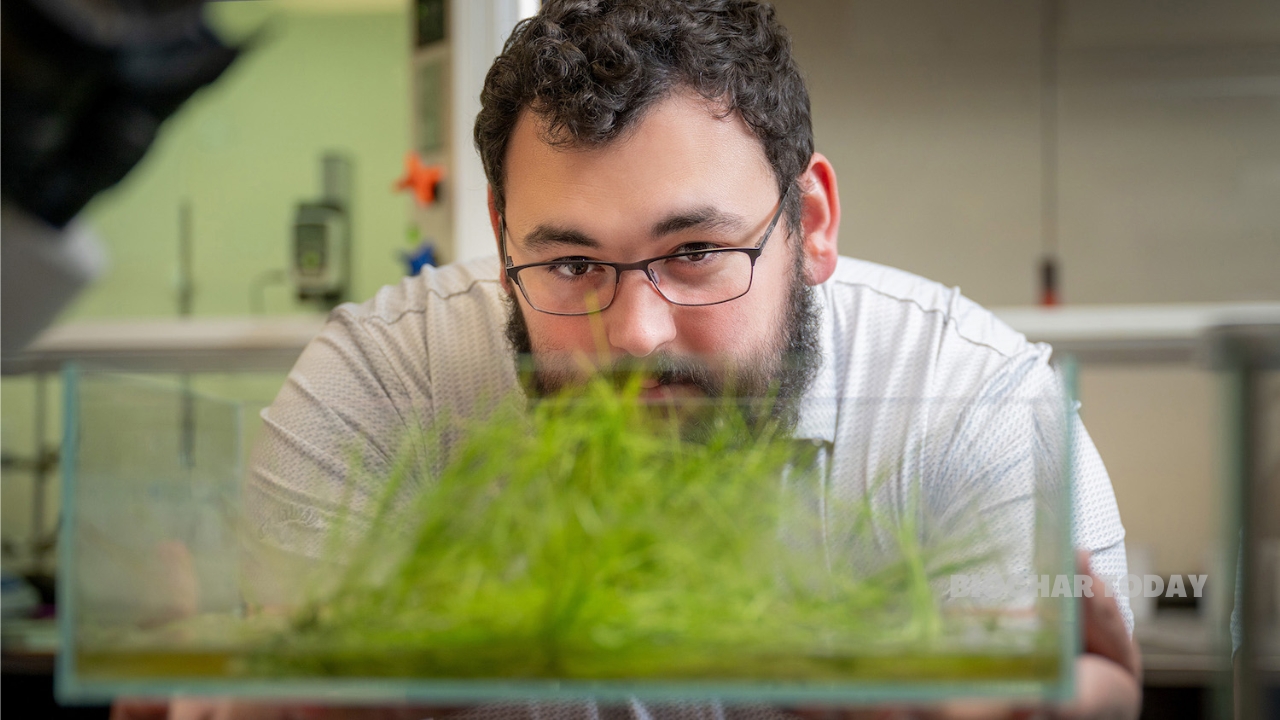
In the United States, doctoral student Reid Barnett of North Carolina State University and his startup, Ceretune LLC, have engineered a nonwoven textile bioscaffold designed to address aquatic nutrient pollution. Supported by the N.C. Plant Sciences Initiative’s Seed2Grow program, the enterprise utilizes advanced polymer engineering to capture excess agricultural runoff from surface waters. The system integrates biological remediation with downstream biomassBiomass is a complex biological organic or non-organic solid product derived from living or recently living organism and available naturally. Various types of wastes such as animal manure, waste paper, sludge and many industrial wastes are also treated as biomass because like natural biomass these More utilization, establishing a circular framework for localized water treatment and soil restoration.
Atmospheric and land-based nutrient runoff introduces significant volumes of nitrogen and phosphorus into freshwater ecosystems, precipitating harmful algal blooms and water quality degradation. Traditional remediation mechanisms, such as land-based riparian buffer strips or manually installed floating wetlands, present severe economic and operational constraints. Land buffers take agricultural areas out of production while removing limited quantities of nitrogen per acre. Concurrently, conventional artificial wetlands depend on pre-grown nursery stock, resulting in high material costs and intensive labor requirements that limit scalable deployment.
To resolve these operational limitations, Ceretune developed a patent-pending, lightweight nonwoven aquatic bioscaffold capable of floating directly on nutrient-rich water bodies. The engineered textile allows plants to germinate directly from seeds sprayed onto the matrix while providing a structural foundation for beneficial microbial communities. As the vegetation develops, the root systems extract dissolved nitrogen and phosphorus directly from the water column. Following a growth period ranging from three to twelve months, operators harvest the consolidated plant biomass and textile matrix in a unified stream, subsequently processing the material into biocharBiochar is a carbon-rich material created from biomass decomposition in low-oxygen conditions. It has important applications in environmental remediation, soil improvement, agriculture, carbon sequestration, energy storage, and sustainable materials, promoting efficiency and reducing waste in various contexts while addressing climate change challenges. More and organic soil amendments.
Field evaluations across diverse aquatic environments demonstrated that the bioscaffold achieves nitrogen removal rates near 1,000 kilograms per acre, operating at approximately thirty times the efficiency of traditional land buffers. Manufactured via high-capacity nonwoven production lines at NC State’s Wilson College of Textiles, an acre of the fabric substrate can be produced in under twenty minutes at a fraction of conventional installation costs. By monetizing the harvested biomass as biochar, carbon credits, and environmental offset payments, the system establishes a self-sustaining financial framework for large-scale watershed restoration.





Leave a Reply