
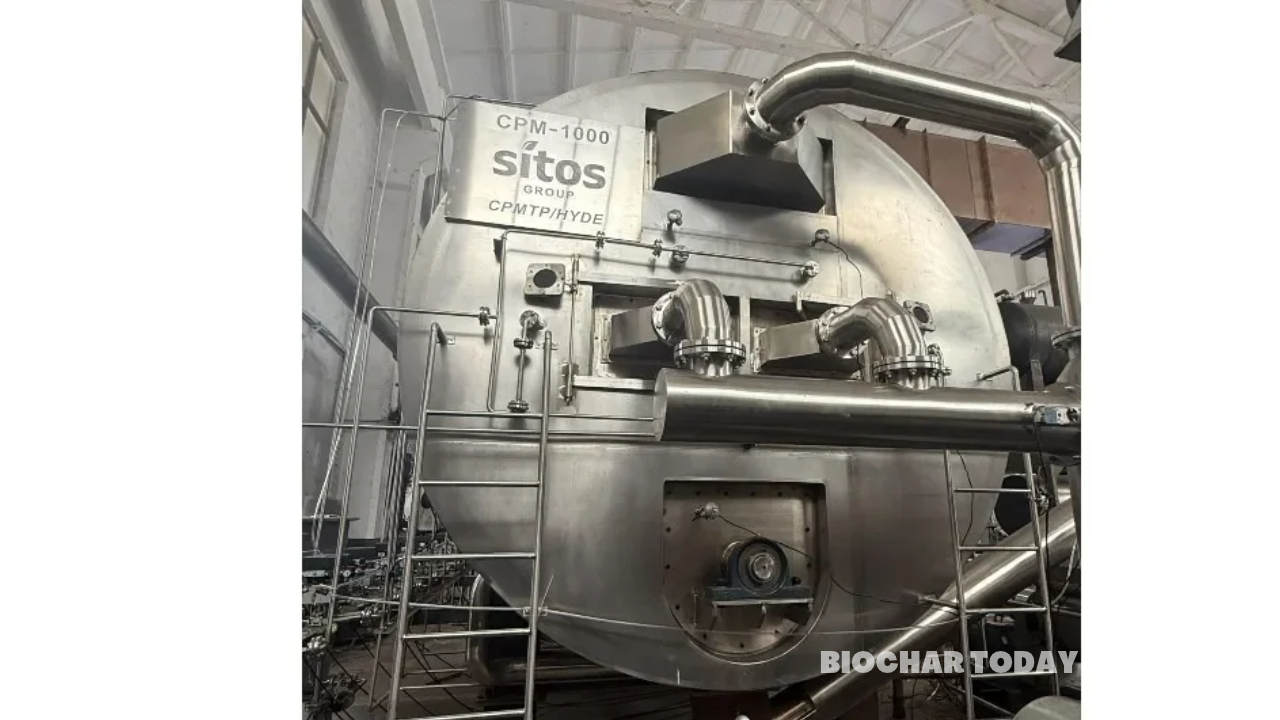
Treehouse California Almonds and Sitos Group have successfully produced their first commercial load of material at a specialized facility in Delano, California. The operation is designed to transform agricultural co-products from almond hulling and shelling processes into a valuable, carbon-rich soil amendmentA soil amendment is any material added to the soil to enhance its physical or chemical properties, improving its suitability for plant growth. Biochar is considered a soil amendment as it can improve soil structure, water retention, nutrient availability, and microbial activity. More. This collaboration marks an operational milestone for processing regional orchard biomassBiomass is a complex biological organic or non-organic solid product derived from living or recently living organism and available naturally. Various types of wastes such as animal manure, waste paper, sludge and many industrial wastes are also treated as biomass because like natural biomass these More into a stable, climate-beneficial product within the United States.
The primary operational challenge involves managing large quantities of agricultural waste generated by nut processing while meeting strict regional greenhouse gas reduction targets. Agricultural operations in California face mandates to reduce emissions significantly by 2030, leaving hullers with costly organic waste streams and traditional disposal limitations. Handling these residual shells without open burning or decomposition requires scalable infrastructure that can integrate directly into existing agricultural supply chains.
To resolve this issue, the Sitos Treehouse facility utilizes an integrated system featuring three side-by-side slow-pyrolysis units and a dedicated drying system equipped with emissions controls. Operating at the 25,000-square-foot plant, this equipment converts organic almond shells into a stable solid through a controlled, low-oxygen thermal decomposition process. The engineering configuration allows the facility to process abundant seasonal biomass efficiently while capturing and managing volatile gases safely.
The resulting material is distributed to local growers, who blend it with compost to improve soil moisture retention, enhance crop resilience against droughts, and reduce reliance on chemical fertilizers. By locking carbon into a stable matrix, the project facilitates durable carbon sequestration and helps regional agricultural producers lower their overall carbon footprint. Furthermore, the partners plan to capture surplus thermal energy generated during pyrolysisPyrolysis is a thermochemical process that converts waste biomass into bio-char, bio-oil, and pyro-gas. It offers significant advantages in waste valorization, turning low-value materials into economically valuable resources. Its versatility allows for tailored products based on operational conditions, presenting itself as a cost-effective and efficient More to optimize resource efficiency across future operations.




Leave a Reply