
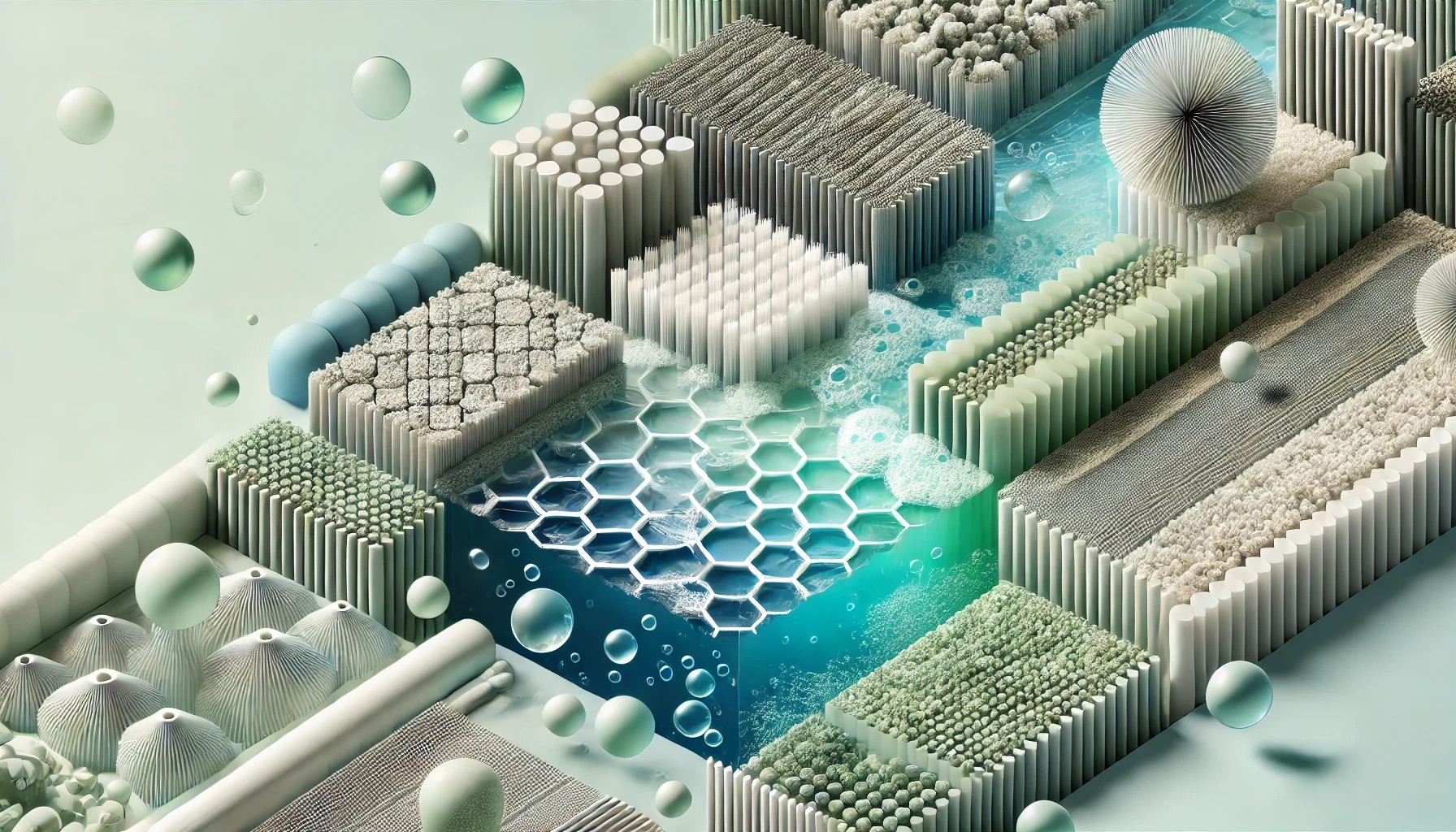
A study by Sefiu Olaitan Amusat and colleagues, published in Results in Chemistry, demonstrates the efficacy of a novel biochar-metal organic framework (MOF) composite in removing multiple contaminants from wastewater. Synthesized using a ball-milling method, the composite effectively adsorbs heavy metals (e.g., lead, nickel, cadmium) and steroidal hormones. It achieved maximum removal rates of 93% for synthetic water and 89% for real wastewater influents.
The research highlights the composite’s enhanced surface area (284 m²/g) and functional group integration, which facilitate efficient contaminant adsorption. Isotherm analysis revealed that the Freundlich model best describes the adsorption mechanism, indicating multilayer interactions on a heterogeneous surface. Adsorption capacities ranged from 74.18 to 85.69 mg/g for heavy metals and 72.99 to 86.21 mg/g for hormones.
The study also evaluated the composite’s stability and reusability. After five regeneration cycles, the adsorbent retained over 60% efficiency, showing promise for long-term application. Thermodynamic analyses confirmed the process to be endothermic and favorable at higher temperatures.
This green, solvent-free approach addresses challenges in conventional wastewater treatment by combining high efficacy with environmental sustainability. The composite represents a significant step toward scalable, cost-effective solutions for addressing water contamination.
SOURCE: Amusat, et al (2025) Ball-milled synthesis of biochar-MOF nanocomposite for the concurrent recovery of mixed contaminants from wastewater. Results in Chemistry. https://doi.org/10.1016/j.rechem.2025.102050




Leave a Reply