
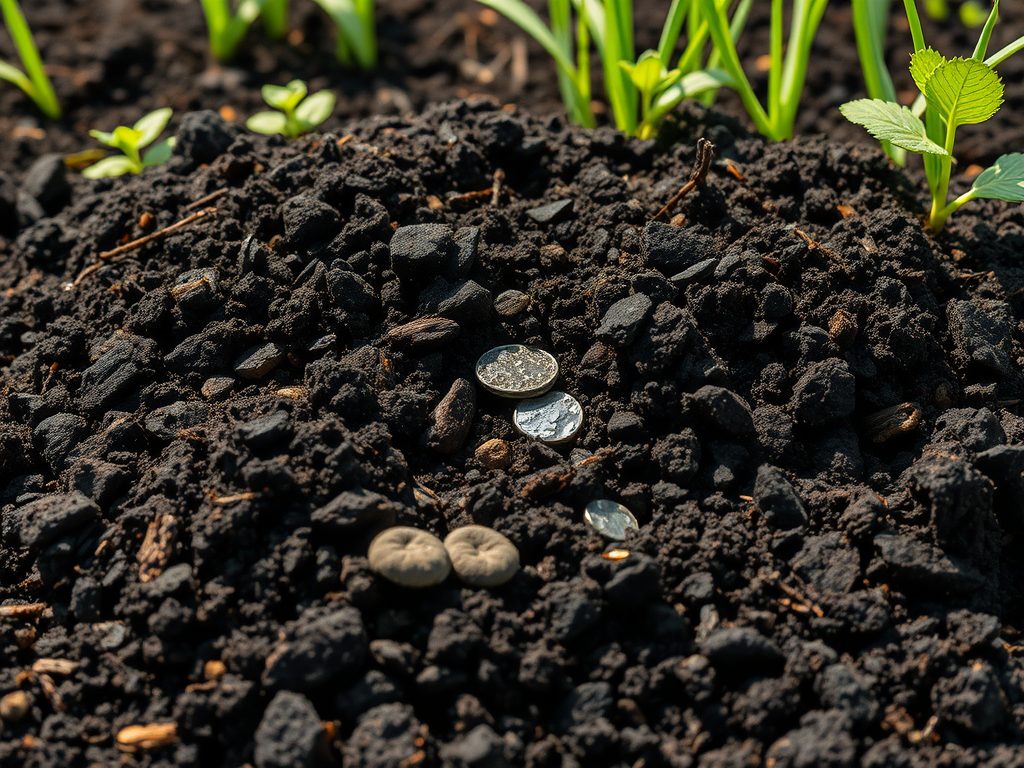
In a study published in Plant Soil, Liu et al., examined the impact of biocharBiochar is a carbon-rich material created from biomass decomposition in low-oxygen conditions. It has important applications in environmental remediation, soil improvement, agriculture, carbon sequestration, energy storage, and sustainable materials, promoting efficiency and reducing waste in various contexts while addressing climate change challenges. More on soil organic carbon (SOC) storage in saline-alkali paddy soils. The research revealed that biochar application, particularly Fe-modified biochar, increases illite content and stabilizes organic carbon in soil over a six-year period.
Soil plays a vital role in the global carbon cycle, storing large amounts of carbon and influencing atmospheric carbon dioxide levels. Biochar, a carbon-rich substance produced from organic matter, has been identified as a soil amendmentA soil amendment is any material added to the soil to enhance its physical or chemical properties, improving its suitability for plant growth. Biochar is considered a soil amendment as it can improve soil structure, water retention, nutrient availability, and microbial activity. More that can enhance SOC storage.
This 6-year field experiment in the Yellow River Delta was conducted to study the interaction between minerals and fungi in soil treated with biochar. The study found that biochar treatments increased the relative content of illite by 4.8%-5.1% compared to mineral fertilizer treatment. Additionally, the specific C mineralization rate decreased by more than 51.1% with biochar application.
This research suggests that biochar, particularly iron-modified biochar, can be used to improve carbon storage in saline-alkali soils.
SOURCE: Liu, L., Chen, M., Meersmans, J., Li, Y., Zhang, S., & Ding, X. (2025). Mineral-fungal interactions in response to biochar amendment: implications for carbon storage in saline-alkali soil. Plant Soil.


![Eucalyptus Wood Waste-Derived Biochar Achieves a Ninety-Eight Percent Removal Efficiency for Benzo[ghi]perylene in Vehicle-Wash Wastewater](https://biochartoday.com/wp-content/uploads/2026/10/SCIENCE-BLOGS-2026-2026-10-19T160523.703.jpg)


Leave a Reply