
Key Takeaways
- Municipal sewage sludge can be successfully transformed into an efficient water-cleaning agent, helping solve urban waste problems.
- A single-step baking process using a special iron chemical creates a highly porous material that acts like a magnetic sponge for toxic metals.
- The newly designed biocharBiochar is a carbon-rich material created from biomass decomposition in low-oxygen conditions. It has important applications in environmental remediation, soil improvement, agriculture, carbon sequestration, energy storage, and sustainable materials, promoting efficiency and reducing waste in various contexts while addressing climate change challenges. More removes almost twice as much cadmium from contaminated water as untreated sewage biochar.
- The material targets and locks away toxic cadmium through a combination of chemical binding, electrical attraction, and mineral trapping.
- This magnetic cleaning agent can be washed and reused five times with minimal loss of its original metal-trapping power.
The escalating discharge of highly toxic heavy metal effluents from modern industrial activities presents critical threats to ecosystems and public health. Cadmium in particular is a dangerous environmental toxin that accumulates in the human body, causing severe skeletal degradation and kidney damage. Traditional filtration, chemical, and electrical remediation technologies exist to pull these metals out of wastewater, but they are frequently held back by high operational costs, membrane clogging, and massive energy requirements. Converting municipal waste sludge into biochar has emerged as a promising, low-cost way to clean up water while recycling solid waste. However, basic untreated biochar has limited binding sites and a negative surface charge that restrict how much cadmium it can actually capture.
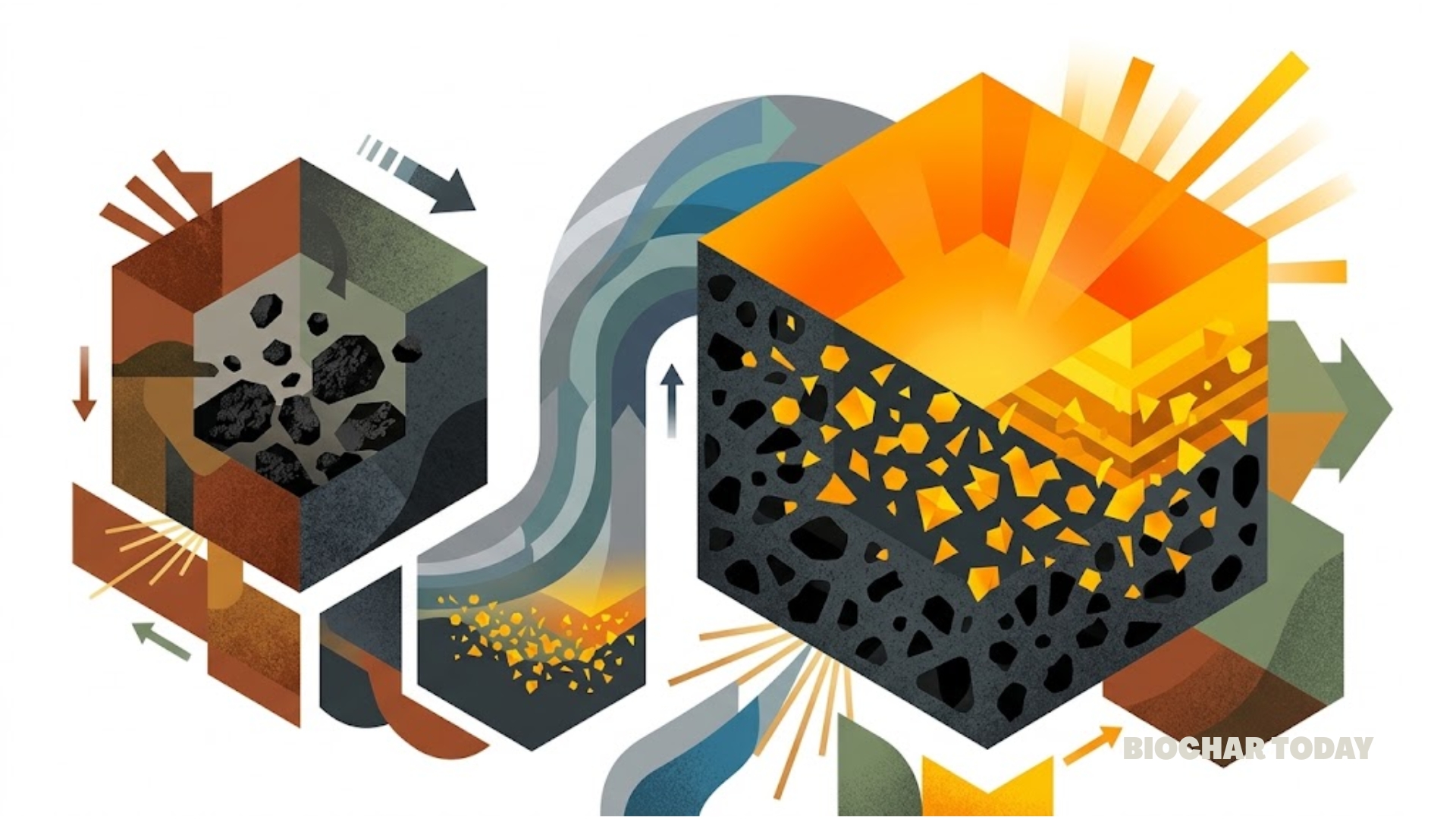
To overcome these physical limitations, researchers from Sichuan Agricultural University and their co-authors engineered a specialized magnetic biochar composite by mixing excess municipal sludge with potassium ferrate. When heated together in a single-step baking process known as co-pyrolysis, the potassium ferrate acts as a dual-function agent. It aggressively etches the carbon structure to open up a massive network of tiny pores while simultaneously embedding iron-oxygen active sites across the material’s surface. This simple, one-pot preparation method successfully bypasses the complex, multi-step acid-washing and secondary iron-soaking steps that have long hindered the large-scale manufacturing of conventional engineered adsorbents.
The resulting modified biochar exhibits a dramatic structural transformation, boasting a surface area that is about four and a half times larger than that of untreated sludge biochar. This highly developed pore network allows the engineered biochar to achieve an exceptional maximum cadmium adsorption capacity. When tested under optimized conditions, the modified biochar reached a peak adsorption capacity of 155.28 milligrams per gram, which is a massive improvement over the 83.89 milligrams per gram capacity measured for the unmodified sludge biochar control. Mathematical modeling confirmed that the cadmium molecules bind to the biochar in a uniform, single-layer chemical reaction that absorbs heat and occurs spontaneously.
The superior performance of this engineered biochar is driven by a highly coordinated, multi-layered chemical defense system. Specialized analytical testing showed that cadmium is trapped through strong chemical coordination with newly added oxygen-containing groups and iron oxides on the biochar surface. At the same time, electrical attraction pulls the positive cadmium ions onto the negative surface of the biochar, while the carbon rings of the biochar skeleton share electrons to bind the metal. Finally, phosphorus naturally released from the sludge-based material chemically reacts with the dissolved cadmium, causing it to crystallize and precipitate out of the water as an insoluble cadmium phosphate mineral.
This material also stands out for its high selectivity and robust industrial durability. Common background ions typically found in real-world wastewater, such as sodium, potassium, calcium, and magnesium, have virtually no negative impact on the biochar’s cadmium-trapping performance. When the biochar eventually becomes saturated with heavy metals, it can be easily collected from the water using its built-in magnetic properties. It can then be washed with a standard chelating agent to release the trapped cadmium without destroying the biochar’s structural framework. Over five consecutive cycles of use and washing, the modified biochar retained over 80 percent of its initial cleaning capacity, whereas the untreated biochar suffered a precipitous decline. This exceptional durability validates the material as a highly cost-effective, reusable, and scalable solution for treating industrial heavy metal wastewater while safely repurposing municipal solid waste.
Source: Long, T., Zuo, X., Ji, Y., & Wang, C. (2026). Removal of Cd(II) from aqueous solution by ferrate-modified sludge biochar: optimization of preparation conditions, adsorption performance, and mechanism. RSC Advances, 16, 23730-23739.



Leave a Reply