

Key Takeaways
- Applying a low electrical current combined with rice husk charcoalCharcoal is a black, brittle, and porous material produced by heating wood or other organic substances in a low-oxygen environment. It is primarily used as a fuel source for cooking and heating. More provides a powerful method for cleaning toxic metals from farm soils.
- This hybrid treatment successfully immobilizes the vast majority of dangerous pollutants, rendering them completely harmless to plants.
- Adding the specialized carbon mixture dramatically lowers soil toxicity, enabling vital crops and grasses to safely sprout and flourish.
- High-fertility black soils show the strongest natural locking capacity, while sandy soils require higher doses of carbon for complete restoration.
The comprehensive environmental manuscript, published in the peer-reviewed journal Carbon Trends, was authored by Altynbek Kazez, Murat Toktar, Kalampyr Bexeitova, Ulan Zhantikeyev, Jechan Lee, and Seitkhan Azat. Severe soil contamination stemming from heavy industrial operations, intensive agricultural practices, and poor historical waste management poses a critical threat to global food security and ecosystem integrity, particularly within the fragile, arid climate zones of Kazakhstan. Sustainable remediation frameworks have historically struggled to clean up fine-grained, low-conductivity soils because toxic metal ions bind tightly to underground particles, resisting traditional extraction techniques. To overcome these physical bottlenecks, the researchers deployed a sequential hybrid system that uses a mild electrical current to mobilize tightly bound toxicants, followed by an in-situ carbon amendment to lock the mobile fractions away into stable, non-bioavailable matrices.
The findings demonstrate a profound synergistic interaction when combining these two independent techniques across contrasting soil types, specifically light gray soil, light chestnut soil, and humus-rich chernozem. While utilizing independent electrochemical treatments successfully moved and minimized the mobile fractions of toxic metals by roughly twenty to sixty percent, integrating the sequential biocharBiochar is a carbon-rich material created from biomass decomposition in low-oxygen conditions. It has important applications in environmental remediation, soil improvement, agriculture, carbon sequestration, energy storage, and sustainable materials, promoting efficiency and reducing waste in various contexts while addressing climate change challenges. More application dramatically enhanced the baseline stabilization efficiency to a range of sixty to ninety-five percent. The combined technology achieved its most striking results when targeting copper and zinc accumulations, registering a ninety-five percent drop in bioavailable copper within organic-rich black soils. Highly toxic lead and cadmium fractions also responded favorably, exhibiting long-term stabilization rates between sixty-five and eighty percent across all treated experimental conditions.
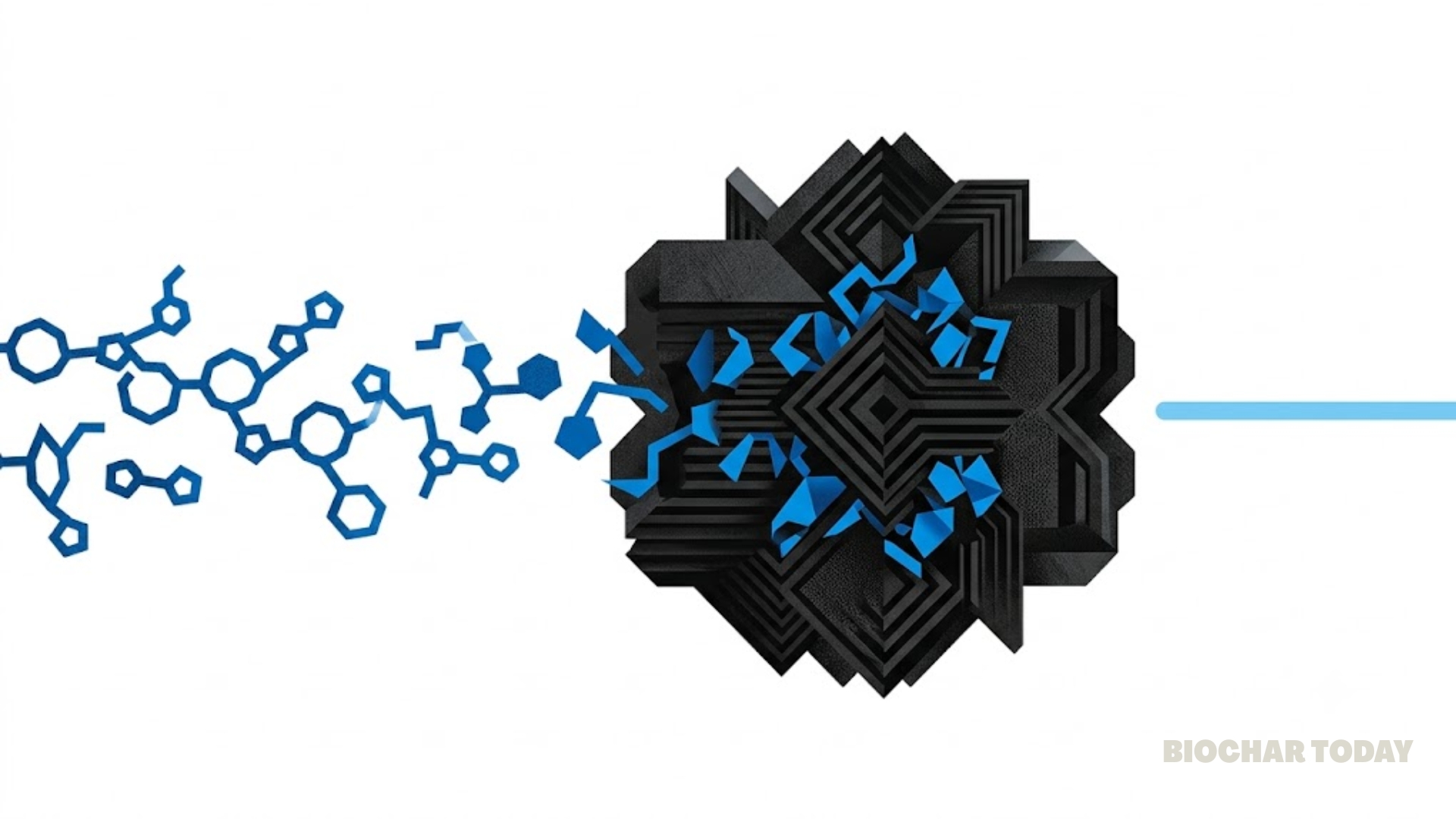
The scientific characterization highlighted that remediation efficiency is heavily governed by the natural physical traits, organic horizons, and texturing of the parent soil matrix. Rich chernozem black soils, which naturally possess high humus contents and robust cation-exchange capacities, locked away toxic metals most aggressively, enabling rapid saturation and stabilization at lower amendment doses. In contrast, light loam gray soils and sandy chestnut varieties possessed low natural sorptive qualities, requiring maximum biochar loading rates to establish an equivalent protective barrier against contaminant migration. The basic, porous architecture of the rice husk charcoal acted as an efficient chemical sponge, relying on surface complexation and mineral precipitation to permanently trap moving ions within its carbonized framework.
The remediation-induced improvement of the soil matrix yielded remarkable agroecological recovery outcomes, effectively eliminating the severe phytotoxicity that typically stunts plant development in industrial zones. In the untreated control soils, the high concentrations of copper, zinc, lead, and cadmium completely suppressed germination, resulting in widespread crop failure and zero vegetative growth. However, following the hybrid electrochemical and biochar intervention, both cereal grasses and legume phytoremediators staged a spectacular biological recovery. Across all tested soil variants, the total number of surviving plants multiplied three to ten-fold, while overall plant heights increased by two to five times compared to baseline control levels. Cereal crops achieved the highest absolute productivity marks, particularly within treated black soils, demonstrating that this integrated mechanism successfully re-establishes soil fertility, restores ecological functions, and secures a reliable path for the safe revegetation of severely degraded land masses.
Source: Kazez, A., Toktar, M., Bexeitova, K., Zhantikeyev, U., Lee, J., & Azat, S. (2026). Synergistic Electrokinetic Biochar Remediation for Heavy Metal Immobilization and Agroecological Treatment of Contaminated Soils. Carbon Trends, 100659.



Leave a Reply