
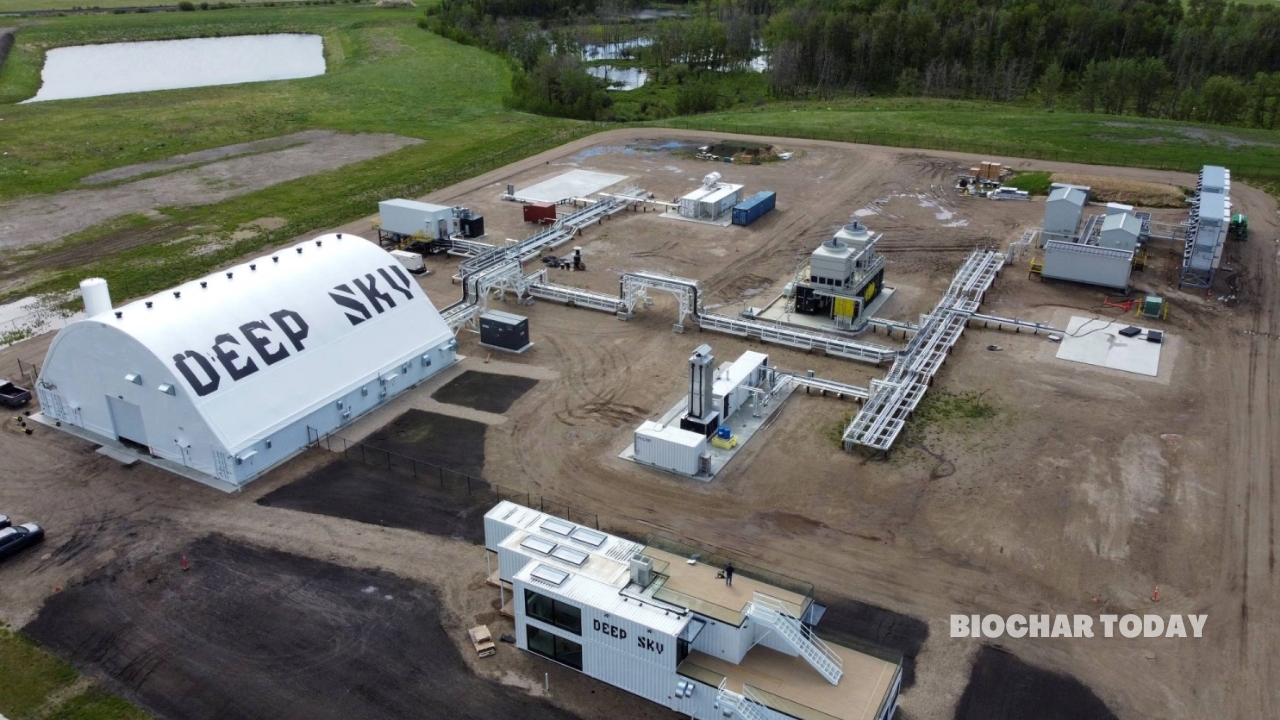
During a climate change economics conference in Italy co-organized by the Polytechnic University of Milan and the Euro-Mediterranean Centre on Climate Change, international scientists presented the third edition of “The State of Carbon Dioxide Removal” report. The findings indicate that current global carbon dioxide removal efforts account for only 5 percent of annual global emissions, totaling a negligible 2 million metric tons of technologically removed carbon compared to over 40 billion tons emitted by human activity. The data highlights a stagnation in research and investment across the carbon-removal sector. While conventional biomassBiomass is a complex biological organic or non-organic solid product derived from living or recently living organism and available naturally. Various types of wastes such as animal manure, waste paper, sludge and many industrial wastes are also treated as biomass because like natural biomass these More methods like biocharBiochar is a carbon-rich material created from biomass decomposition in low-oxygen conditions. It has important applications in environmental remediation, soil improvement, agriculture, carbon sequestration, energy storage, and sustainable materials, promoting efficiency and reducing waste in various contexts while addressing climate change challenges. More pyrolysisPyrolysis is a thermochemical process that converts waste biomass into bio-char, bio-oil, and pyro-gas. It offers significant advantages in waste valorization, turning low-value materials into economically valuable resources. Its versatility allows for tailored products based on operational conditions, presenting itself as a cost-effective and efficient More are currently active, overall expansion is lagging due to shifting political landscapes and geopolitical conflicts.
The prominent industry challenge outlined by the research consortium is the severe market contraction driven by fluctuating political priorities, geopolitical instability, and extreme cost barriers. Carbon removal investment has deteriorated significantly relative to the levels observed two to three years ago, exacerbated by international conflicts and shifting political administrations. Furthermore, high operational expenses present a barrier to entry, with the majority of innovative technological removal pathways exceeding $200 per metric ton. This high cost structure, combined with a lack of standardized public funding mechanisms, prevents these essential carbon-abatement technologies from scaling at a pace sufficient to match industrial emissions.
To counter these systemic investment and scalability constraints, the report emphasizes the deployment of diversified technological removal pathways, led primarily by the conversion of organic plant residues. Through oxygen-free pyrolysis, biomass is converted into biochar, which provides durable carbon storage while simultaneously enhancing agricultural soil water and nutrient retention. The scientific cohort also detailed supplementary solutions, including direct air capture systems in Iceland and oceanic alkalinity management strategies designed to safely absorb atmospheric gas. To secure the billions of euros in capital required for industrial scaling, analysts at the conference proposed a structural shift toward treating carbon dioxide removal as a essential public good funded by state entities.
The primary outcome of the report’s release is a unified global mandate for governments to transition from voluntary corporate procurement to state-subscribed public purchasing models to prevent market stagnation. While private corporations currently dominate early-stage market activity, institutional analysts conclude that sovereign state funding is mandatory to scale technological removal beyond its current marginal baseline. Over the next four critical years, this structural transition aims to expand innovative removal technologies to bridge the gap between biological sequestration and industrial emissions. Successfully scaling these protocols will establish a viable economic framework capable of processing the billions of tons required for global climate targets.





Leave a Reply