
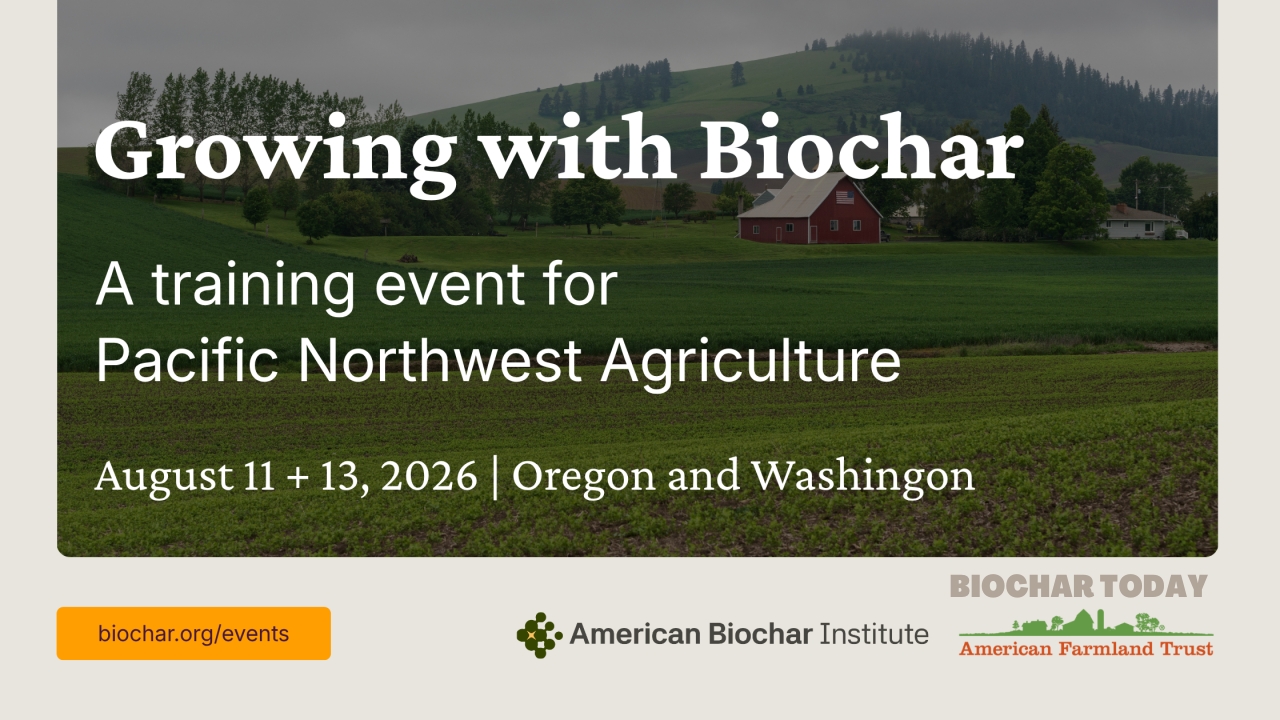
The American BiocharBiochar is a carbon-rich material created from biomass decomposition in low-oxygen conditions. It has important applications in environmental remediation, soil improvement, agriculture, carbon sequestration, energy storage, and sustainable materials, promoting efficiency and reducing waste in various contexts while addressing climate change challenges. More Institute and Washington State University Tri-Cities have organized a comprehensive, full-day training event titled “Growing with Biochar: A Training Event for Washington Agriculture” in the United States. Scheduled for August 2026 at the university’s campus in Richland, Washington, this free initiative targets agricultural advisors, farmers, land managers, sustainability coordinators, and policymakers. The event aims to provide participants with the practical knowledge, tools, and peer connections required to support and accelerate biochar adoption across the Pacific Northwest region.
A major challenge addressed by this training event is the gap in practical application knowledge and confidence among agricultural professionals who wish to help farmers integrate biochar into their practices. While the theoretical benefits of biochar are recognized, industry stakeholders frequently struggle with knowing where and how to begin implementation. Specifically, professionals face barriers related to safe handling and storage, selecting the appropriate biochar type for specific operations, aligning application with sustainable nutrient management protocols, and navigating the complexities of state and federal financial assistance programs.
To resolve these complexities, the organizers established a structured, science-based curriculum that combines technical instruction with practical administrative guidance. The training program delivers education on the production and science of biochar regarding soil health, alongside best practices for safe handling, storage, and application. Instructors will guide attendees on utilizing the “4Rs of sustainable nutrient management” for proper selection, integrating biochar into existing regenerative agricultural systems, and examining local case studies. Furthermore, the curriculum provides direct instruction on accessing federal and state cost-share programs, specifically the Natural Resources Conservation Service (NRCS) Practice 336 code, while offering formal Continuing Education Credits (CEUs) through the Agronomy Society of America to incentivize attendance.
The anticipated outcomes of this event focus on establishing a capable, confident regional community of practice equipped to drive measurable biochar adoption. By educating regional agricultural professionals and crop advisors, the American Biochar Institute and Washington State University Tri-Cities will establish a knowledgeable support network capable of guiding farmers through successful, subsidized field applications. Ultimately, the dissemination of these standardized practices and cost-share pathways is expected to enhance regional soil health and solidify biochar’s role within commercial regenerative agriculture across Washington and its surrounding states.


Leave a Reply