

Key Takeaways
- Chemical activation using alkali compounds creates highly porous biocharBiochar is a carbon-rich material created from biomass decomposition in low-oxygen conditions. It has important applications in environmental remediation, soil improvement, agriculture, carbon sequestration, energy storage, and sustainable materials, promoting efficiency and reducing waste in various contexts while addressing climate change challenges. More with significantly expanded surface areas.
- Potassium carbonate activation generates balanced networks of both tiny micropores and larger mesopores across carbon structures.
- Potassium hydroxide activation substantially increases total biochar surface area while occasionally reducing microporous volume.
- Tailoring chemical activation parameters allows for the precise customization of biochar pore architecture for targeted pollutant capture.
- Engineered porous biochars serve as versatile, high-performance materials across water treatment, soil remediation, energy storage, and catalysis.
Biochar is a carbonaceous material synthesized through the thermochemical decomposition of biomassBiomass is a complex biological organic or non-organic solid product derived from living or recently living organism and available naturally. Various types of wastes such as animal manure, waste paper, sludge and many industrial wastes are also treated as biomass because like natural biomass these More under oxygen-limited conditions, primarily via pyrolysisPyrolysis is a thermochemical process that converts waste biomass into bio-char, bio-oil, and pyro-gas. It offers significant advantages in waste valorization, turning low-value materials into economically valuable resources. Its versatility allows for tailored products based on operational conditions, presenting itself as a cost-effective and efficient More, gasificationGasification is a high-temperature, thermochemical process that converts carbon-based materials into a gaseous fuel called syngas and solid by-products. It takes place in an oxygen-deficient environment at temperatures typically above 750°C. Unlike combustion, which fully burns material to produce heat and carbon dioxide (CO2), gasification More, torrefaction, or hydrothermal carbonization. While raw biochars produced directly from pristine biomass exhibit useful baseline properties, their raw adsorption and catalytic capacities are frequently constrained by residual tars, ashAsh is the non-combustible inorganic residue that remains after organic matter, like wood or biomass, is completely burned. It consists mainly of minerals and is different from biochar, which is produced through incomplete combustion. Ash Ash is the residue that remains after the complete More, and amorphous carbon deposits that partially block internal pore channels. To overcome these limitations, advanced activation and functionalization strategies are employed to re-engineer the carbon matrix, expand specific surface area, and introduce active surface functional groups tailored for specific technological applications.
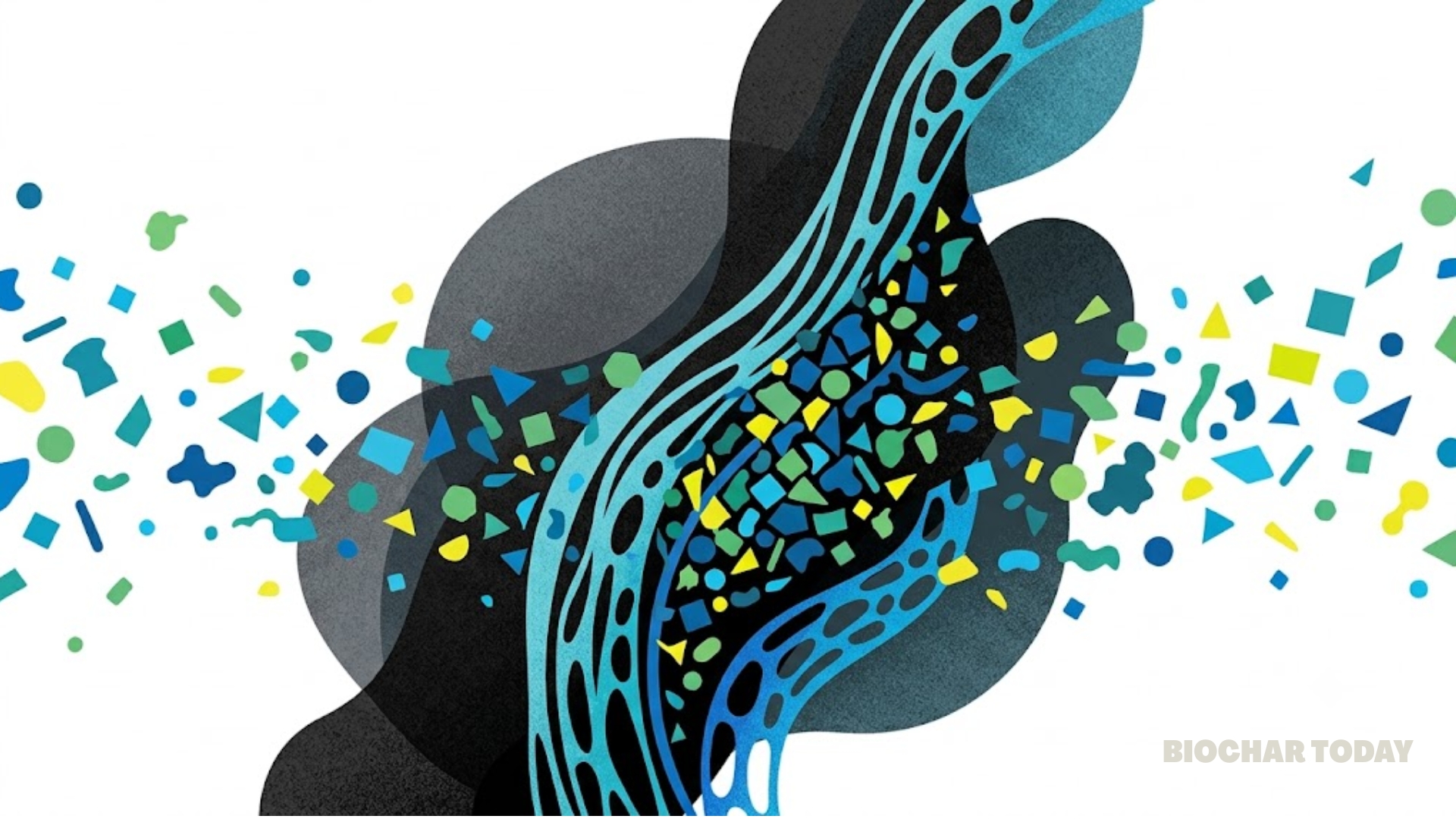
Among chemical modification techniques, alkali activation using potassium carbonate and potassium hydroxide represents one of the most effective pathways for synthesizing ultra-porous carbon materials. The thermal activation process relies on complex redox and gasification reactions between the alkali hydroxides and the carbon framework, etching the solid structure to generate extensive internal voids and increasing liquid-solid surface contact. Activation temperature serves as a primary governing factor: as processing temperatures rise, both potassium salts drive substantial increases in total biochar surface area. However, the choice of activating agent dictates the final pore size distribution across the material.
The review highlights distinct architectural outcomes depending on the specific alkali agent applied. Activation with potassium carbonate generally yields biochars possessing superior surface areas and well-developed hierarchical pore networks, incorporating a balanced distribution of both micropores (under two nanometers) and mesopores (two to fifty nanometers). Conversely, potassium hydroxide activation drastically boosts overall surface area—frequently elevating pore volume by order-of-magnitude factors—but can alter pore distribution by diminishing microporous volume under certain thermal conditions. Consequently, selecting between these chemical agents enables precise structural tuning based on whether an application requires rapid mass transport through mesopores or high-density adsorption within micropores.
The resulting high-surface-area biochars exhibit exceptional multi-sector functionality across environmental and industrial domains. In water treatment and soil remediation, expanded pore accessibility allows biochars to immobilize heavy metals, pharmaceuticals, synthetic dyes, and agricultural pesticides through complementary physical and chemical mechanisms, including ion exchange, surface complexation, and electrostatic attraction. Furthermore, these structural enhancements position engineered biochars as sustainable replacements for commercial activated carbons in gas capture, supercapacitor energy storage electrodes, and heterogeneous catalyst supports for green chemical synthesis.
Source: Sharma, P., & Kaur, R. (2026). Mechanisms and applications of biochar in environmental remediation, energy, and catalysis. Discover Plants, 3, Article 294.


Leave a Reply