
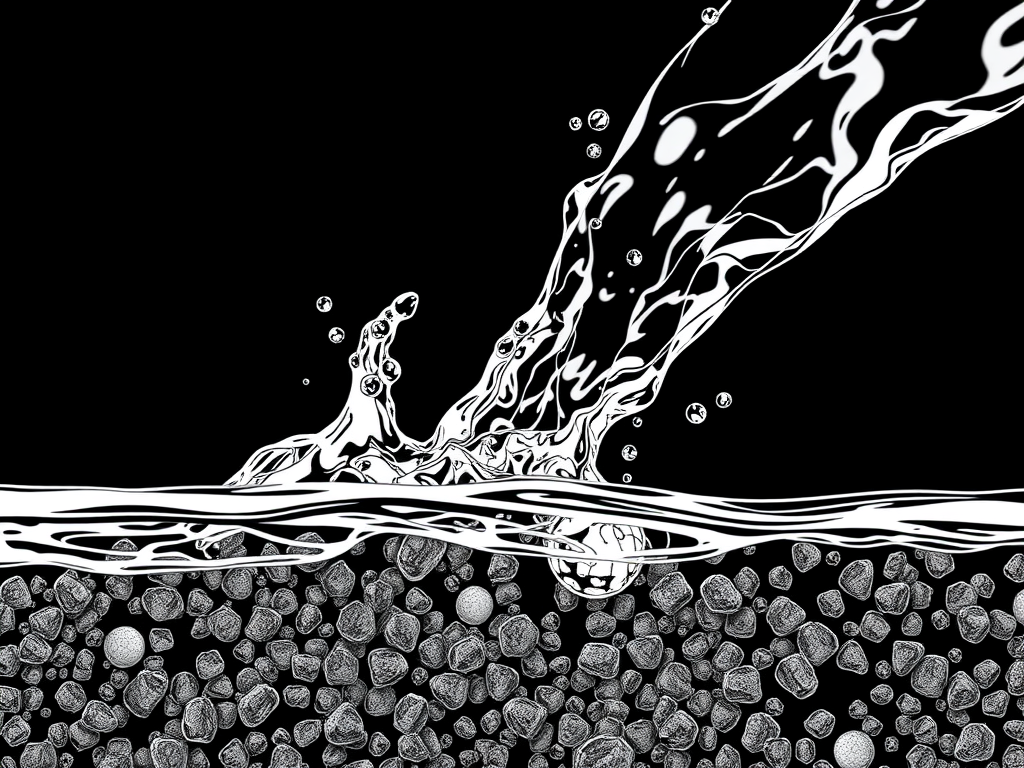
Cheng et al., in the journal Industrial Crops & Products, explored a novel approach to address the growing concern of antibiotic contamination in water by using biocharBiochar is a carbon-rich material created from biomass decomposition in low-oxygen conditions. It has important applications in environmental remediation, soil improvement, agriculture, carbon sequestration, energy storage, and sustainable materials, promoting efficiency and reducing waste in various contexts while addressing climate change challenges. More derived from Enteromorpha clathrata (EC), a type of green macroalga. The researchers focused on removing two common antibiotics, oxytetracycline (OTC) and norfloxacin (NOR), which are widely used in human and animal medicine and often end up in water bodies. This contamination contributes to the rise of antimicrobial resistance (AMR), a serious threat to public health.
The team created biochar from EC through pyrolysisPyrolysis is a thermochemical process that converts waste biomass into bio-char, bio-oil, and pyro-gas. It offers significant advantages in waste valorization, turning low-value materials into economically valuable resources. Its versatility allows for tailored products based on operational conditions, presenting itself as a cost-effective and efficient More and then activated it using NaOH to enhance its adsorption properties. This process resulted in a biochar with a porous structure and enriched functional groups, ideal for capturing pollutants. The EC-derived biochar proved highly effective in removing both OTC and NOR from water, boasting impressive adsorption capacities.
This study highlights the potential of biochar as a sustainable and efficient solution for tackling antibiotic pollution in water. The use of algae as a feedstockFeedstock refers to the raw organic material used to produce biochar. This can include a wide range of materials, such as wood chips, agricultural residues, and animal manure. More for biochar production not only provides a valuable resource for water treatment but also contributes to a circular economy by utilizing a renewable and readily available biomassBiomass is a complex biological organic or non-organic solid product derived from living or recently living organism and available naturally. Various types of wastes such as animal manure, waste paper, sludge and many industrial wastes are also treated as biomass because like natural biomass these More.
SOURCE: Cheng, X., Jiang, D., Zhu, W., Xu, H., Ling, Q., Yang, J., … & Wang, S. (2025). Iron and nitrogen co-doping biochar for simultaneous and efficient adsorption of oxytetracycline and norfloxacin from wastewater. Industrial Crops & Products, 226, 120646. https://doi.org/10.1016/j.indcrop.2025.120646


![Eucalyptus Wood Waste-Derived Biochar Achieves a Ninety-Eight Percent Removal Efficiency for Benzo[ghi]perylene in Vehicle-Wash Wastewater](https://biochartoday.com/wp-content/uploads/2026/10/SCIENCE-BLOGS-2026-2026-10-19T160523.703.jpg)

Leave a Reply