

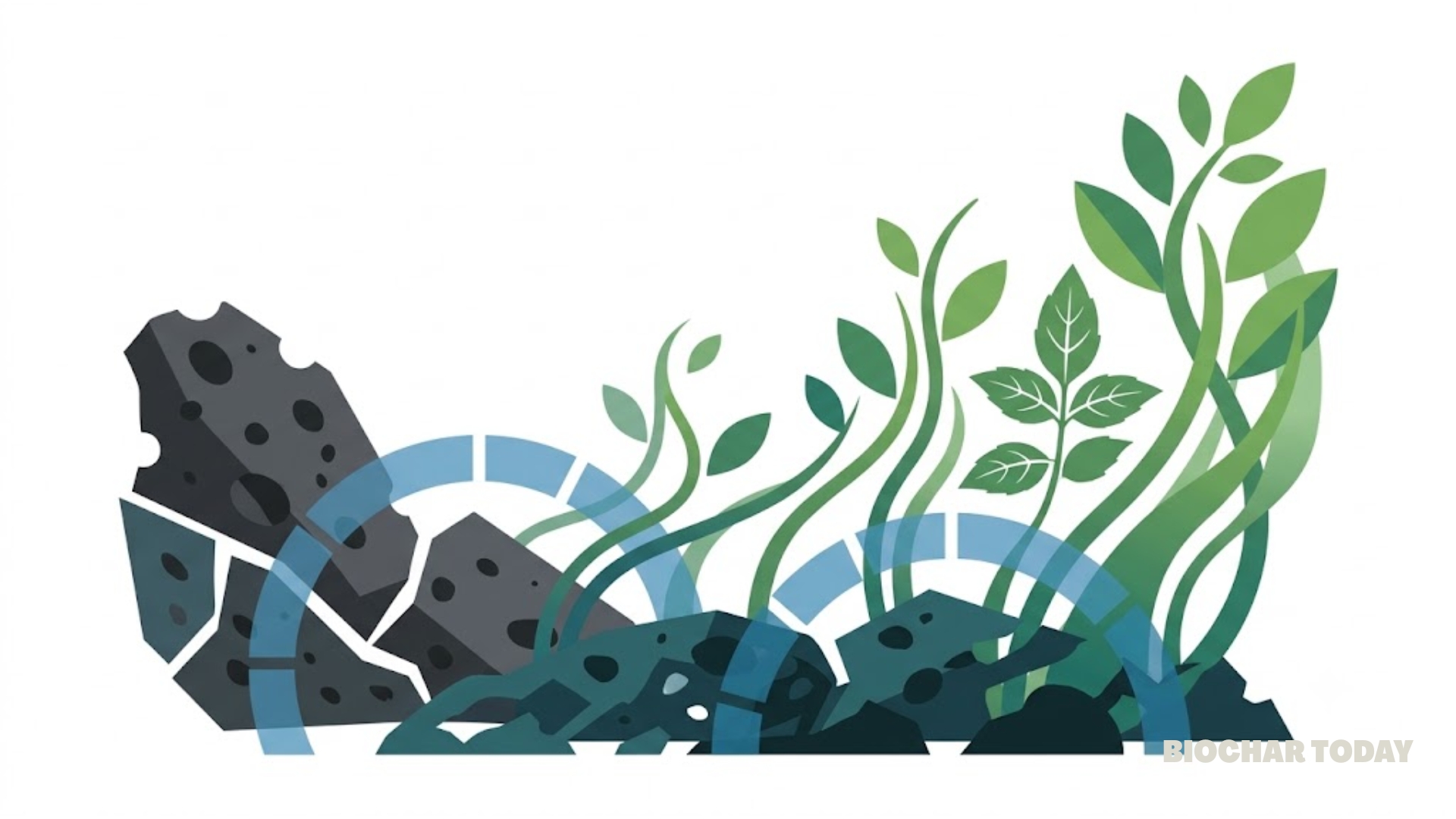
BiocharBiochar is a carbon-rich material created from biomass decomposition in low-oxygen conditions. It has important applications in environmental remediation, soil improvement, agriculture, carbon sequestration, energy storage, and sustainable materials, promoting efficiency and reducing waste in various contexts while addressing climate change challenges. More research has made remarkable strides over the past decade, establishing itself as a pivotal tool in addressing some of the world’s most pressing environmental and sustainability challenges. What started as a simple byproduct of pyrolysisPyrolysis is a thermochemical process that converts waste biomass into bio-char, bio-oil, and pyro-gas. It offers significant advantages in waste valorization, turning low-value materials into economically valuable resources. Its versatility allows for tailored products based on operational conditions, presenting itself as a cost-effective and efficient More has transformed into a versatile solution for climate change mitigation, soil enhancement, and pollution remediation.
The Journey of Biochar Research: From Progress to a Promising Sustainable Future in 2025
Biochar research has advanced significantly over the past decade, gaining attention for its potential in addressing environmental challenges like climate change and pollution. Innovations in production and applications broaden its use in soil enhancement, water treatment, and energy storage. However, scaling production and assessing long-term impacts remain challenges.
3–5 minutes


Leave a Reply