

In the global race toward a net-zero carbon society, biocharBiochar is a carbon-rich material created from biomass decomposition in low-oxygen conditions. It has important applications in environmental remediation, soil improvement, agriculture, carbon sequestration, energy storage, and sustainable materials, promoting efficiency and reducing waste in various contexts while addressing climate change challenges. More is emerging as an indispensable resource. Produced from biomassBiomass is a complex biological organic or non-organic solid product derived from living or recently living organism and available naturally. Various types of wastes such as animal manure, waste paper, sludge and many industrial wastes are also treated as biomass because like natural biomass these More waste, biochar is more than just a byproduct; it is a versatile material with profound implications for agriculture, environmental remediation, and climate change mitigation. Its promise lies in its ability to simultaneously address waste management, enhance soil health, and offer a powerful solution for long-term carbon capture, utilization, and storage (CCUS).
The Biochar Economy: Turning Waste into Multibillion-Dollar Value
The ascent of biochar is already transforming the global market landscape. According to recent statistics, the global biochar market was valued at $877.15 million in 2024 and is projected to experience significant growth, reaching an estimated $ 3,111.96 million by 2034. This expansion represents a robust compound annual growth rate of approximately 13.5%. This booming market is underpinned by the concept of waste valorization. The raw materials, collectively known as biomass, are vast and readily available waste streams that often hold little intrinsic value. Sources include industrial and agricultural residues such as wood chips, sawdust, bamboo, rice straw, and spent coffee grounds. Historically, the direct landfill disposal of these materials has been recognized as an environmentally unfriendly practice. By converting these low-value, bulky biomass wastes into biochar, we enhance their stability and value, thereby achieving true waste valorization and diverting substantial amounts of organic material from ecologically detrimental disposal methods. This process is a foundational pillar of a sustainable, circular economy.
Biochar’s Ecological powers: Soil Health and Carbon Sequestration
The primary advantages driving biochar research and application fall into two critical, interconnected areas: environmental stability and agricultural improvement.
Long-Term Carbon Capture, Utilization, and Storage (CCUS)
Biochar is celebrated as one of the most cost-effective and feasible methods for long-term carbon sequestration. The thermal conversion process transforms the carbon structure within the biomass into a highly stable form. When incorporated into the soil, this stable carbon structure can retain carbon for thousands of years, effectively removing it from the active carbon cycle and offering a crucial strategy for mitigating atmospheric greenhouse gas concentrations. This permanent form of sequestration is a key component of its potential for supporting bioenergy carbon capture, utilization, and storage (BECCUS) systems.
Significant Soil Improvement
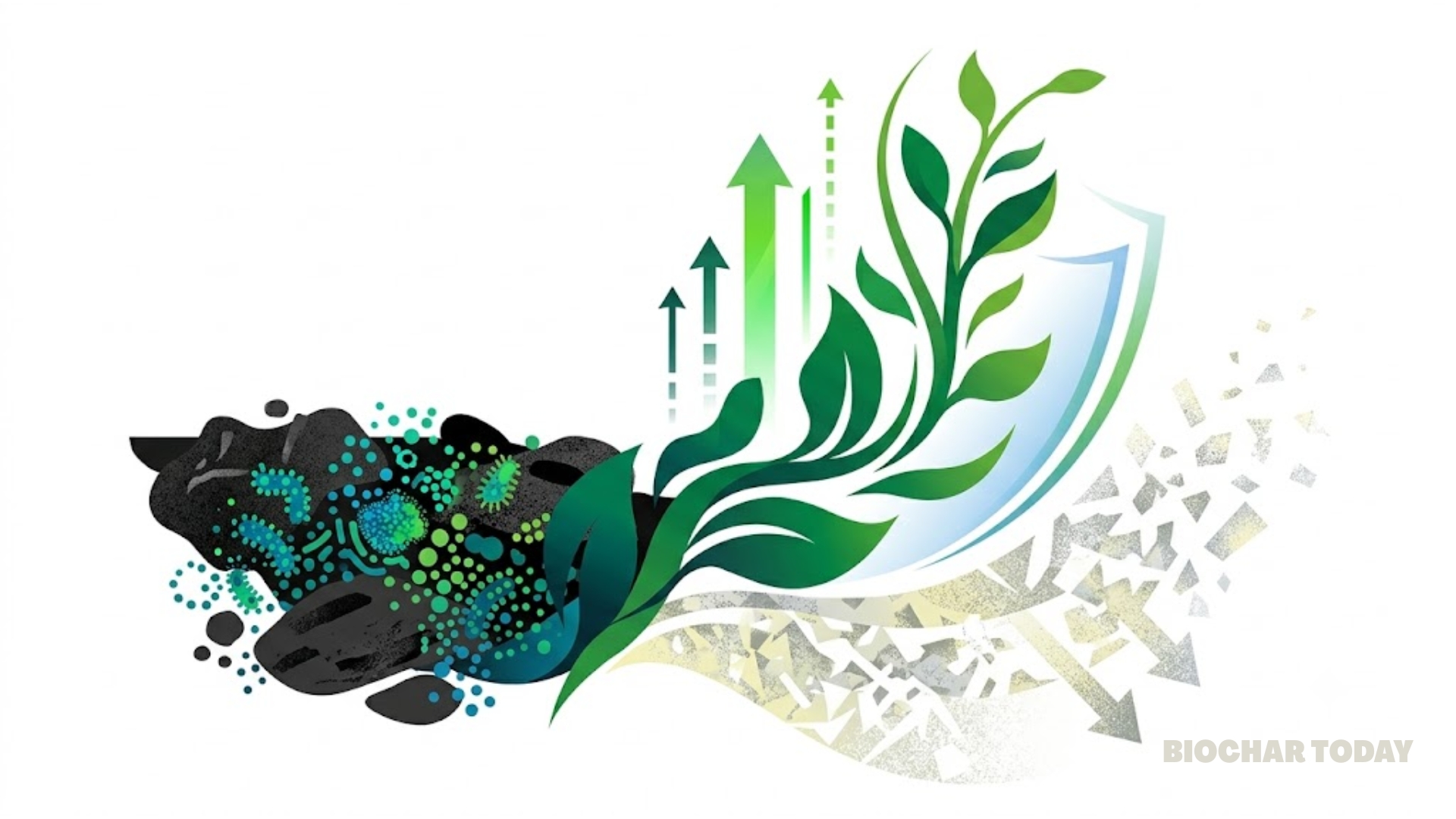
Biochar acts as a powerful soil amendmentA soil amendment is any material added to the soil to enhance its physical or chemical properties, improving its suitability for plant growth. Biochar is considered a soil amendment as it can improve soil structure, water retention, nutrient availability, and microbial activity. More, significantly improving several aspects of soil quality and fertility. By improving the soil environment, biochar can directly boost crop yields, contributing to food security and farm profitability. Its porous structure makes biochar an excellent material for retaining water. This is particularly critical in drought-prone areas or for maximizing water-use efficiency in agriculture. Biochar also enhances the soil’s capacity to retain essential nutrients, reducing leachingLeaching is the process where nutrients are dissolved and carried away from the soil by water. This can lead to nutrient depletion and environmental pollution. Biochar can help reduce leaching by improving nutrient retention in the soil. More and ensuring better nutrient availability for crop plants.
Beyond Soil: A Versatile Material in the Circular Economy
While its agricultural application is prominent, biochar’s unique material properties—high surface area and chemical stability—make it valuable across numerous other sectors, solidifying its role in a comprehensive circular economy. The philosophy of the circular economy is perfectly embodied by biochar’s lifecycle: it converts a waste product into a long-lived resource, aligning with the “waste-to-resource” and “sustainable material” concepts.
Beyond CCUS and soil conditioning, biochar is utilized in 1) Wastewater Treatment: Its high adsorption capacity makes it highly effective for filtering and purifying wastewater by trapping contaminants; 2) Air Purification: Biochar can be engineered for use in air filtration and purification systems; 3) Catalysis: It can function as a catalyst or a catalyst support in various industrial chemical processes.
The Manufacturing Science: Torrefaction and Pyrolysis
The final properties and quality of biochar are dictated by its production methodology. The primary methods for producing this high-value carbon material are torrefaction and pyrolysisPyrolysis is a thermochemical process that converts waste biomass into bio-char, bio-oil, and pyro-gas. It offers significant advantages in waste valorization, turning low-value materials into economically valuable resources. Its versatility allows for tailored products based on operational conditions, presenting itself as a cost-effective and efficient More.
These thermal conversion processes involve heating the organic biomass feedstockFeedstock refers to the raw organic material used to produce biochar. This can include a wide range of materials, such as wood chips, agricultural residues, and animal manure. More under controlled, low-oxygen conditions. Pyrolysis, often conducted at higher temperatures, results in a more recalcitrant (stable) carbon structure. Torrefaction, generally a lower-temperature process, produces a material with different physiochemical properties. The specific conditions applied—temperature, heating rate, and reaction time—are critical factors that influence the final properties and therefore the utility of the biochar.
The Roadblocks: Challenges and the Need for Rigor
Despite its immense potential, the journey to large-scale biochar implementation is not without its hurdles. Several challenges must be addressed to unlock its full potential.
- Production Cost: While the feedstock (biomass waste) is inexpensive, the thermal conversion processes of torrefaction and pyrolysis are currently quite expensive, presenting an economic barrier.
- Logistics and Application: The cost and difficulty associated with the logistics of transporting large volumes of biochar and the practical challenges of applying it uniformly to vast agricultural fields represent another significant hurdle to adoption.
- Quality and Standardization: The fundamental challenge of achieving consistent performance stems from the high variability in biochar quality. The final product is highly dependent on both the initial feedstock and the precise production process used, leading to a recognized lack of standardization in the industry.
To overcome these economic and environmental uncertainties, there is a critical and immediate need for comprehensive scientific and economic analysis. A thorough LCA is essential for determining the total environmental footprint of a biochar system, from sourcing the feedstock to final application. Similarly, a rigorous TEA is required to establish the true economic viability and cost-effectiveness of various biochar production and application systems. More studies focused on LCA and TEA are paramount for providing the data necessary to confidently move this promising technology forward.
Future Forward: Advanced Biochar and Policy Support
The future of biochar technology is bright, focusing on advanced engineering and crucial policy alignment.
Advanced Biochar Modification:To enhance biochar’s performance and expand its application range beyond current capabilities, the development of advanced modification techniques is a key prospect. Techniques such as nanomaterial modification promise to engineer designer biochar products with superior qualities and targeted functionalities for specific environmental or agricultural challenges.
Policy and Integration Overcoming: the substantial economic barriers will require dedicated policy intervention. Government incentives and supportive policies are crucial for driving the widespread adoption of biochar technology. Furthermore, a significant future strategy involves the creation of integrated systems. Integrating biochar production facilities with other key industries, such as bioenergy systems, can create symbiotic relationships that improve overall efficiency and significantly reduce the net cost of biochar production, making it a viable and competitive technology.
Long-Term Safety and Contaminants: As with any material applied to the environment, long-term safety studies are absolutely necessary. The scientific community must investigate the long-term effects of biochar application, especially when using low-quality or potentially contaminated feedstocks. There is a need for caution and research regarding potential contaminants that could be introduced into the environment, such as heavy metals and polycyclic aromatic hydrocarbons (PAHs). Ensuring the long-term safety and environmental compatibility of biochar is critical for its widespread, safe adoption.
Biochar stands at the confluence of sustainability, climate action, and agricultural innovation. With a robust and growing market, a core function in carbon sequestration, and an adaptable role in the circular economy, this dark, porous material offers a tangible pathway to a more resilient and net-zero carbon society. Addressing the challenges of cost and standardization through rigorous scientific and economic analysis, coupled with smart policy, will ensure biochar fulfills its remarkable promise for the comming year.



Leave a Reply