
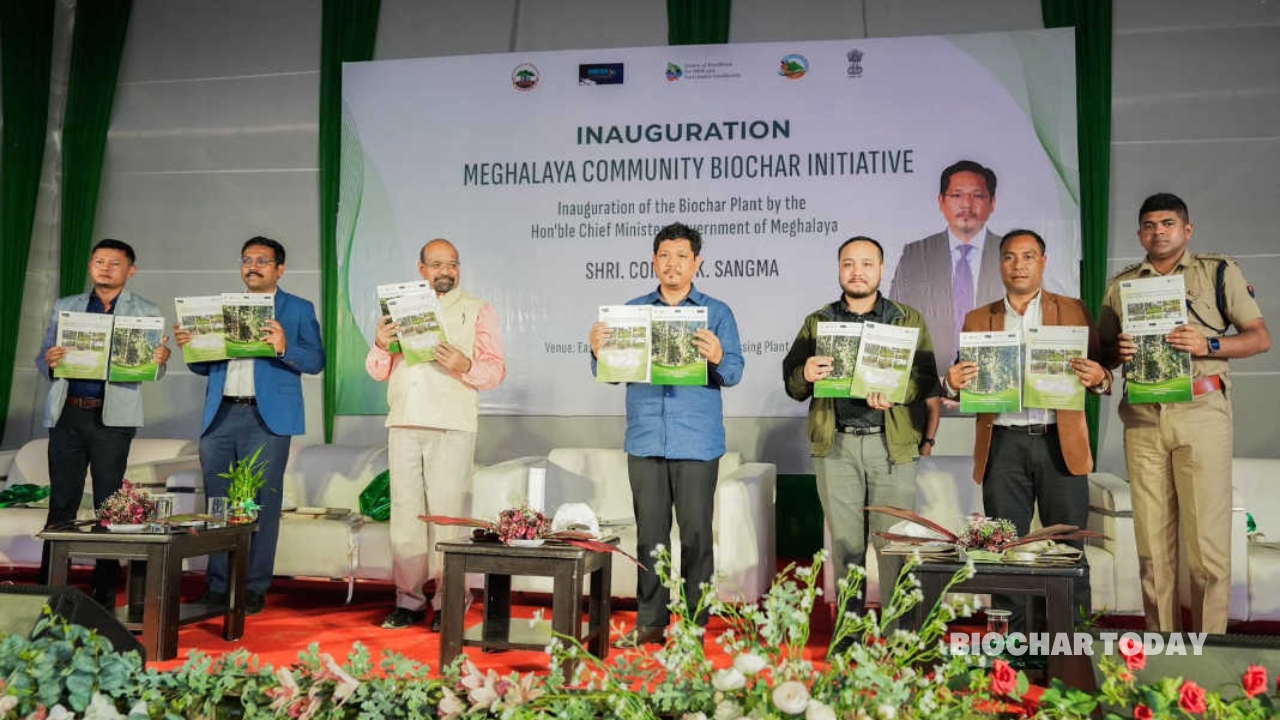
The Government of Meghalaya, located in the northeastern region of India bordering Bangladesh, recently reached a developmental milestone with the inauguration of the state’s first community-focused biochar production unit in Umsli, Ri Bhoi district. Chief Minister Conrad Sangma presided over the launch, emphasizing the project’s role in integrating climate mitigation strategies with rural economic development. The facility is designed to process sustainably harvested bamboo into biocharBiochar is a carbon-rich material created from biomass decomposition in low-oxygen conditions. It has important applications in environmental remediation, soil improvement, agriculture, carbon sequestration, energy storage, and sustainable materials, promoting efficiency and reducing waste in various contexts while addressing climate change challenges. More, utilizing a controlled pyrolysisPyrolysis is a thermochemical process that converts waste biomass into bio-char, bio-oil, and pyro-gas. It offers significant advantages in waste valorization, turning low-value materials into economically valuable resources. Its versatility allows for tailored products based on operational conditions, presenting itself as a cost-effective and efficient More process to create a stable, carbon-rich soil amendmentA soil amendment is any material added to the soil to enhance its physical or chemical properties, improving its suitability for plant growth. Biochar is considered a soil amendment as it can improve soil structure, water retention, nutrient availability, and microbial activity. More. This initiative represents a strategic shift toward decentralized, nature-based solutions aimed at fostering environmental resilience within this specific South Asian highland ecosystem.
A primary challenge addressed by this initiative is the prevalence of acidic soil conditions across the Meghalaya plateau, which historically limits agricultural productivity and nutrient availability. Traditional farming in this high-rainfall region of India often contends with declining soil fertility and poor moisture retention, factors exacerbated by regional climatic patterns. Furthermore, there is a systemic need for scalable carbon removal methods that provide tangible benefits to rural populations. Finding a viable method to sequester atmospheric carbon while simultaneously providing a practical tool for farmers has remained a complex hurdle for local administrators in the region.
The solution implemented at the Umsli unit involves the conversion of local bamboo biomassBiomass is a complex biological organic or non-organic solid product derived from living or recently living organism and available naturally. Various types of wastes such as animal manure, waste paper, sludge and many industrial wastes are also treated as biomass because like natural biomass these More into biochar. By heating the organic material in a low-oxygen environment, the facility produces a material that, when integrated into the soil, functions as a long-term carbon sink and a fertility enhancer. Unlike traditional charcoalCharcoal is a black, brittle, and porous material produced by heating wood or other organic substances in a low-oxygen environment. It is primarily used as a fuel source for cooking and heating. More used for fuel, this biochar is specifically intended for agricultural application to neutralize acidity and improve the soil’s physical structure. The state government intends to use this unit as a pilot for a broader network of similar facilities across Northeast India, leveraging bamboo as a primary green resource for sustainable rural development.
Projected outcomes for the Ri Bhoi facility include the removal of approximately 6,000 metric tonnes of carbon dioxide over the next two decades. Beyond carbon sequestration, the unit is expected to generate new revenue streams for the local community by commercializing carbon removal and improving crop yields through enhanced soil moisture and nutrient retention. By positioning this Indian state as a model for community-driven climate action, the government aims to demonstrate how environmental sustainability can be directly linked to the economic empowerment of indigenous agricultural workers on a global stage.





Leave a Reply